BREXCIYA
ATHEN KARDASHIAN & NINA MHACH DURBAN, EMMANUEL AWUNI, KUMBIRAI MAKUMBE
CURATED BY RUDI MINTO DE WIJS
SATURDAY 1ST NOVEMBER - SUNDAY 21ST DECEMBER 2025
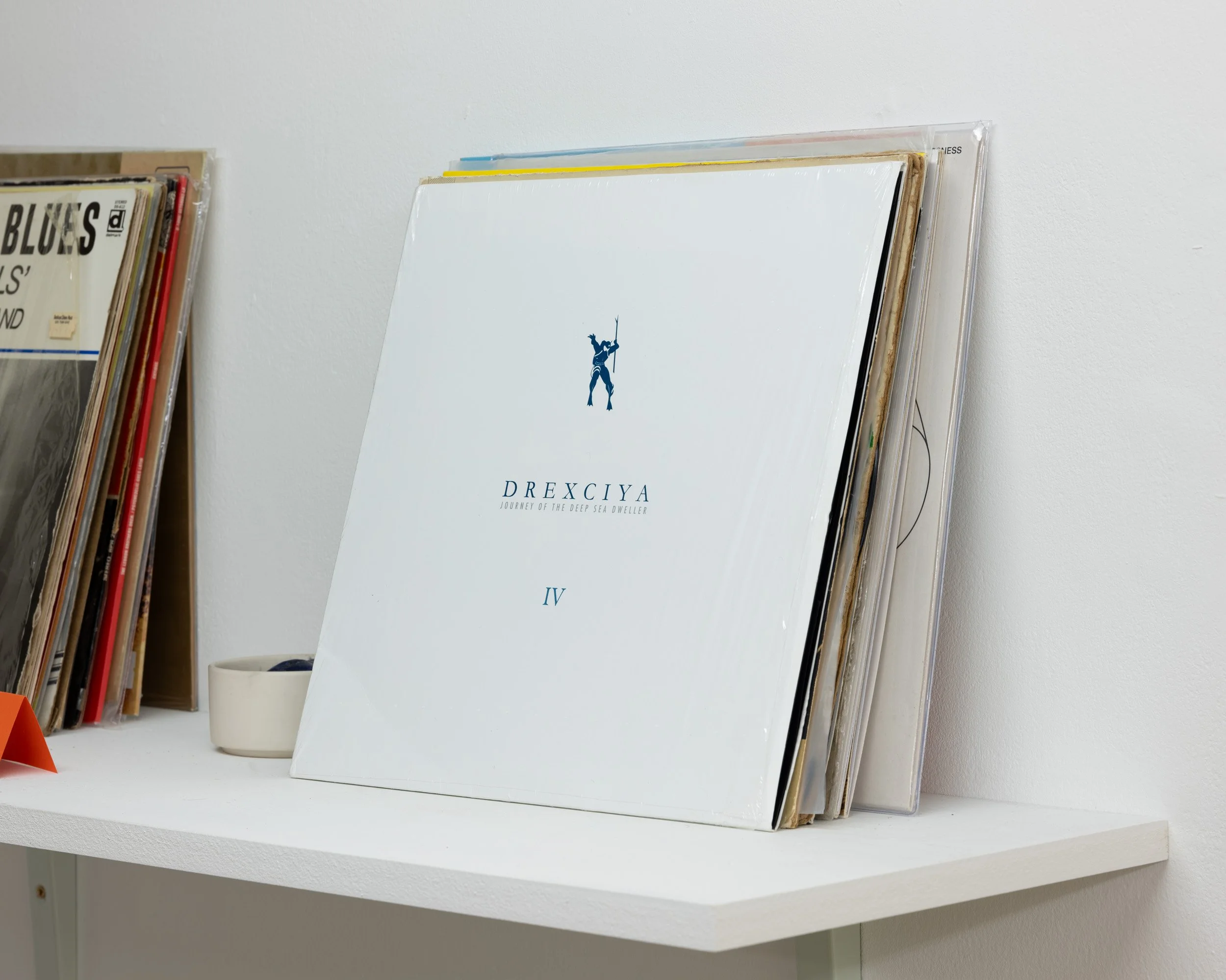
Quench Gallery presents Brexciya, an exhibition that reimagines narratives of belonging, resistance, and rebirth through the works of Kumbirai Makumbe, Emmanuel Awuni, and the artist duo Athen Kardashian & Nina Mhach Durban. Inspired by Drexciya, a speculative mythology created by Detroit-based electronic duo Drexciya, Brexciya explores themes of migration, identity, and transformation, while situating these ideas within the socio-political context of Margate and Thanet, a region pivotal to Brexit.
The exhibition bridges two significant frameworks, one fiction and one historical: Drexciya’s narrative retelling of enslaved mothers who were cast overboard after being captured and Brexit. Dreciya rewrites the deaths of enslaved mothers, instead saying that they thrived in an underwater utopia. This exhibition positions all immigrants as new world survivors.The realities of Brexit, which reshaped the UK’s relationship with Europe is also present. Brexciya reframes immigrant tales, focusing on resilience, growth, and hope rather than loss or displacement.
Through sculpture, installation, and immersive environments, the participating artists interrogate the complex, nonlinear experiences of migration, hybridity, and identity.
From Makumbe’s speculative explorations of Black queer diaspora to Awuni’s liberatory reimaginings of cultural objects, and Kardashian & Mhach Durban’s domestic reconstructions, Brexciya offers an expansive, hopeful vision of belonging and resistance. Together, these works invite audiences to reflect on histories of removal and conceptualise them as stories of emergence, renewal, and solidarity.
Brexciya is a reimagining of belonging, resistance, and rebirth, drawing conceptual inspiration from Drexciya, a speculative mythology created by Detroit-based electronic duo Drexciya. The exhibition bridges narratives of migration, hybridity, and transformation, linking the Drexciyan mythos with the socio-political realities of Brexit.
Set against the backdrop of Margate and Thanet, a region central to the Brexit referendum, Brexciya reframes immigrant tales as stories of growth, resilience, and hope. The exhibition challenges traditional narratives of loss and removal, instead celebrating emergence, rebirth, and the possibility of new belonging.
Through your works, the exhibition will invite audiences to engage with these ideas, offering an expansive, hopeful vision of resistance and solidarity.
Curated by Rudi Minto de Wijs
Athen Kardashian and Nina Mhach Durban
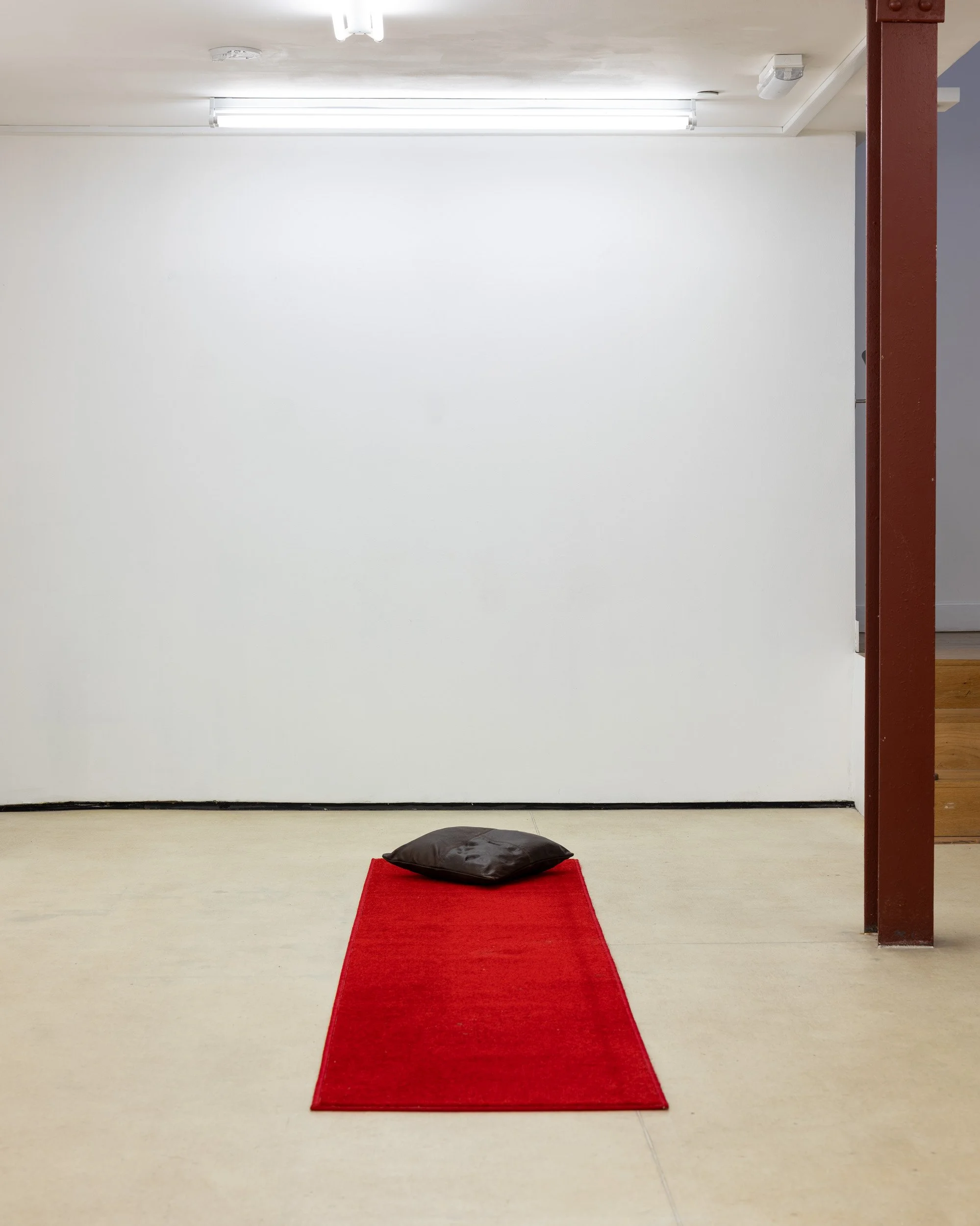
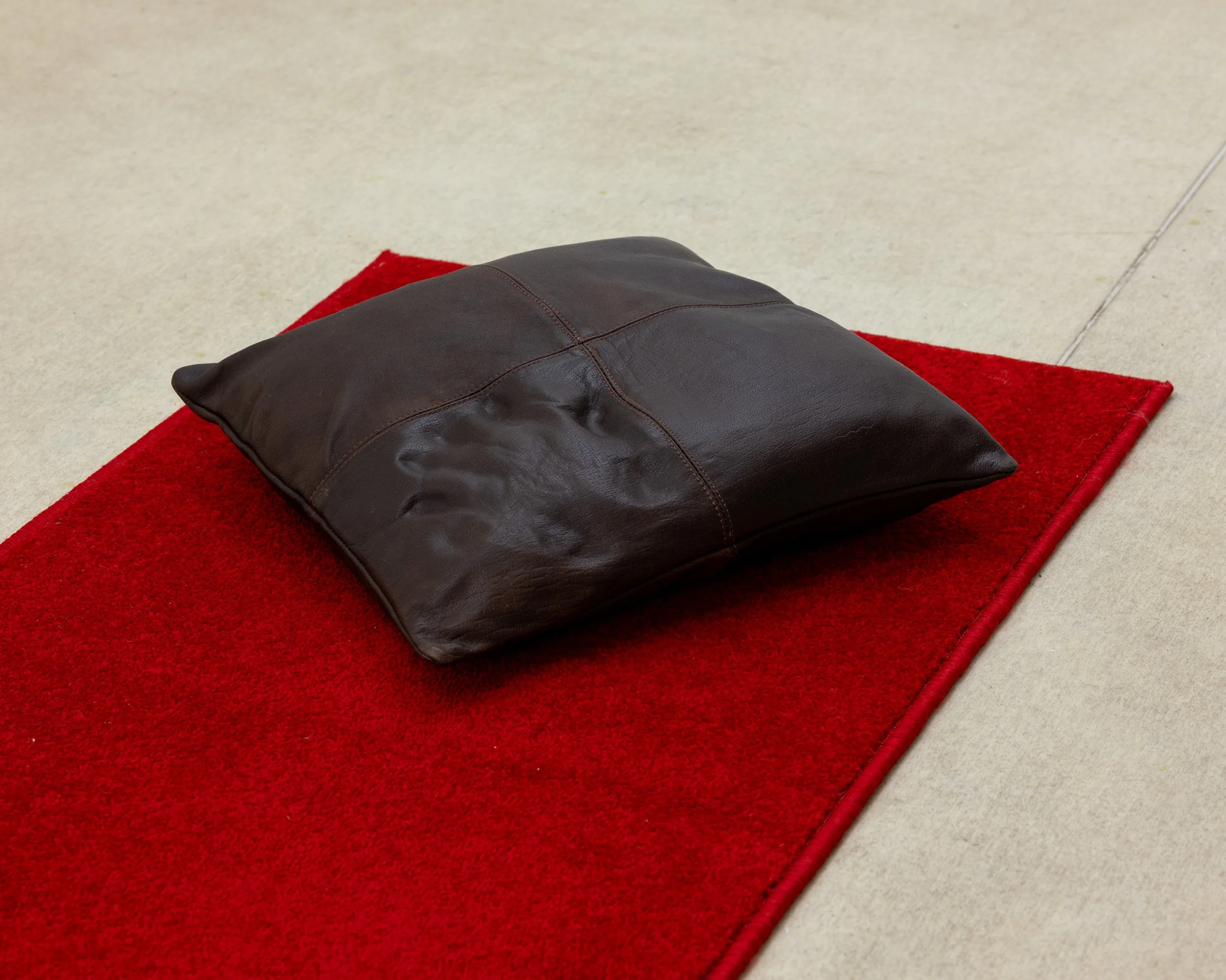
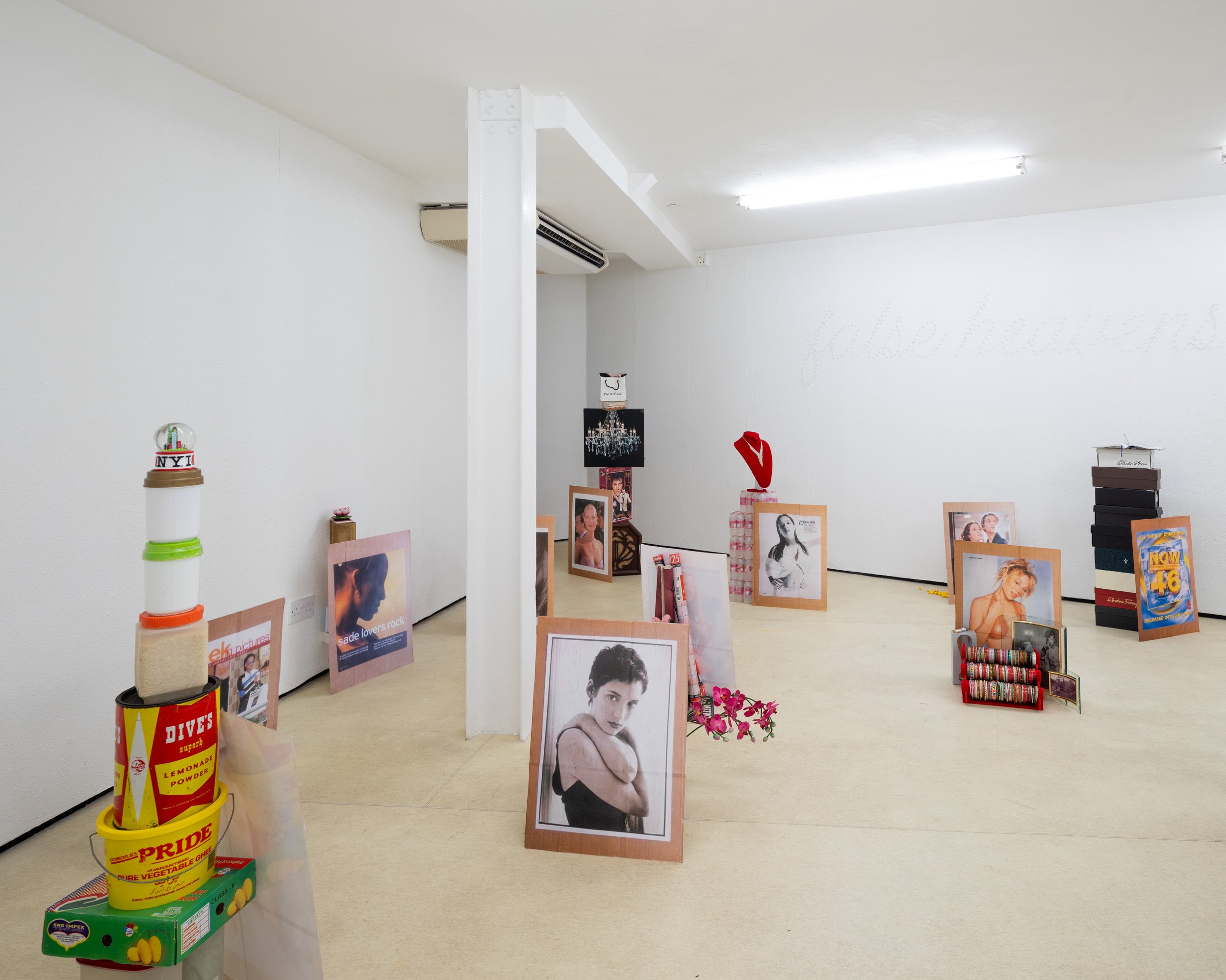
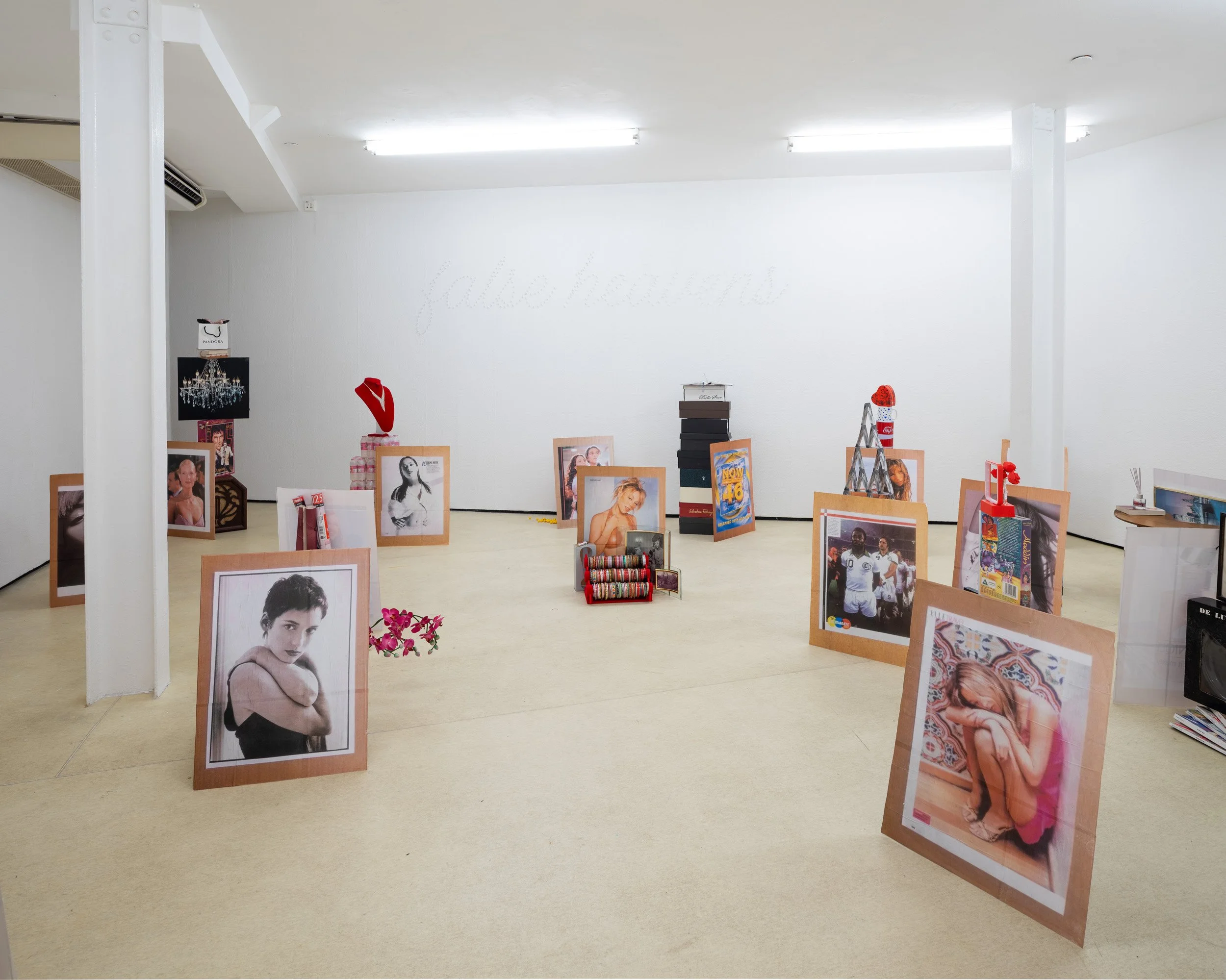
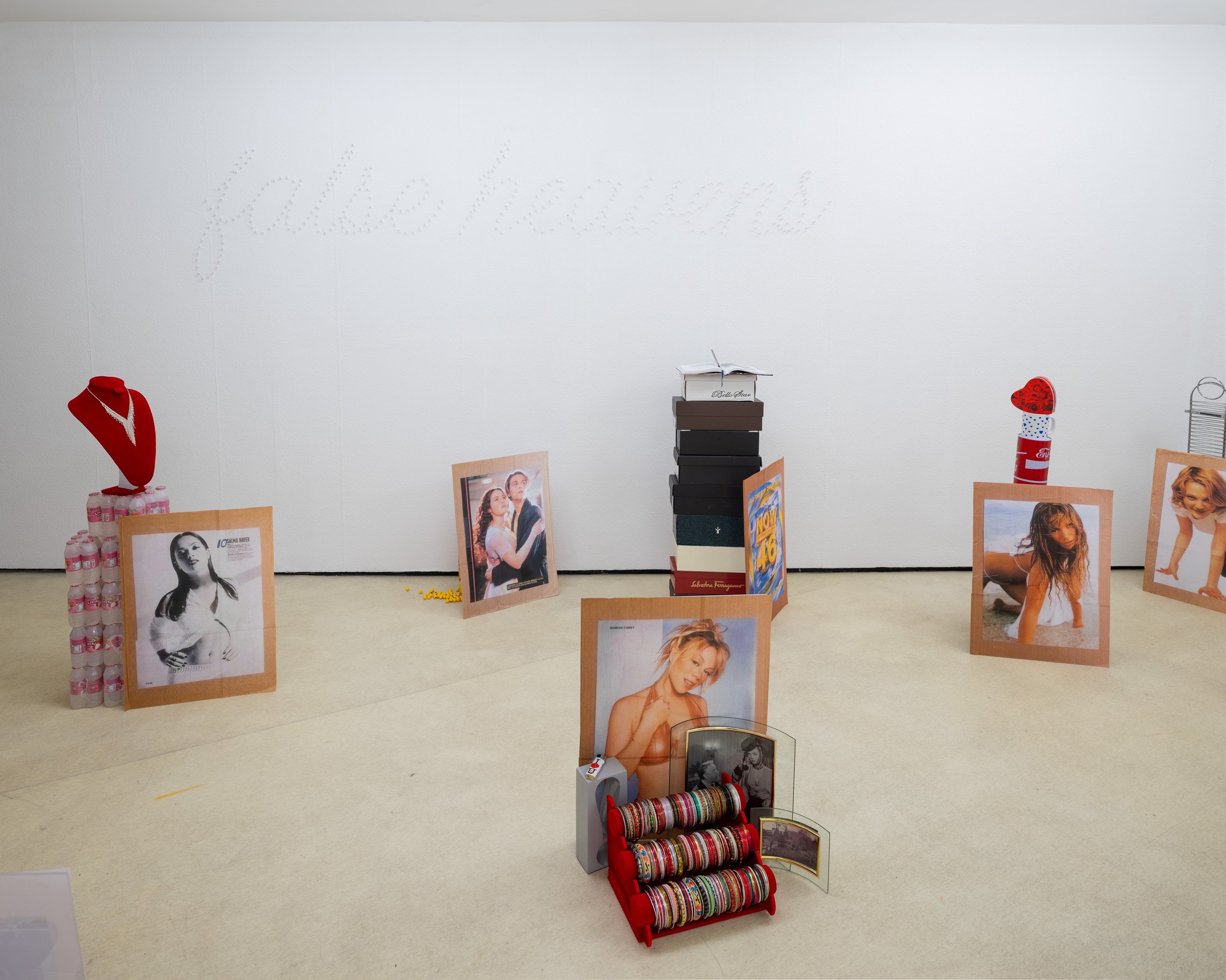
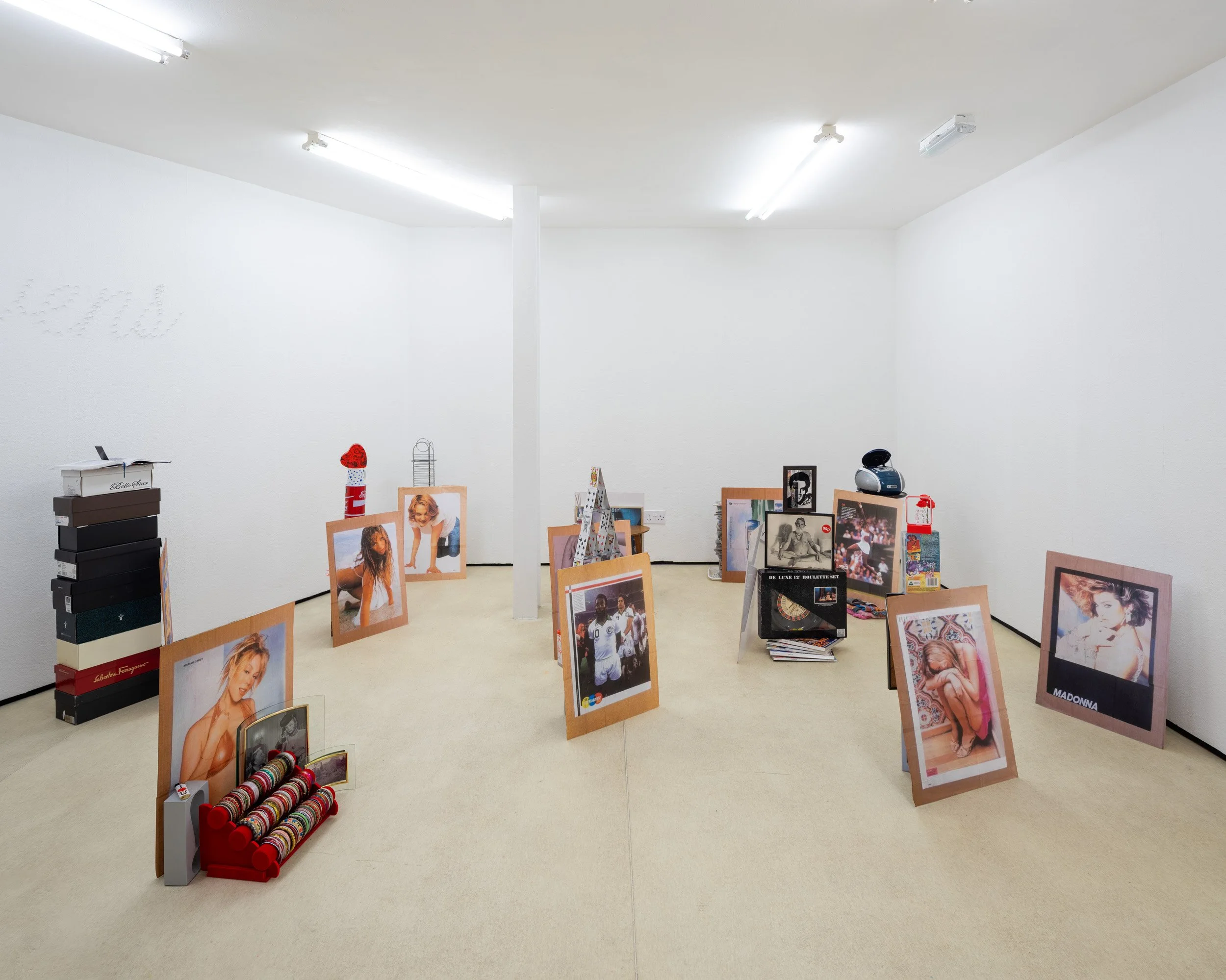
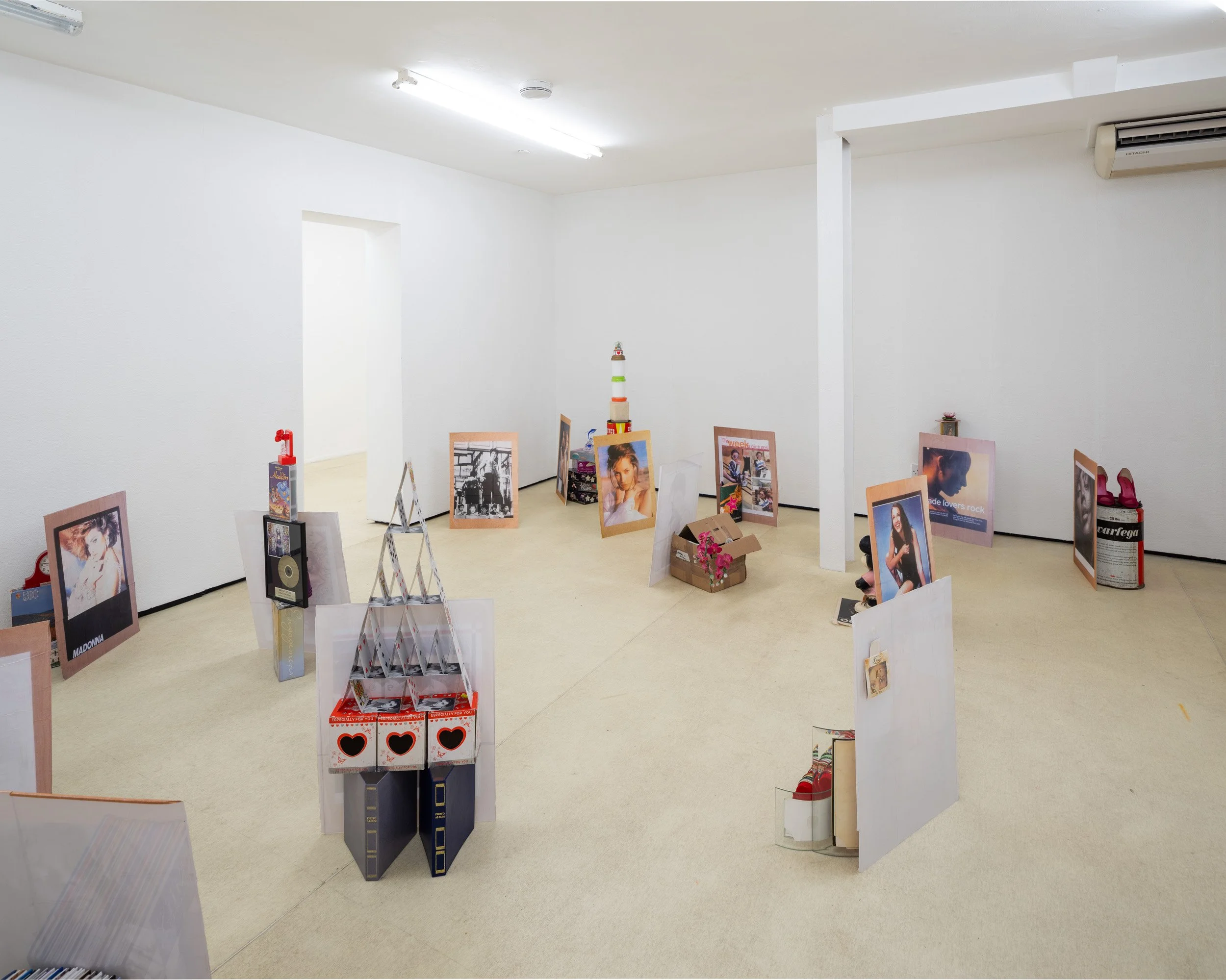
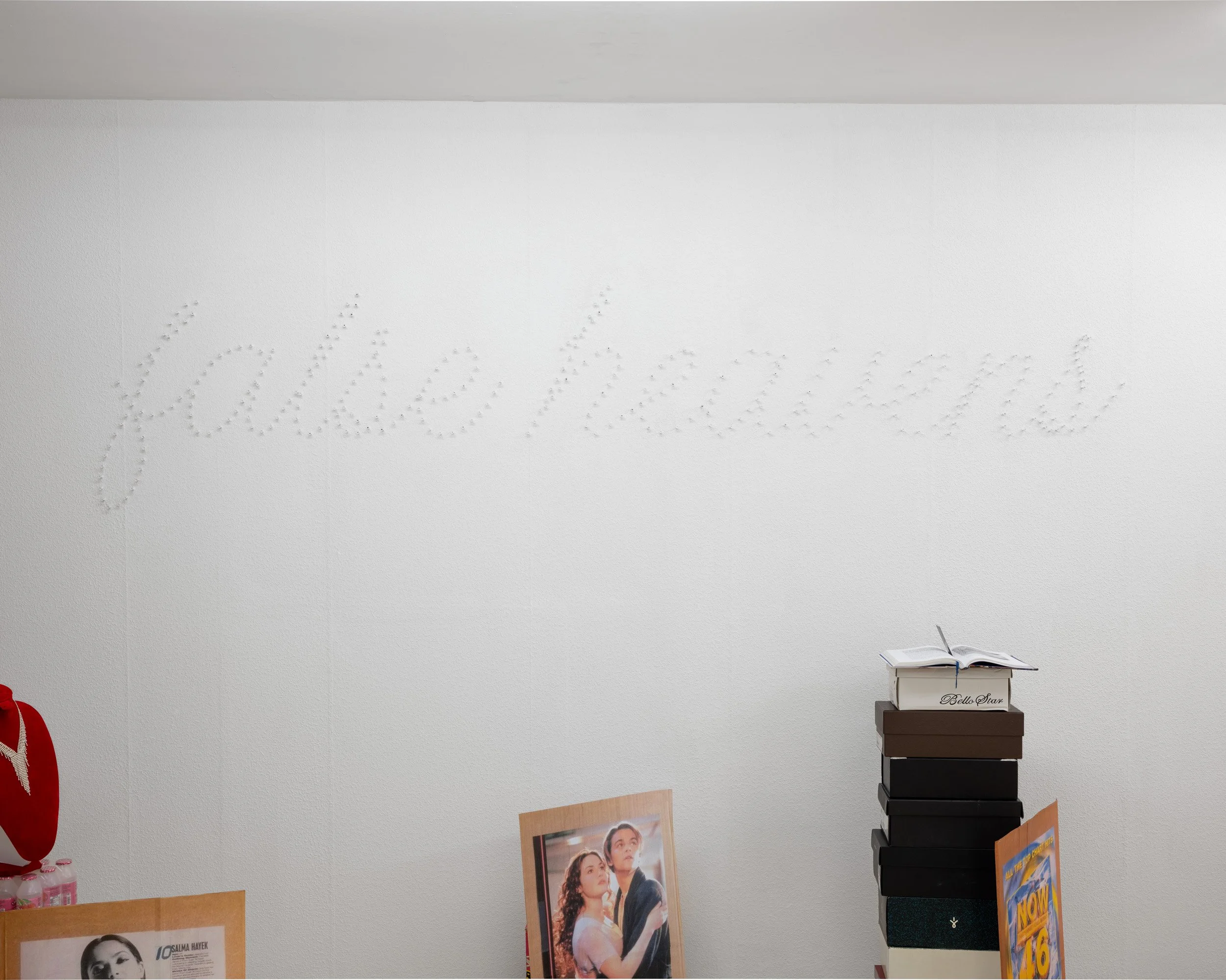
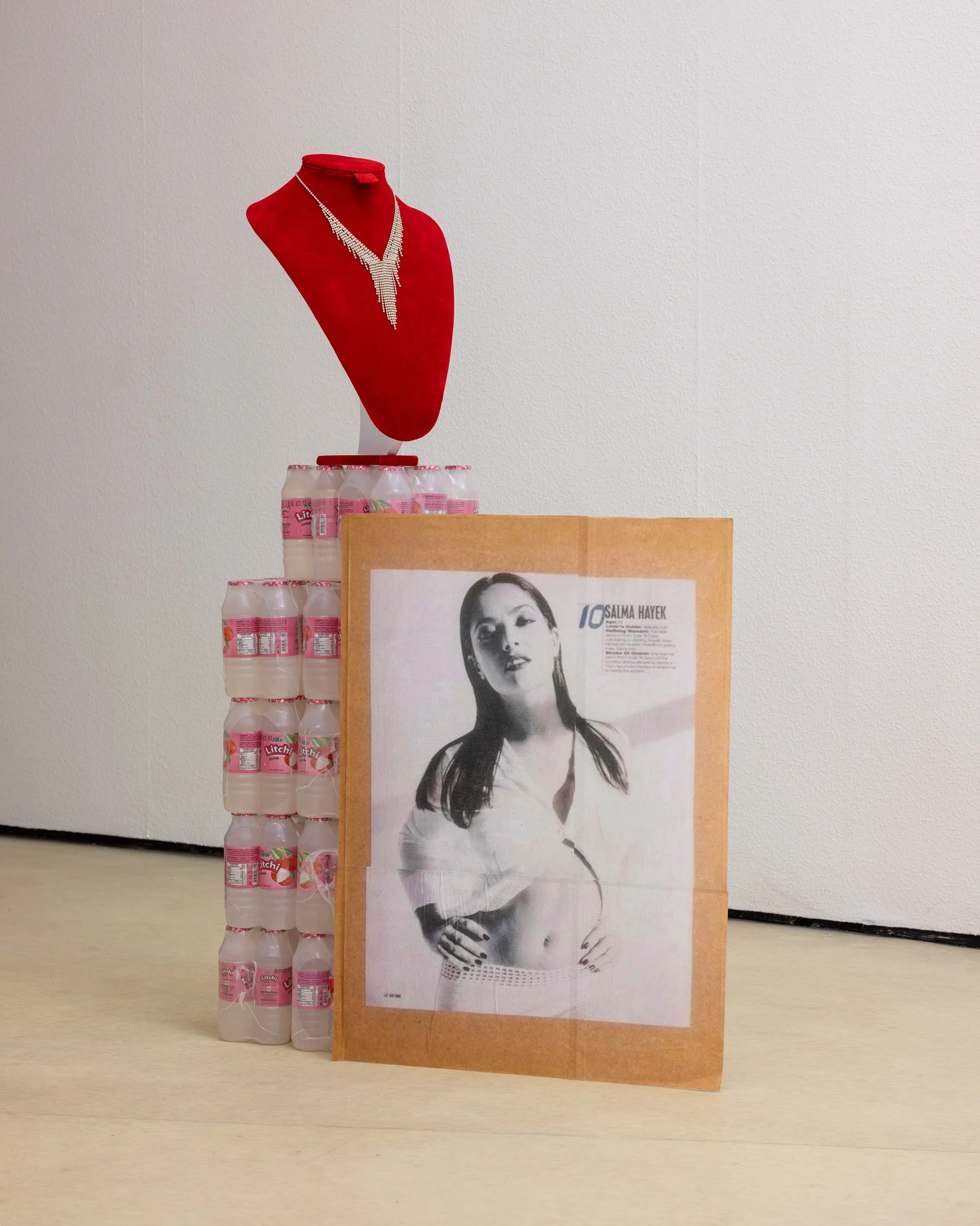
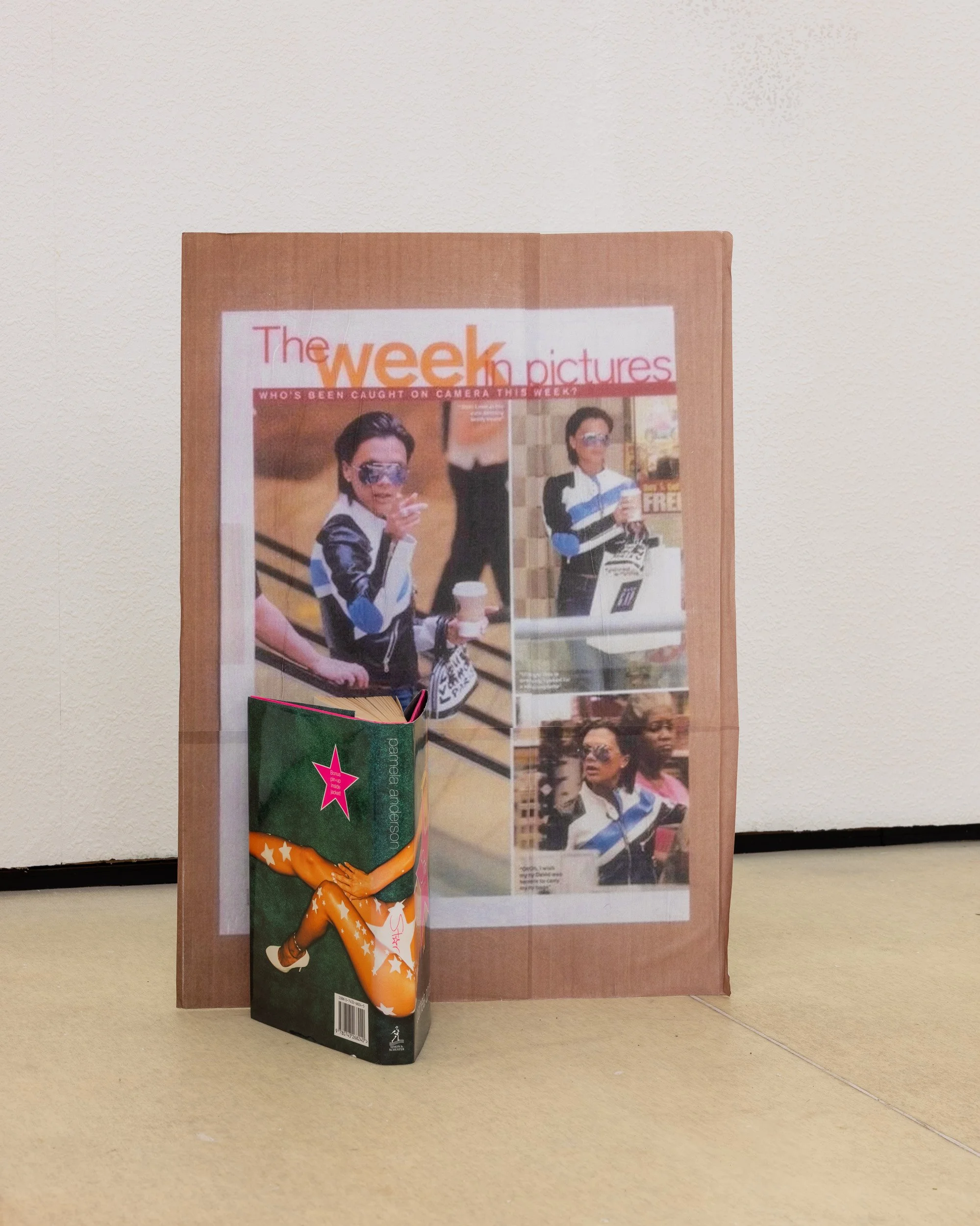
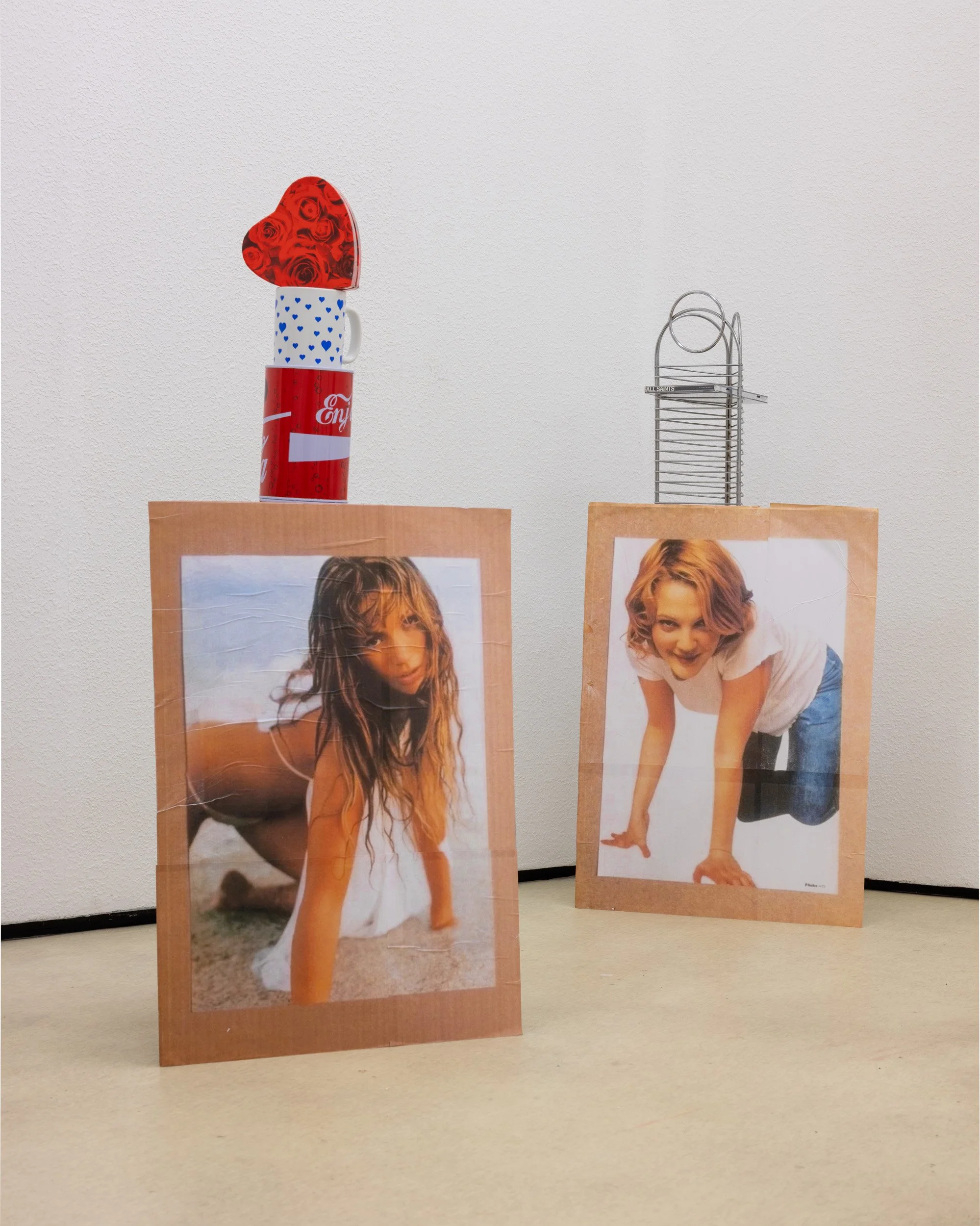
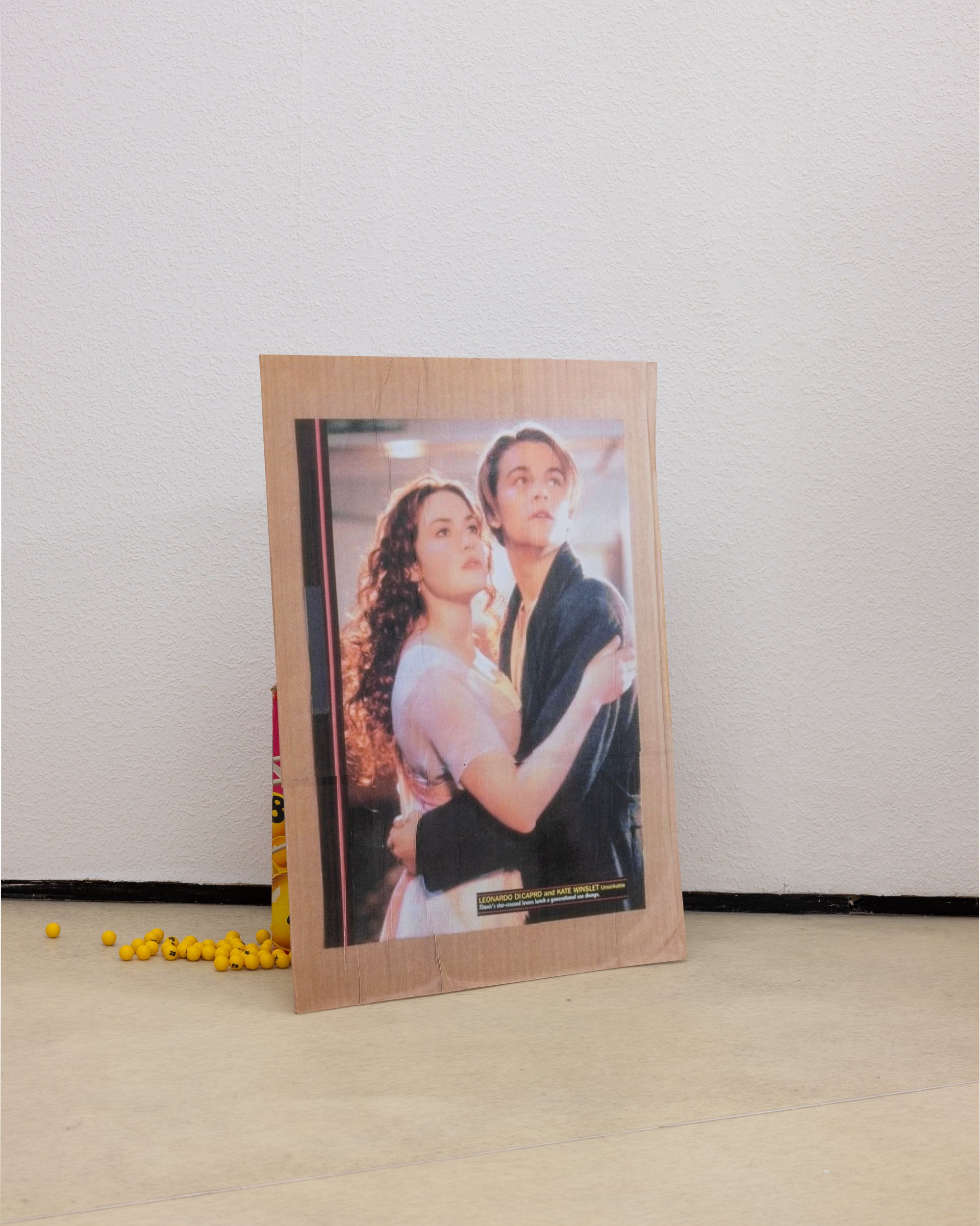
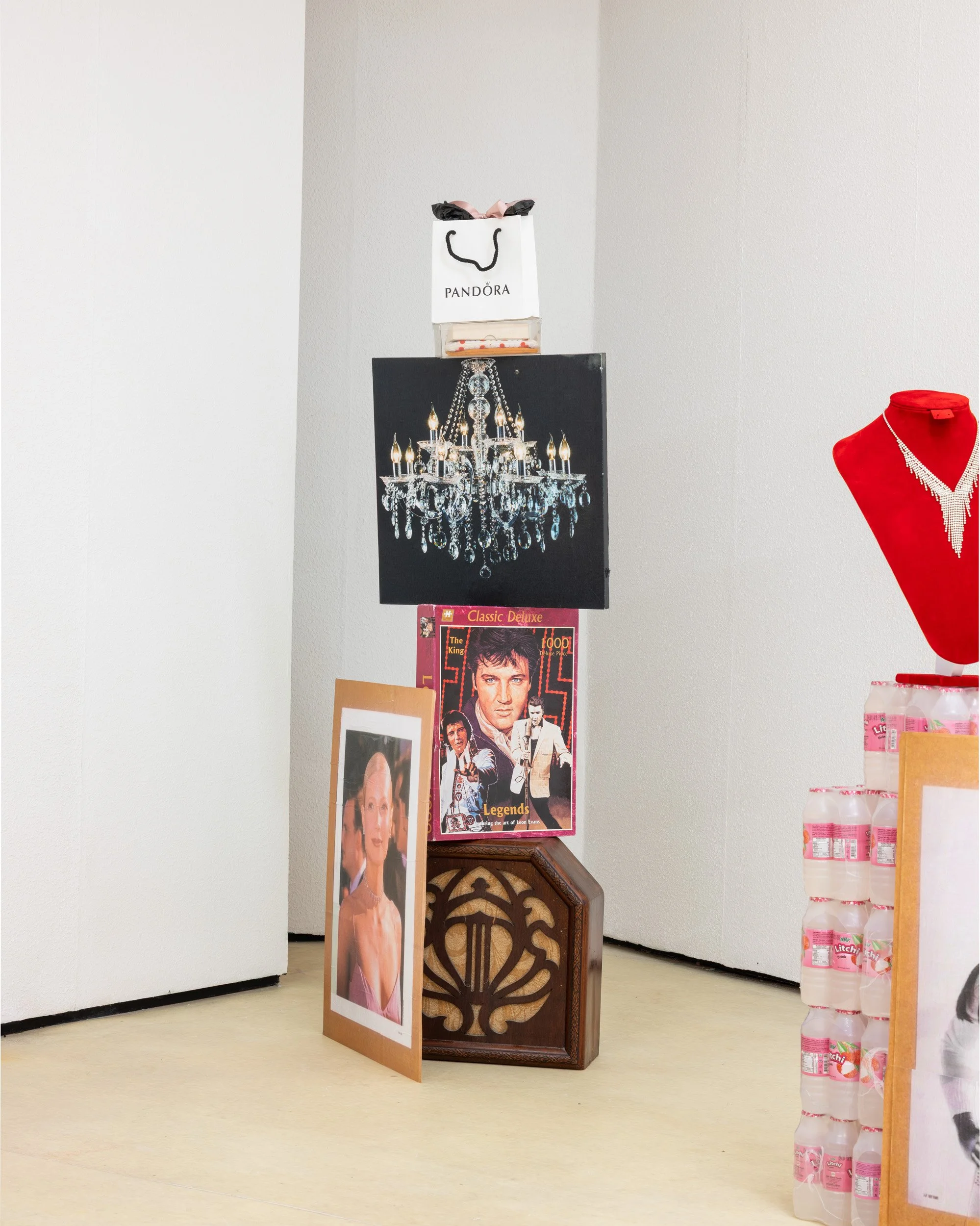
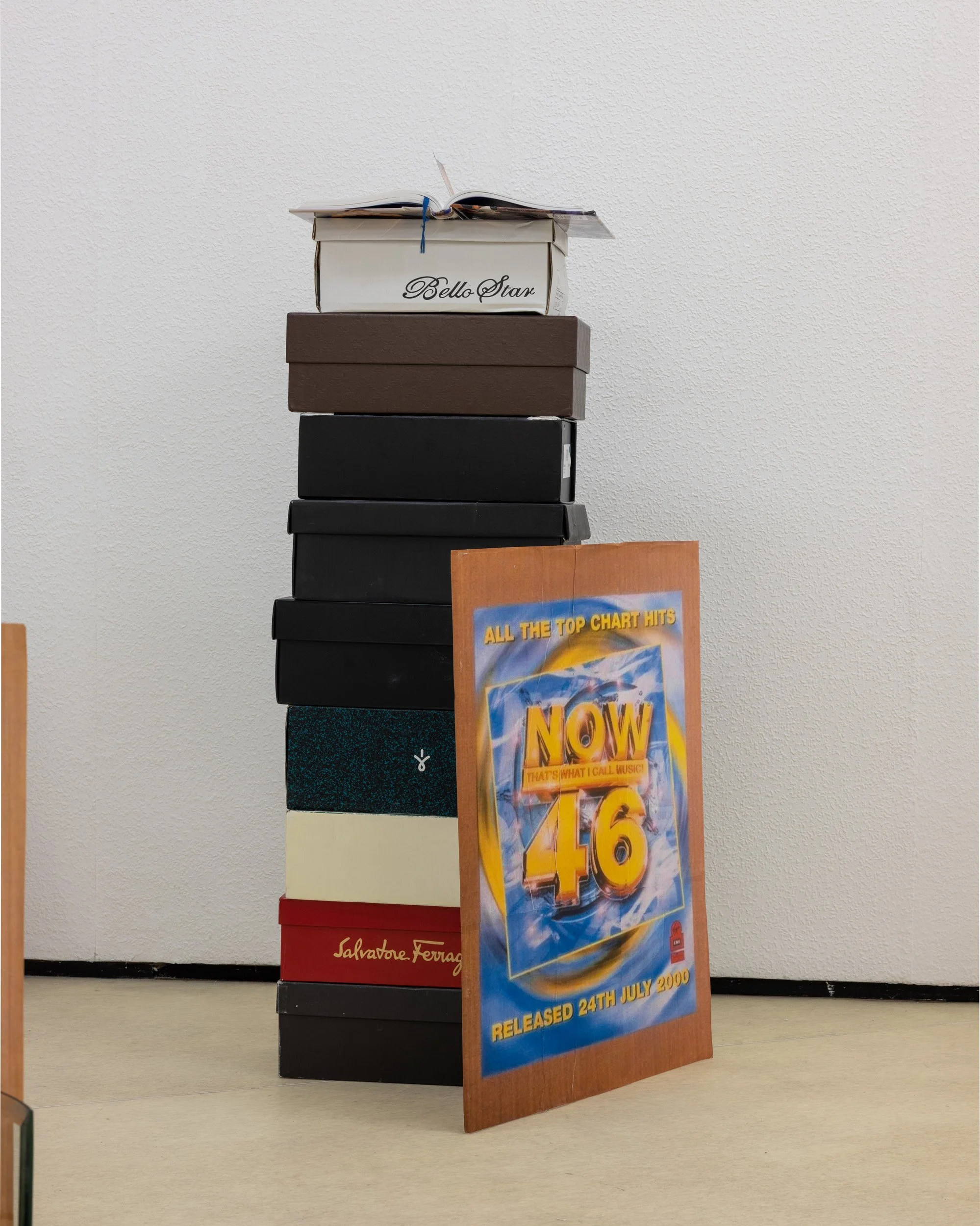
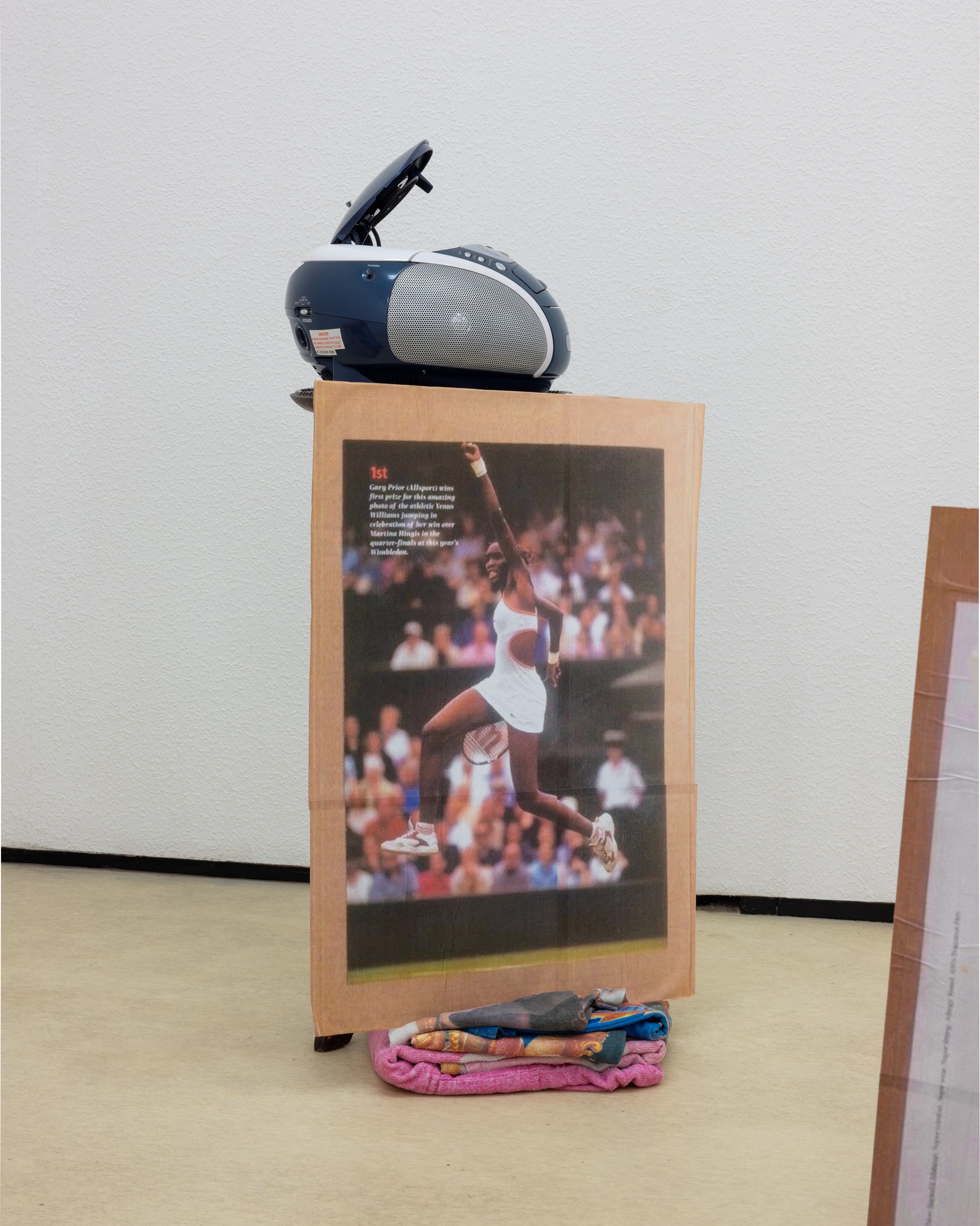
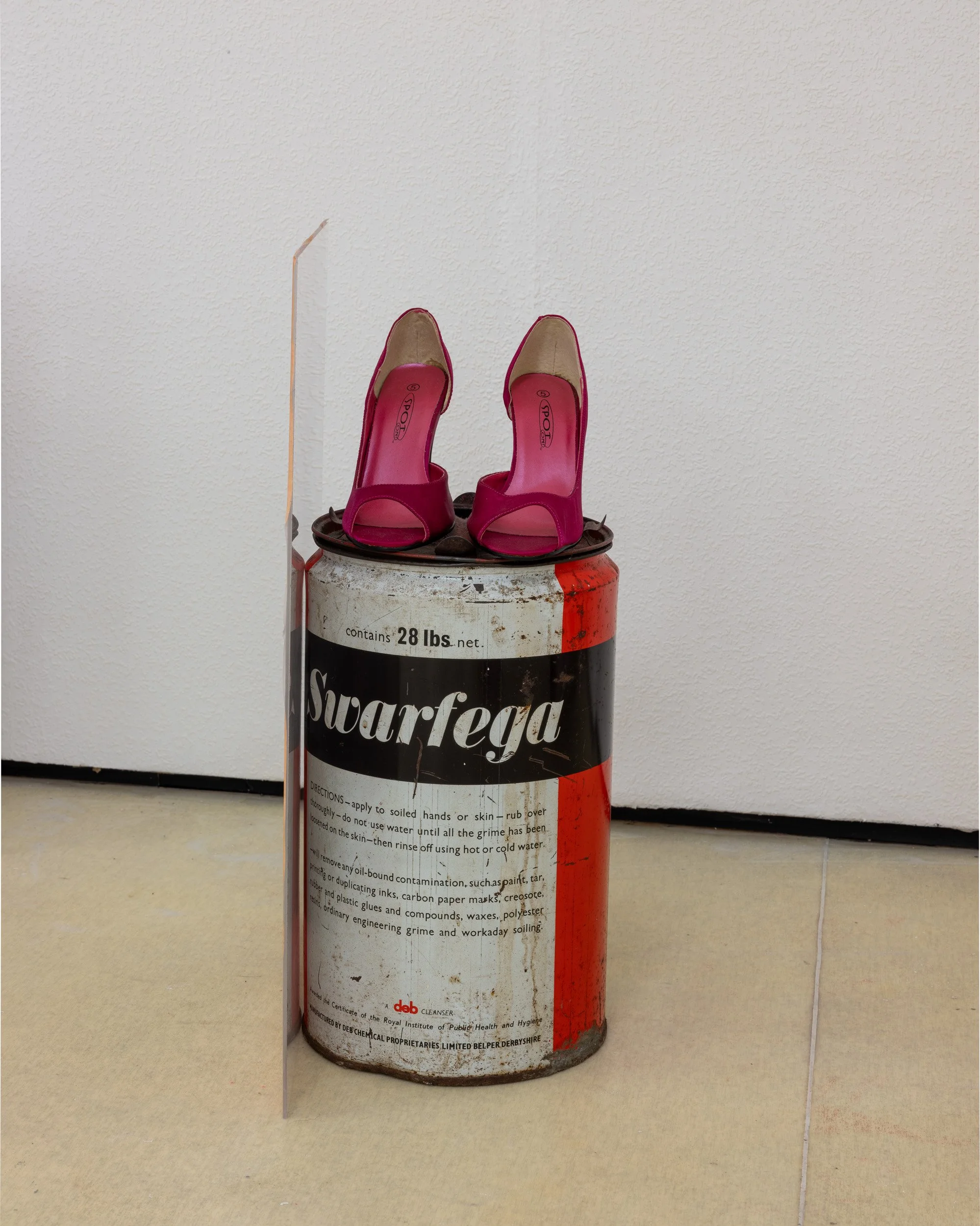
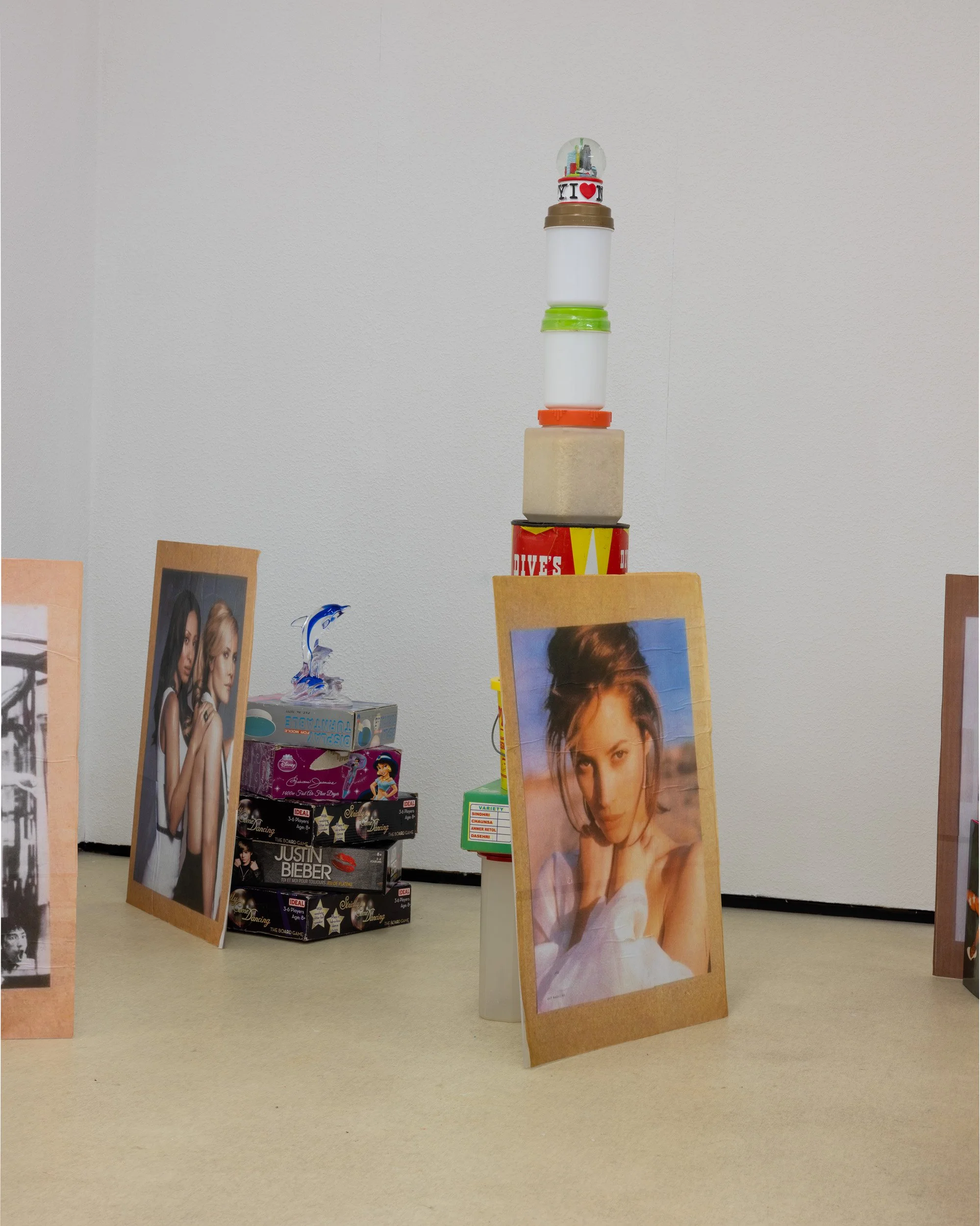
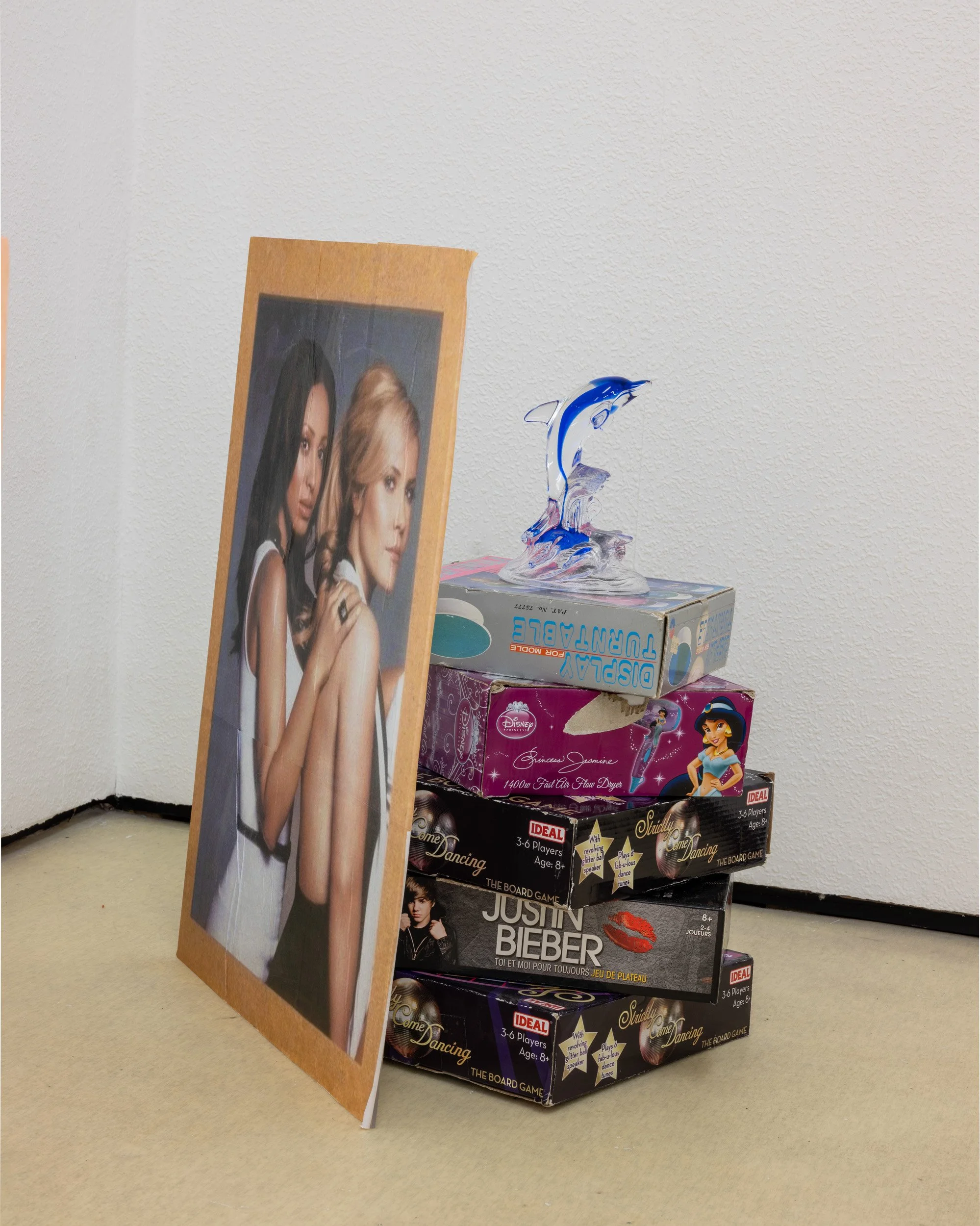
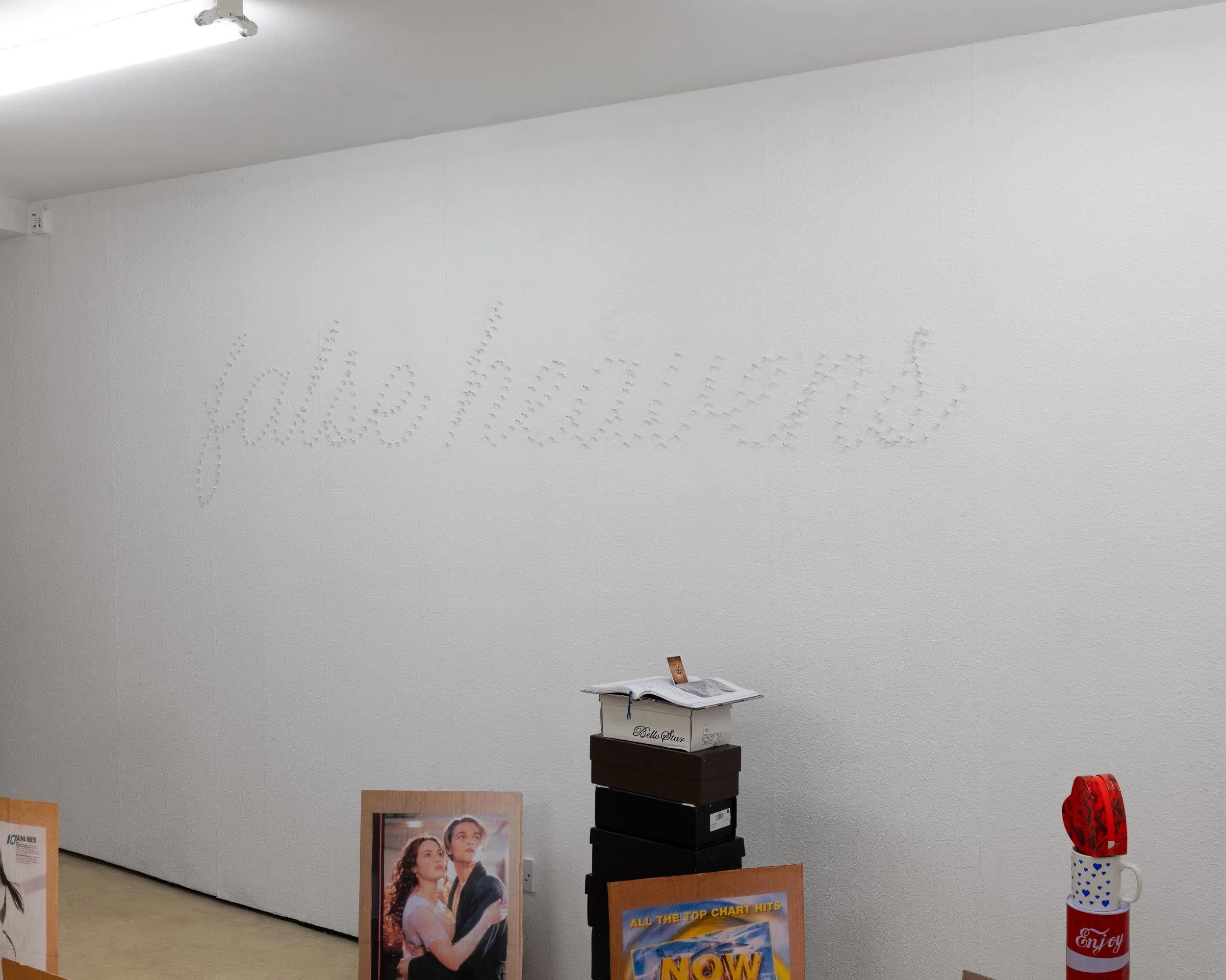
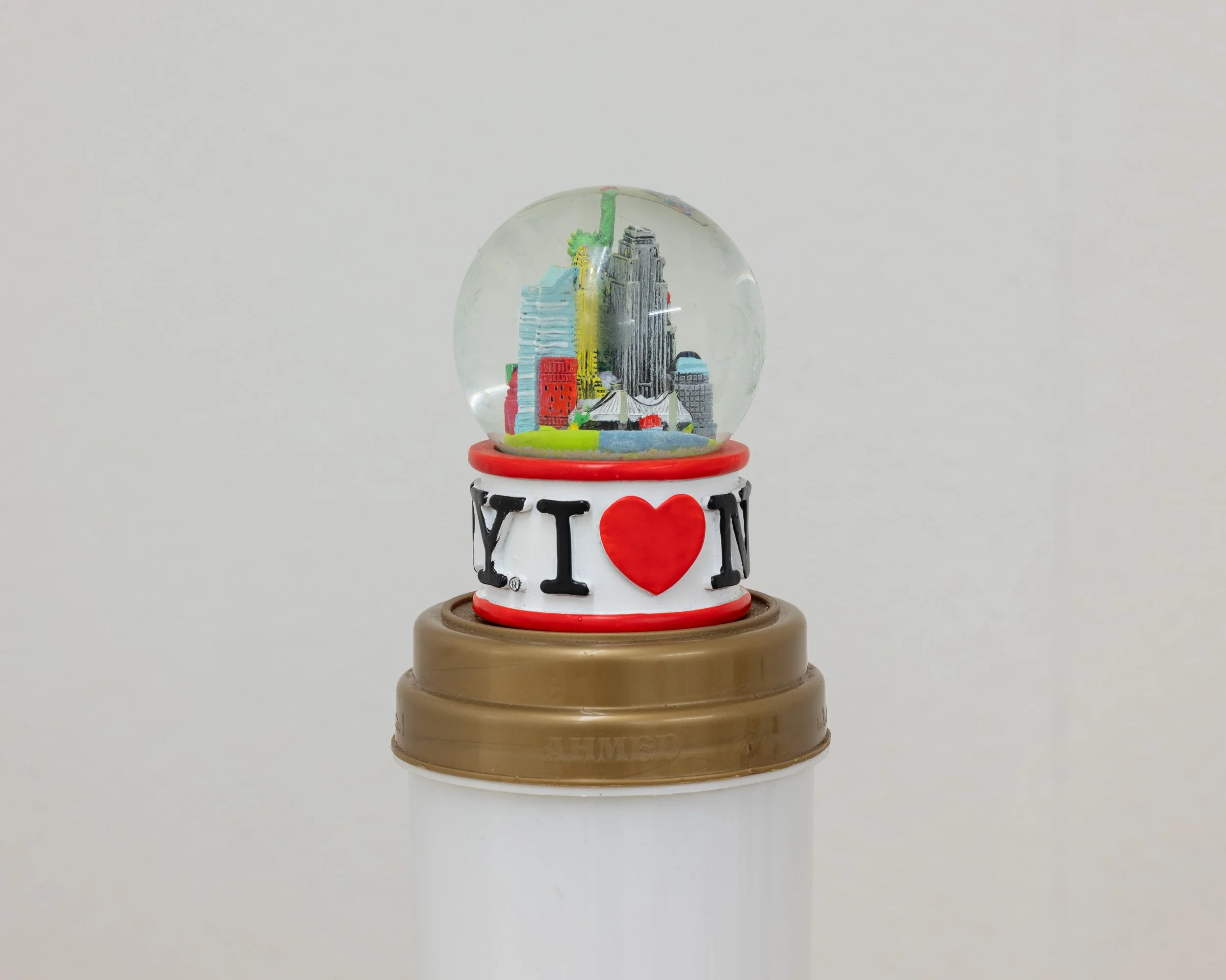
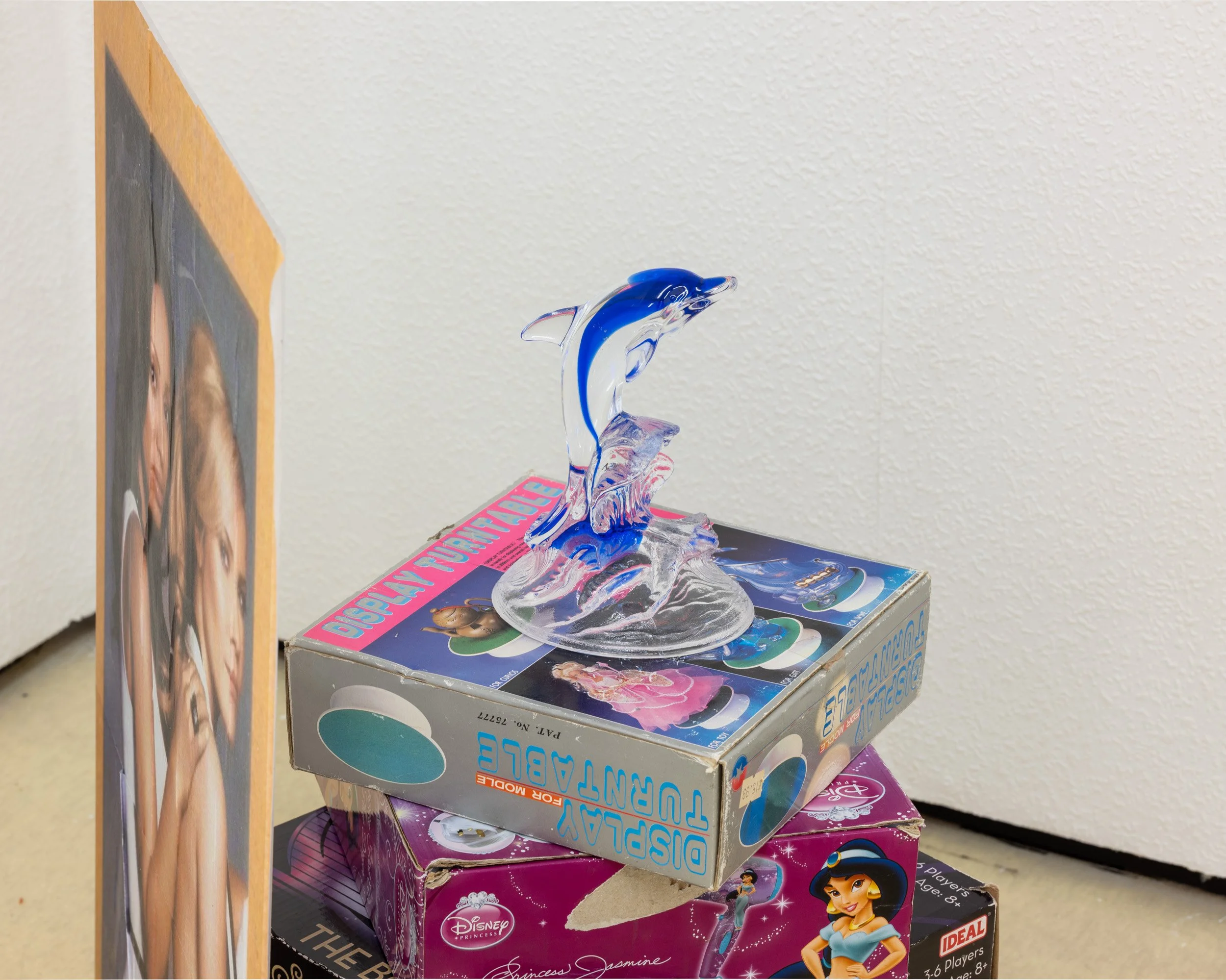
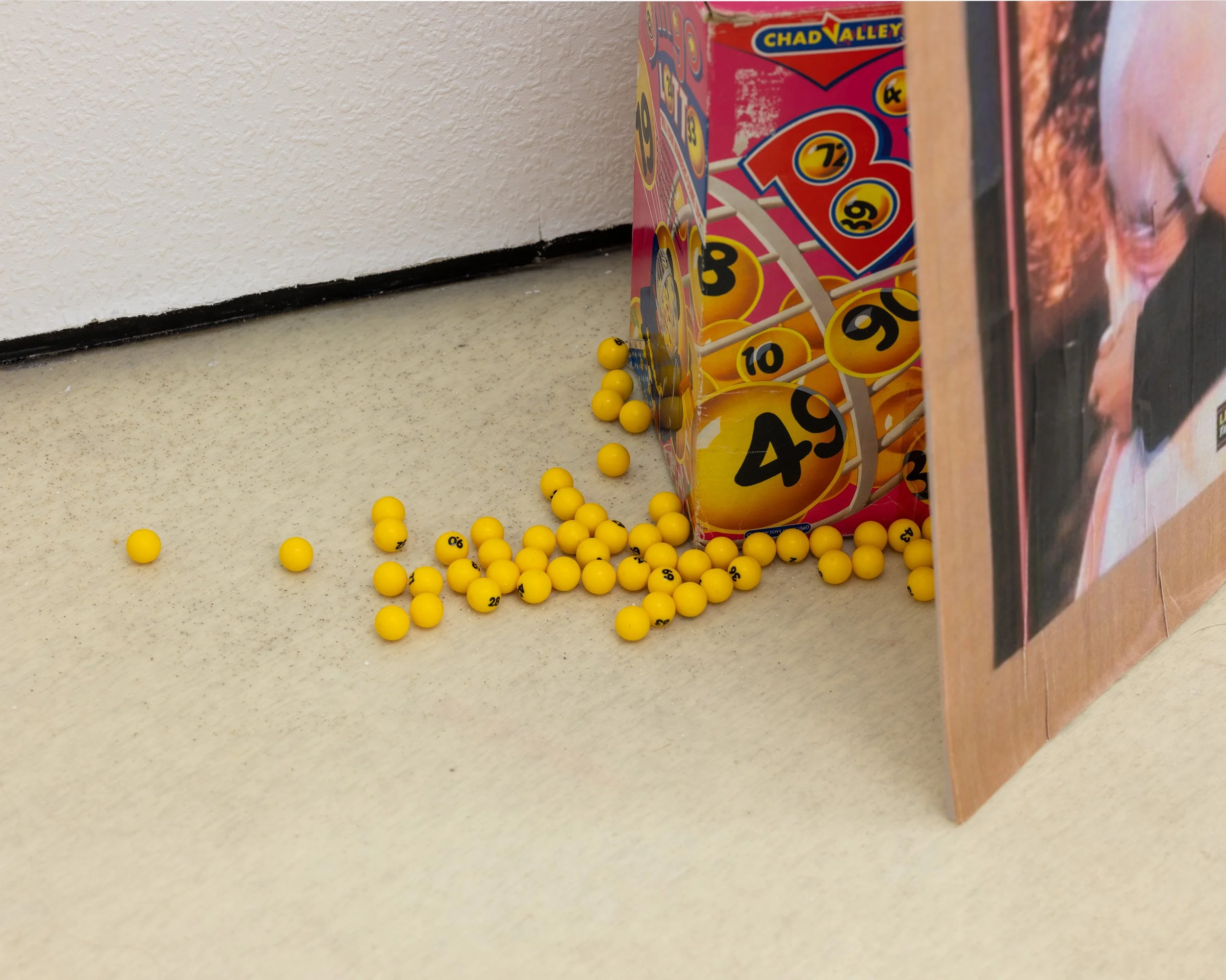
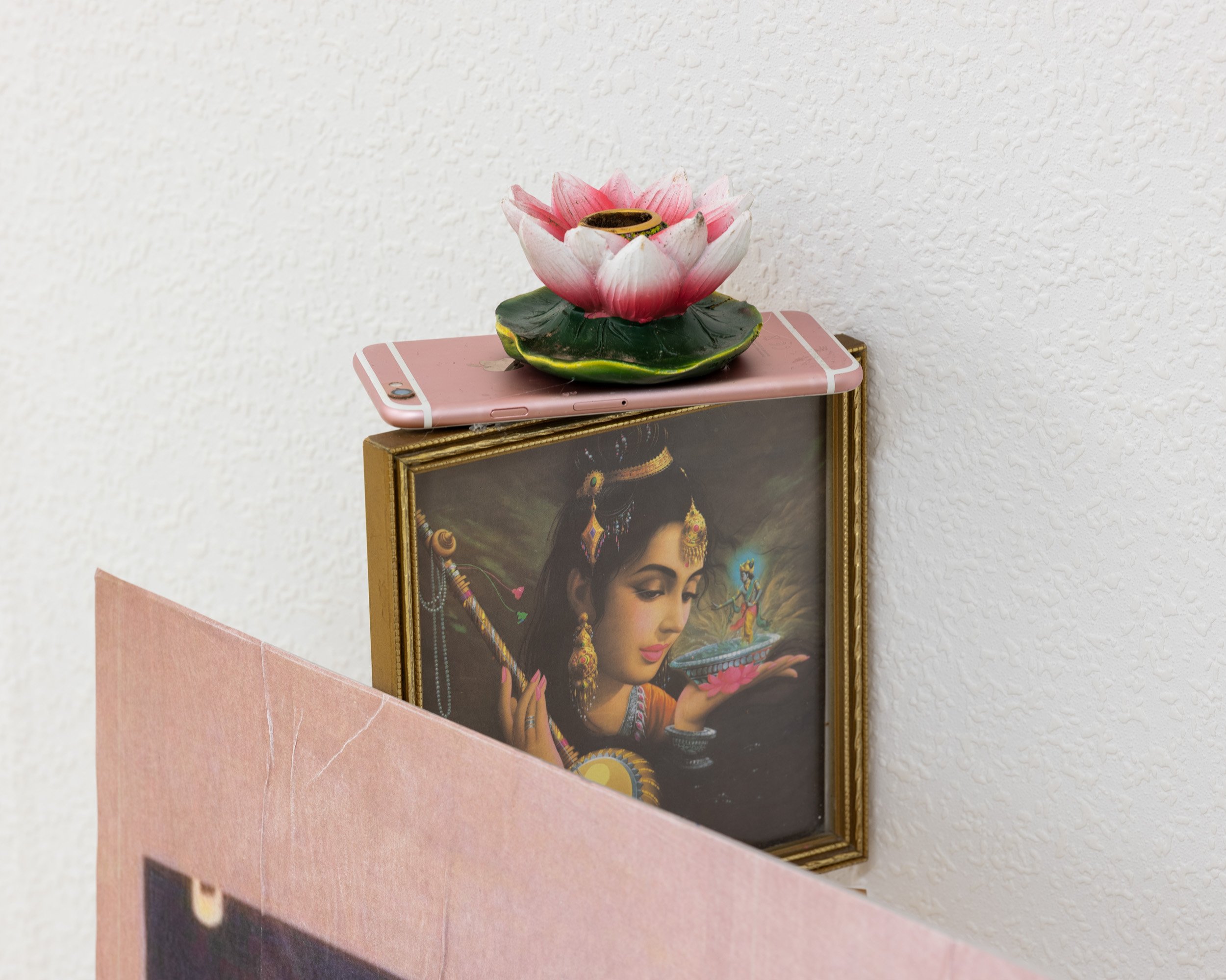
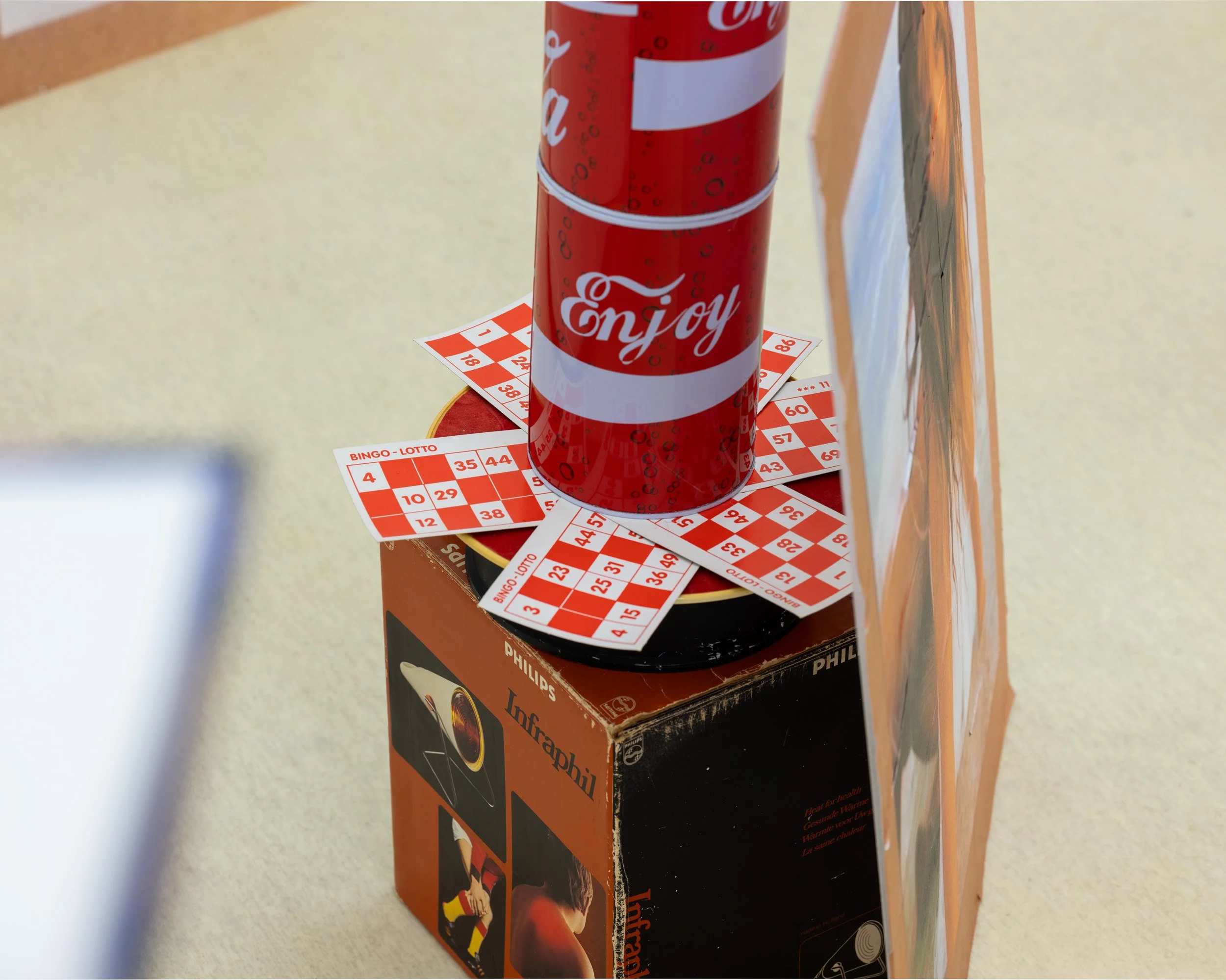
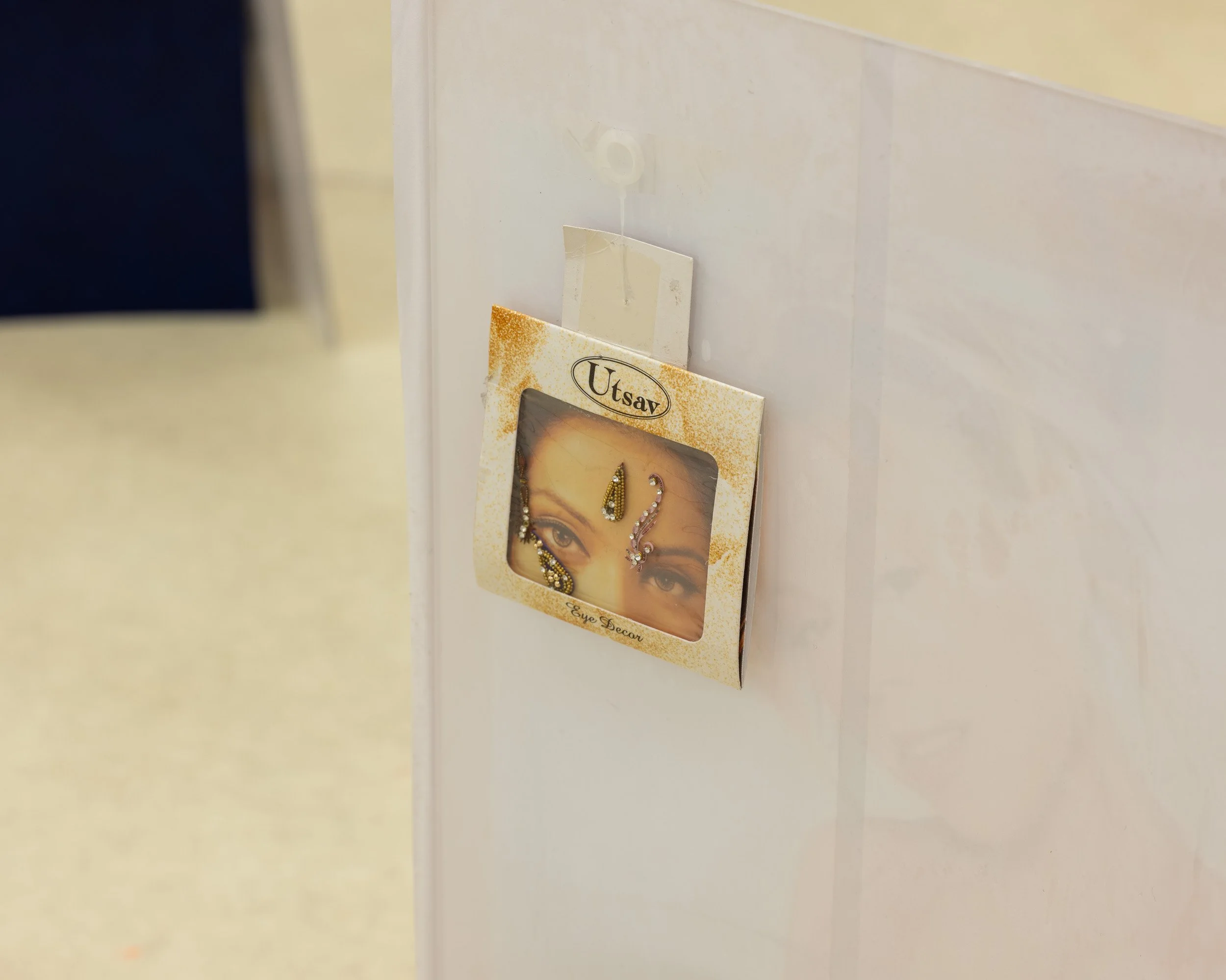
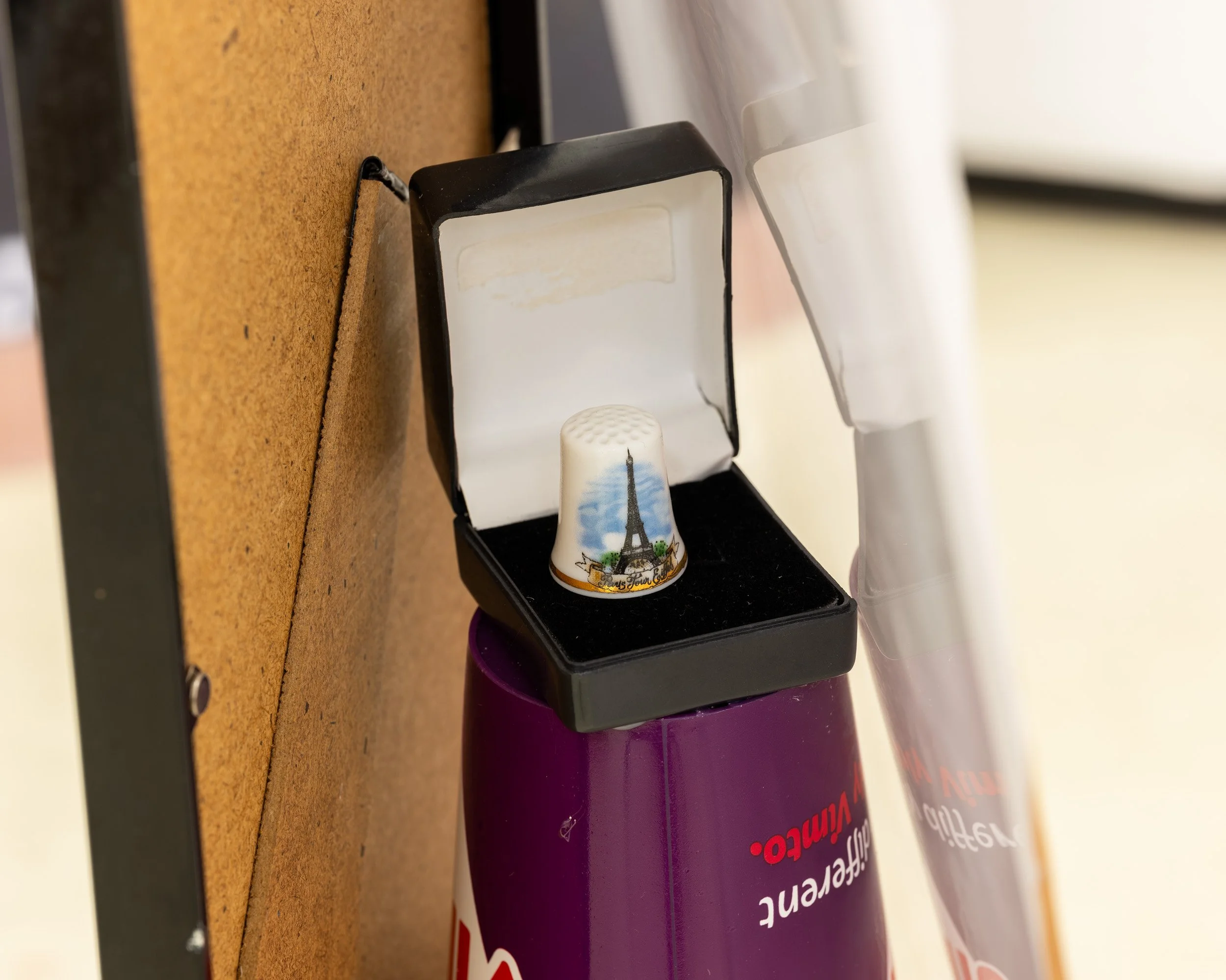
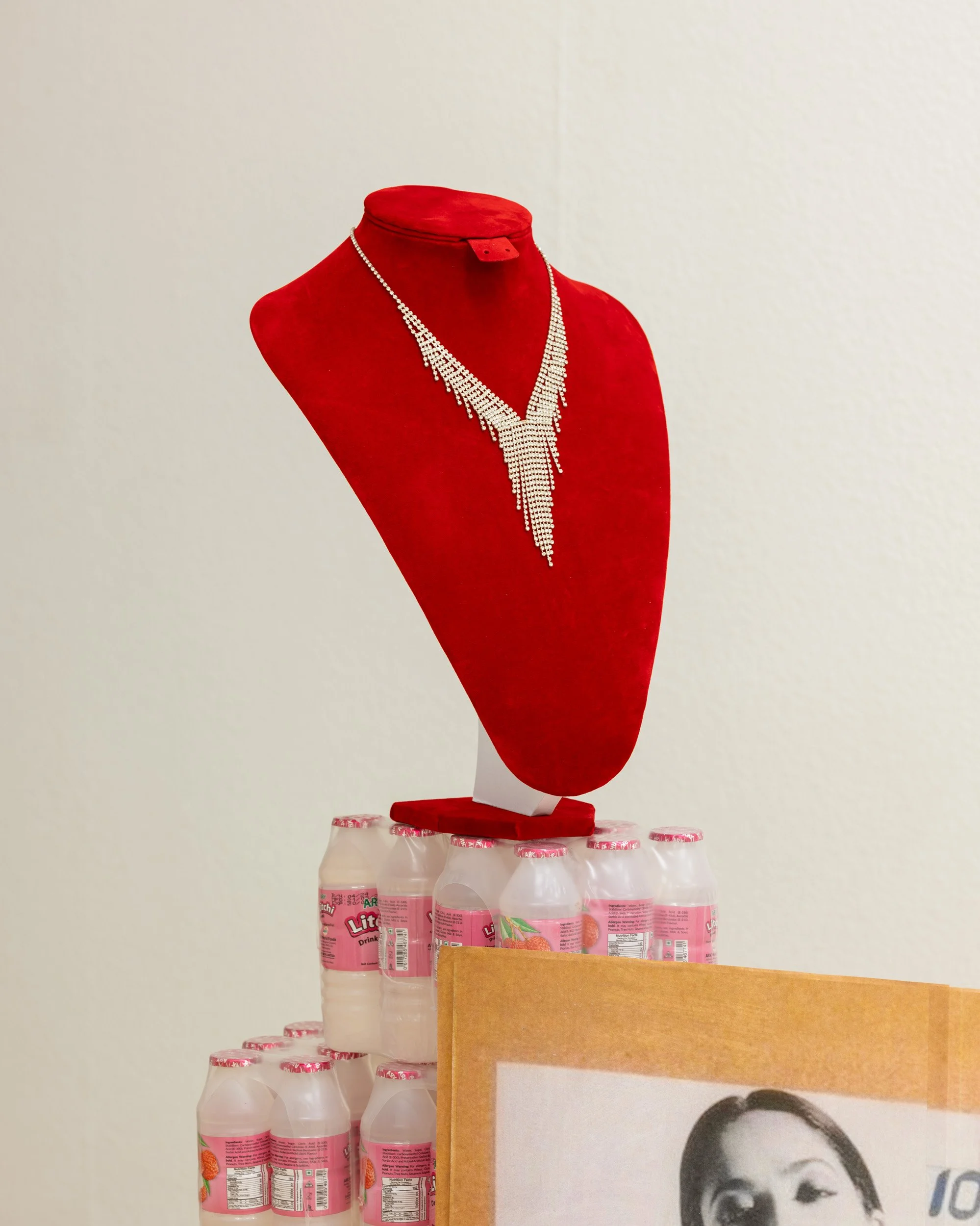
Across the floor are tiled, double-sided images on thin wooden boards, leaning angularly on open water bottles, stacks of carefully balanced items, and sculptures. Each assemblage feels fragile, risky, alive the images depend entirely on these unstable supports for their balance, as if caught in a moment between collapse and animation.
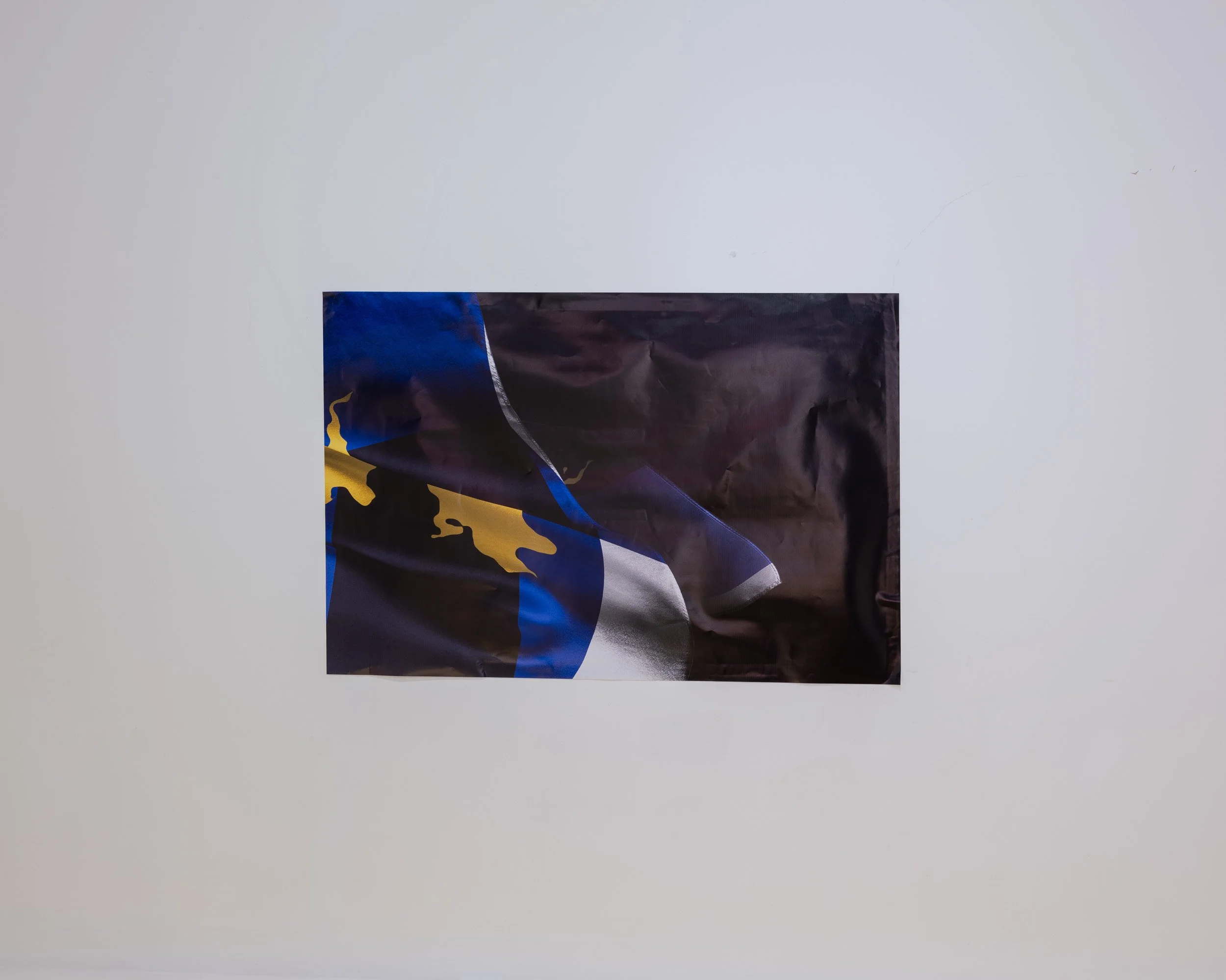
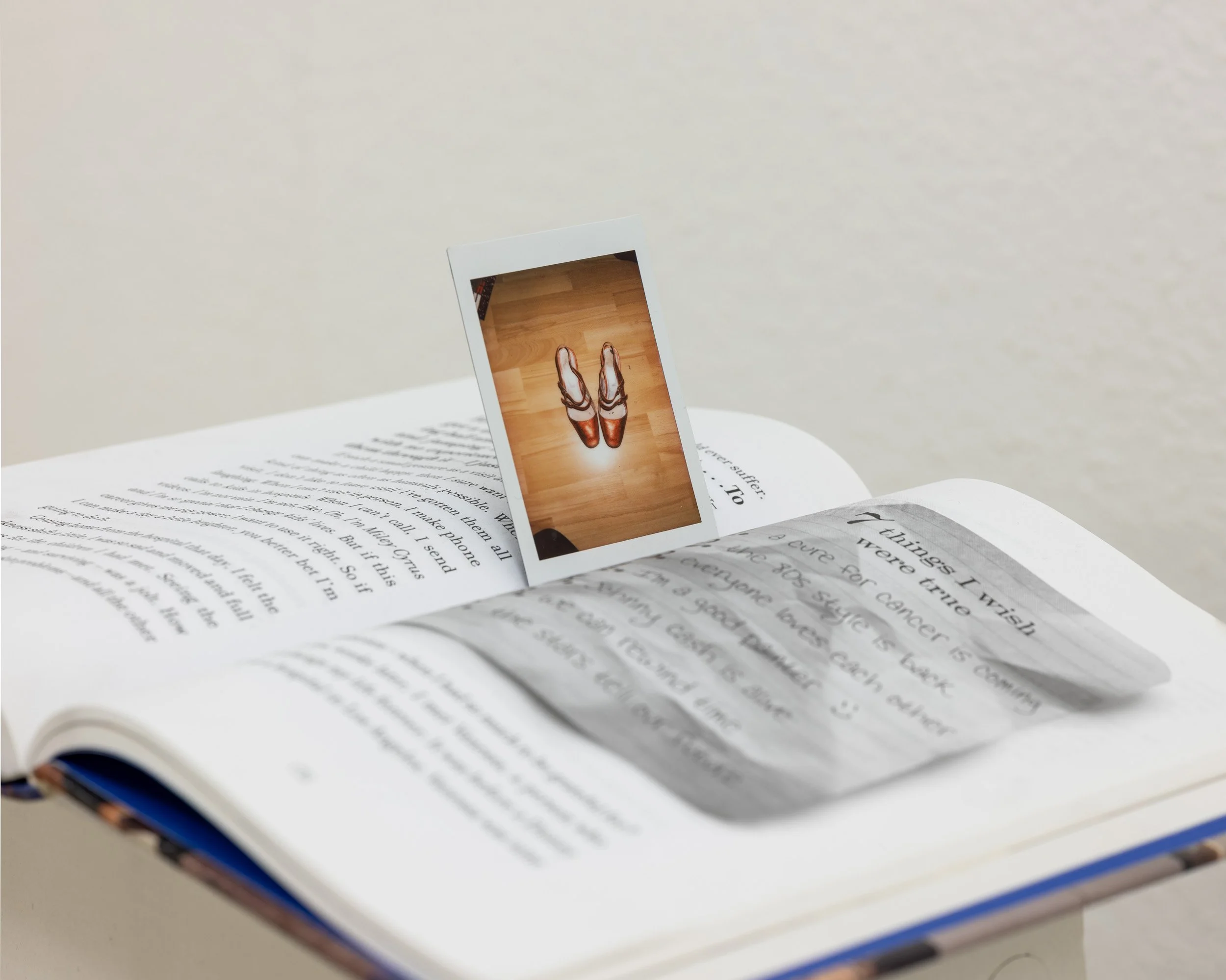
The works depict a series of found photos from a UK based eBay seller (peteburto-0) with an archive of magazine clippings, we appropriate his images for our gain. The soft focus, bad quality and essentially mid photographer skills all allude to current aesthetics popular within the art world; like that what we play with- the ‘found’ and the ‘curated accidental’. His collection spans across the ‘Cool Britannia’ era and into the naughties. The obsession with celebrity meets the British Pride, these were once pop images, now through this sellers photos, uploading them, us downloading them and then resizing and printing, the images (and what they symbolise) wash out, blur and appear less clear. These time capsules have felt the shift in time and context.
These images also resemble The West, the market/economy, and projections and how much has shifted and revealed itself over the past thirty years. What are these fragile sculptures, disjointed and random, that prop up these pillars of the west? How were they convinced to do the heavy lifting, and how much longer till they give in?
Glasses half full, bottles half empty. The installation acts in itself as a secret performance once being seen. As the viewers awkwardly dance around the work, avoiding knocking any over, they are faced with the absurdity of the role of the gallery and our relation to how we act in it. Despite the political based concepts for this idea, we also engage with humour. As the shuffle around the space continues, perhaps one of the images tumbles, its base knocking liquid across the floor. The liquid bleeds into the images, the scars become a part of the work, perhaps the final touch. The falling dominos, the falling from grace, and one day, the fall of the west.
Artists Bio
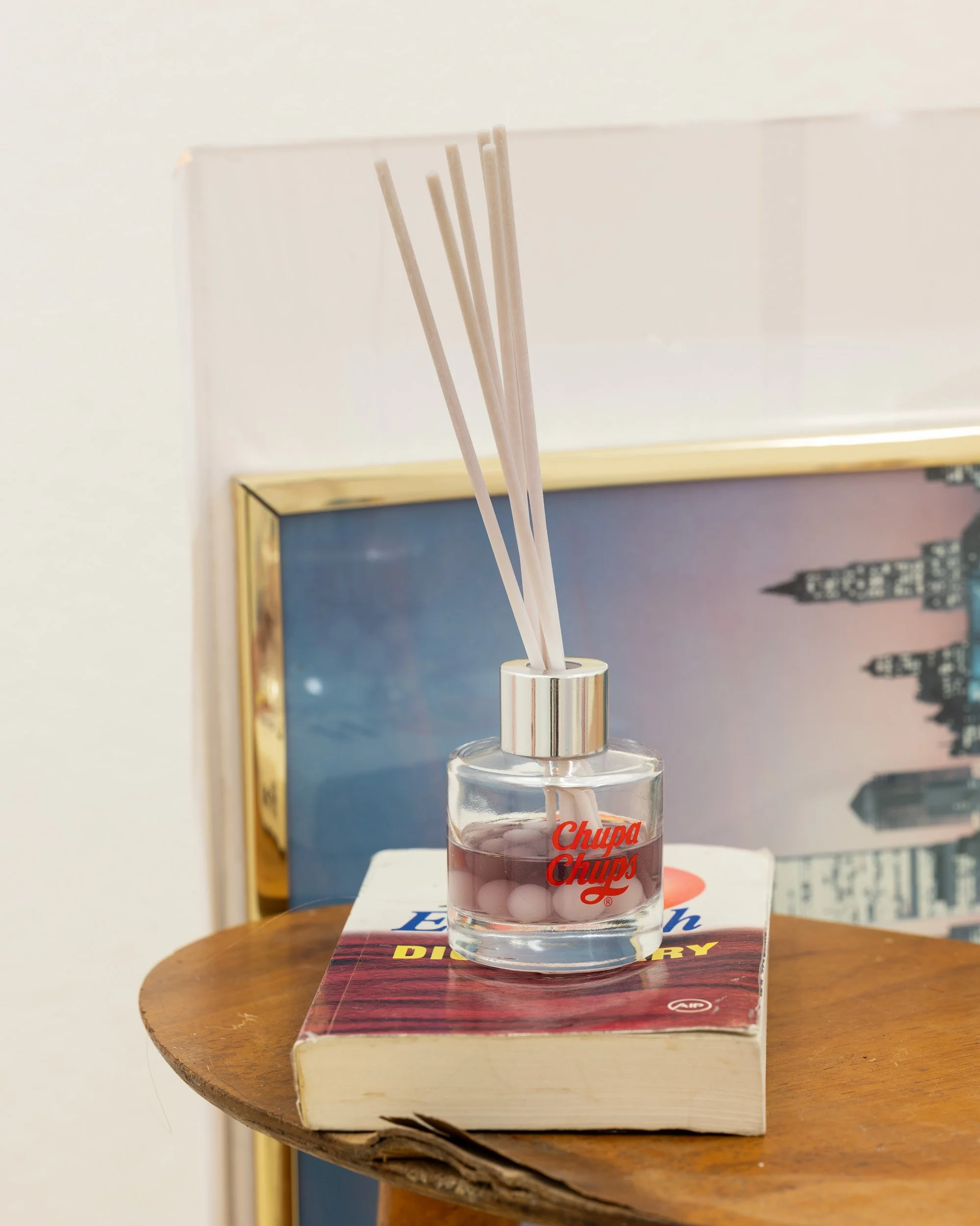
Athen Kardashian & Nina Mhach Durban (both b. 2000) are a British-Asian artist duo based in London. Their collaborative practice is founded upon an open & ongoing dialogue examining their shared experience of being raised in London by Indian mothers. Stories, food, clothes & objects passed from person to person, across houses, hands & borders, find a home in their work. The feminine diaspora & its link to world building is something the duo dissect, creating environments that reference the domestic & acknowledge but alter the gallery space & its atmosphere. A recurring question raised by their practice remains; what is sacred? Religious deities & pop icons of the modern world exist side by side, and the home-made & the glamorous encounter. Piracy, age, ownership, love & circumstance all take effect on the work’s materials resulting in an articulation of personal & marginalised histories.
Emmanuel Awuni
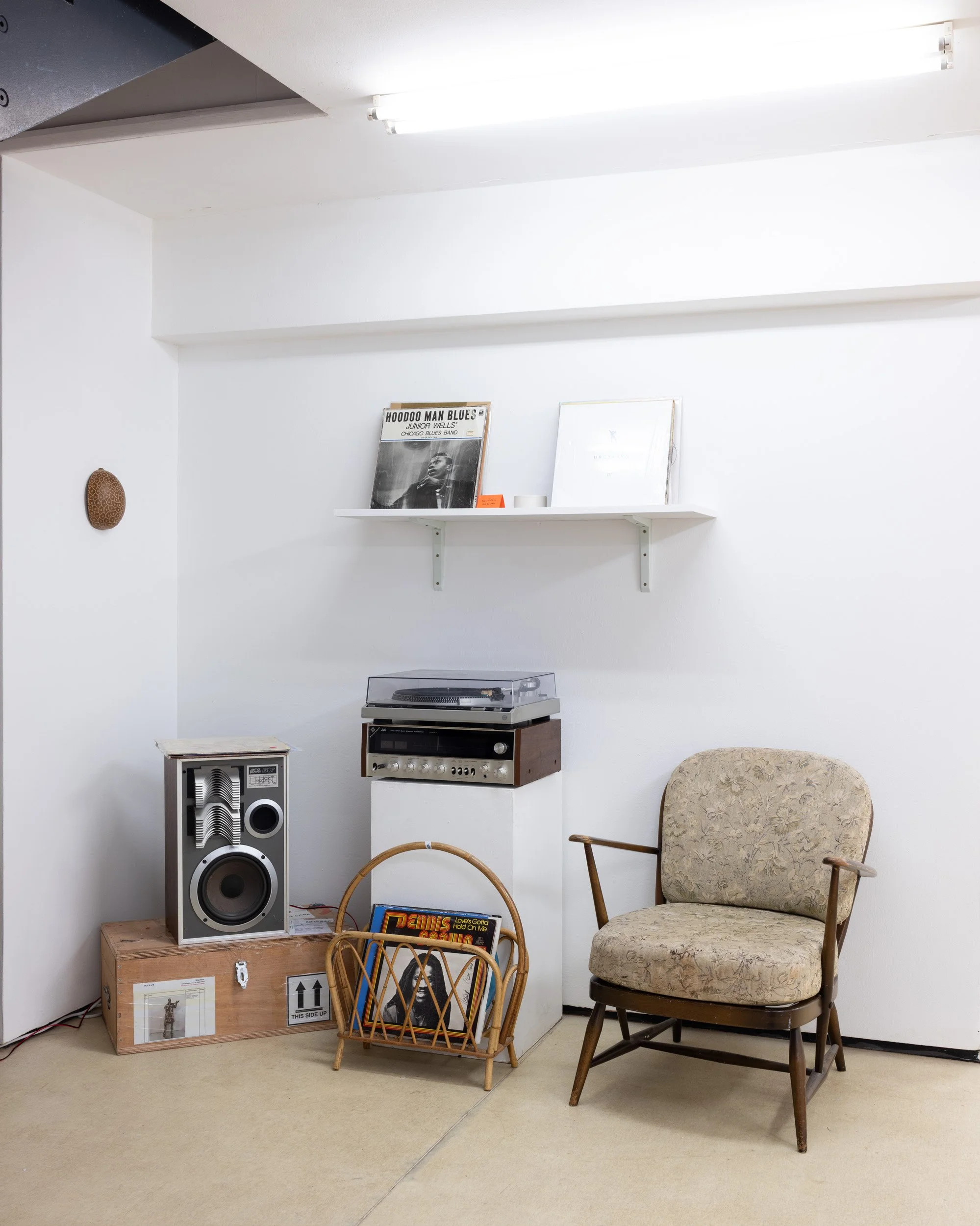
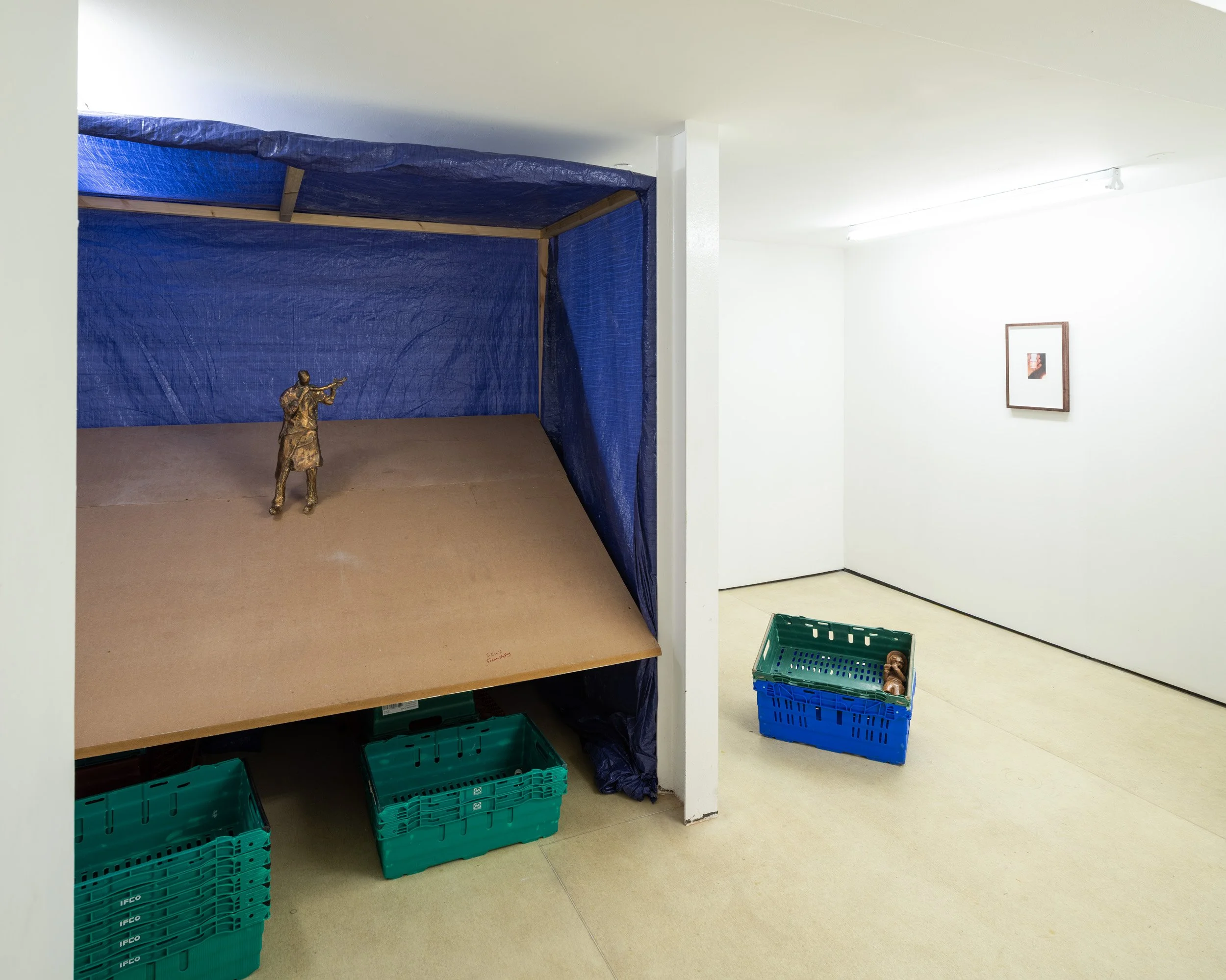
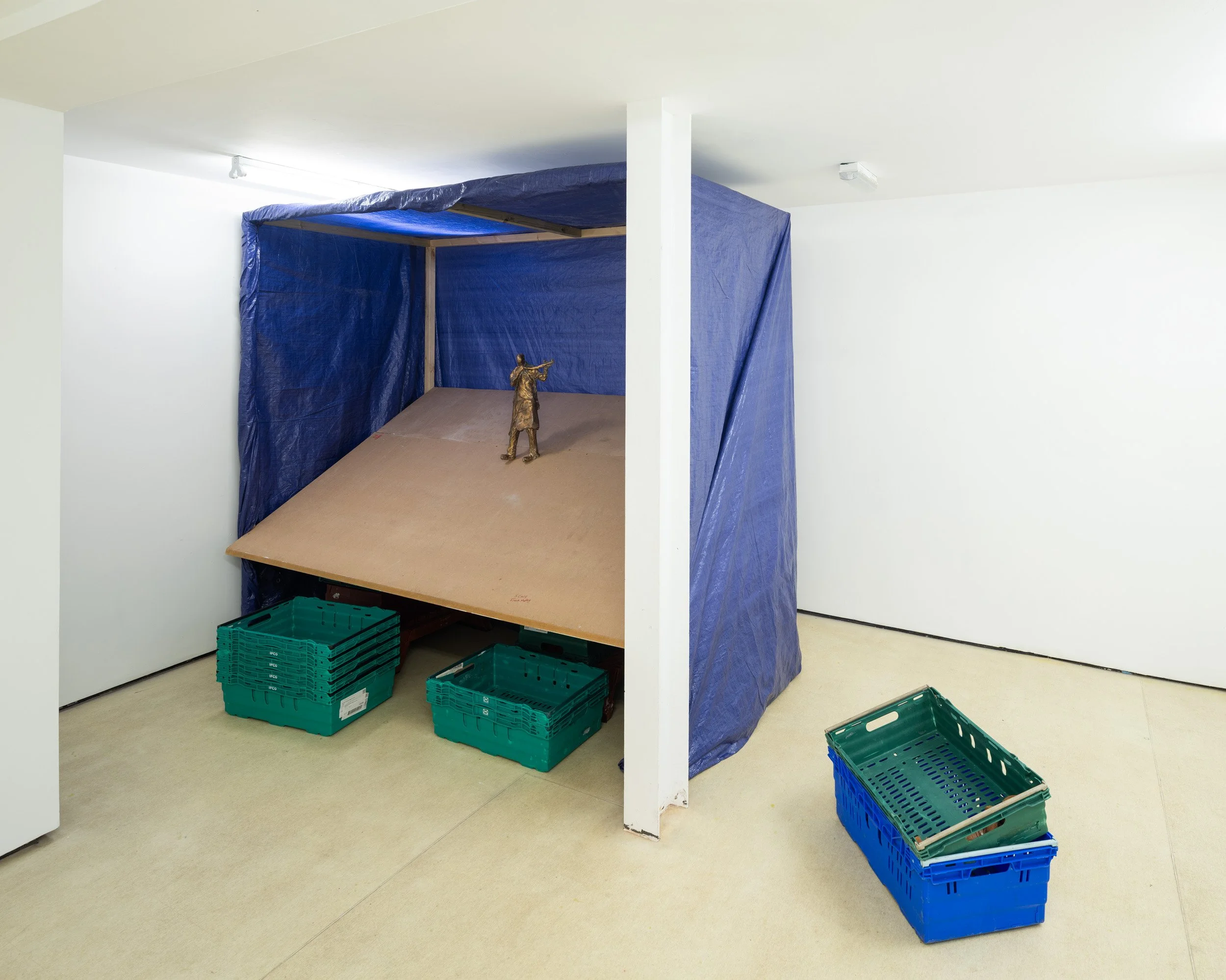
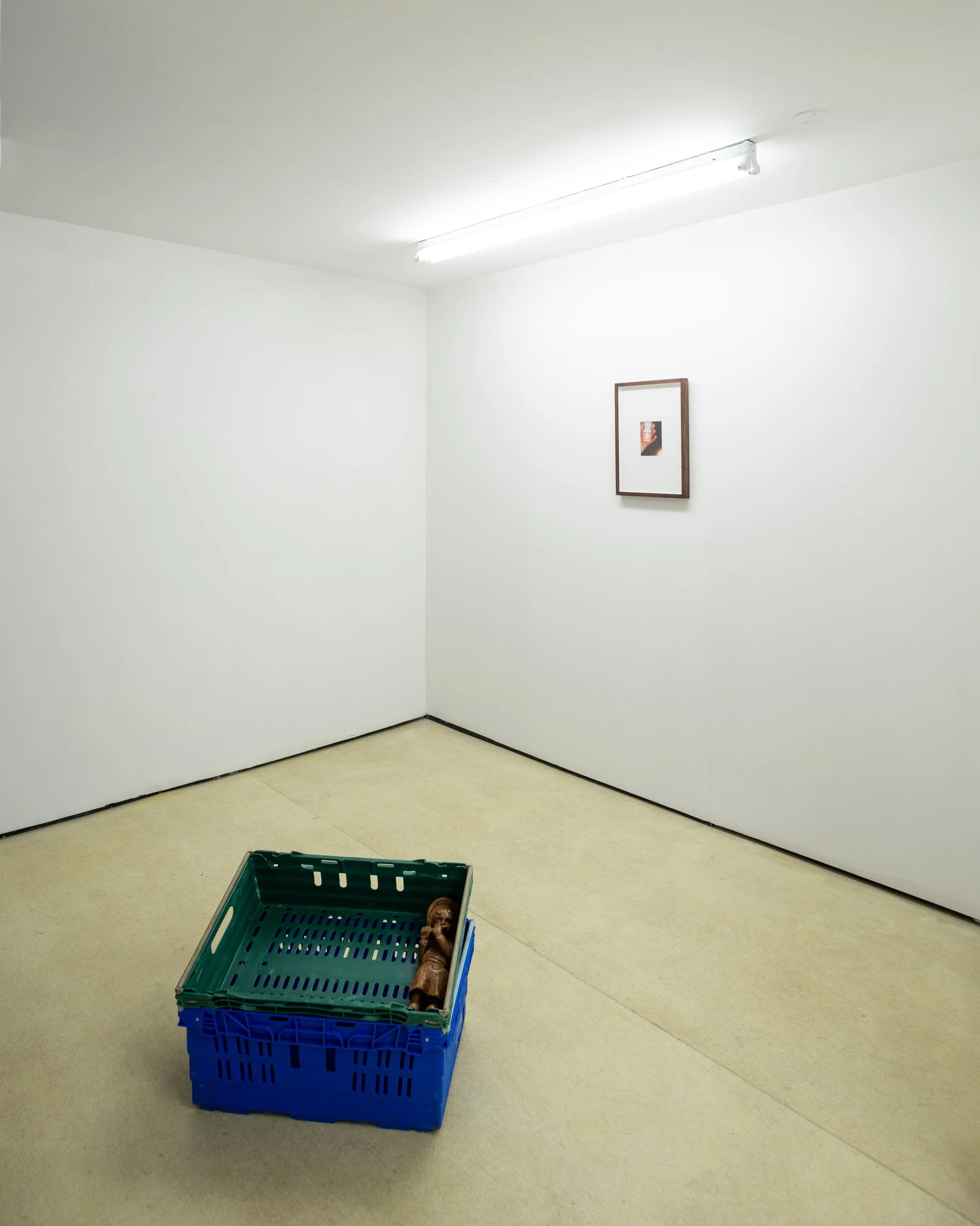
This installation, titled Mourning, forms part of Brexciya. Through sculpture, found objects, and shared acts of care. The installation reimagines the market as a site of exchange, migration, and memory; a place where histories collide and new identities are forged.
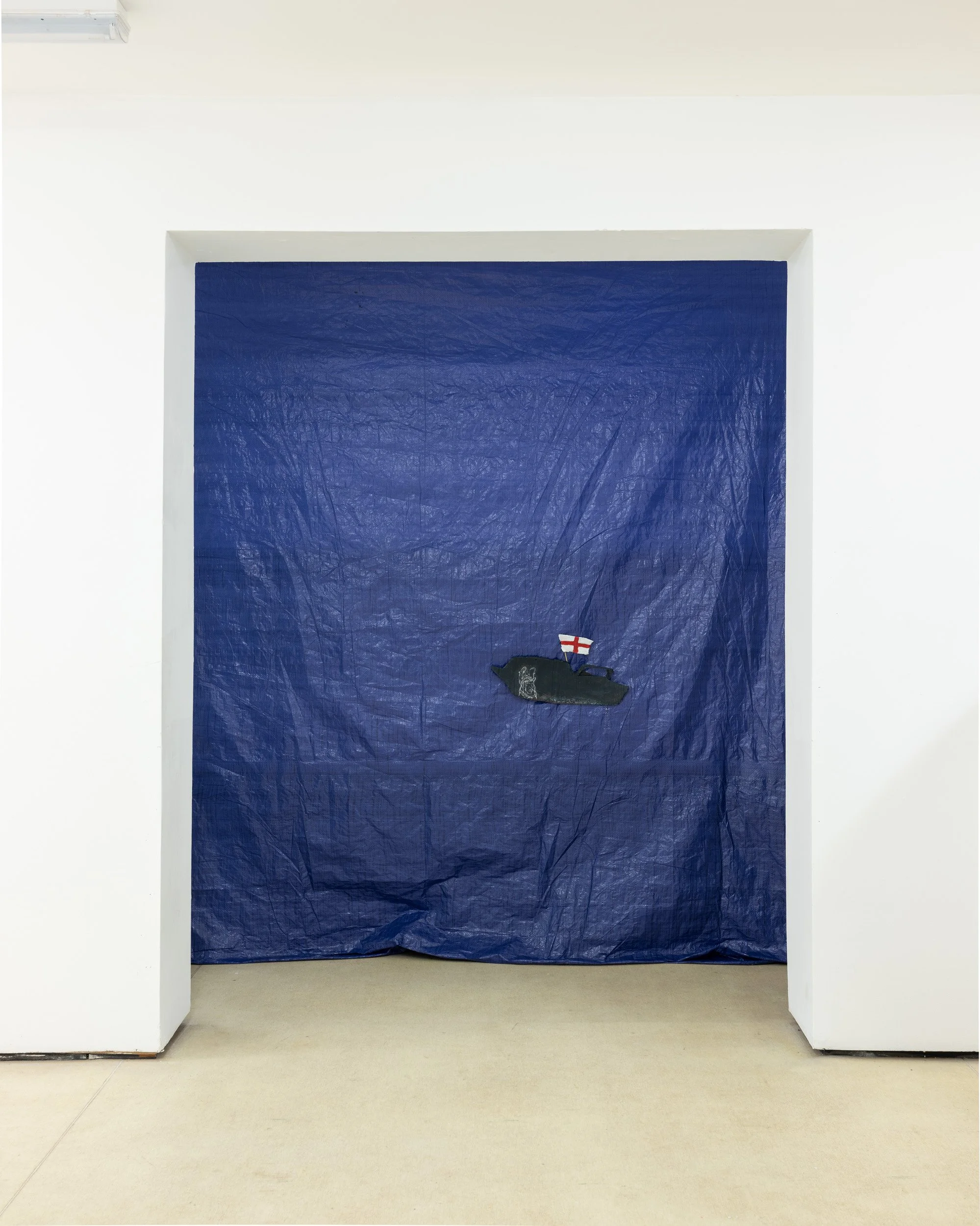
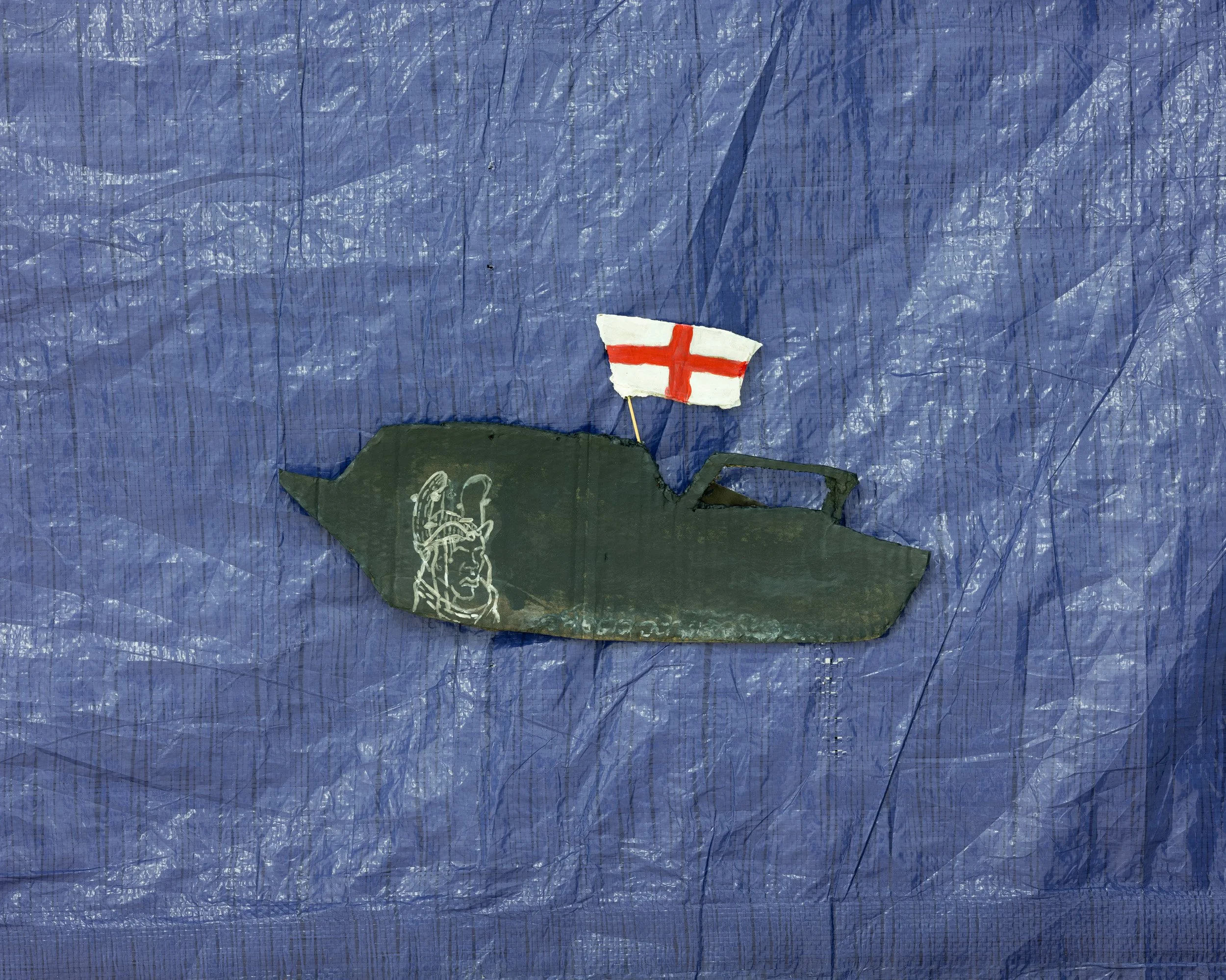
At the centre stands a market stall that doubles as a ship. Its wooden frame and tarpaulin canopy form a threshold that recalls the expanse of the sea: a surface of passage and peril, of hope and dream. The stall becomes a vessel, its tent-like form evoking the sails of a ship, a journey made across uncertain waters and the trade routes that have long shaped human movement.
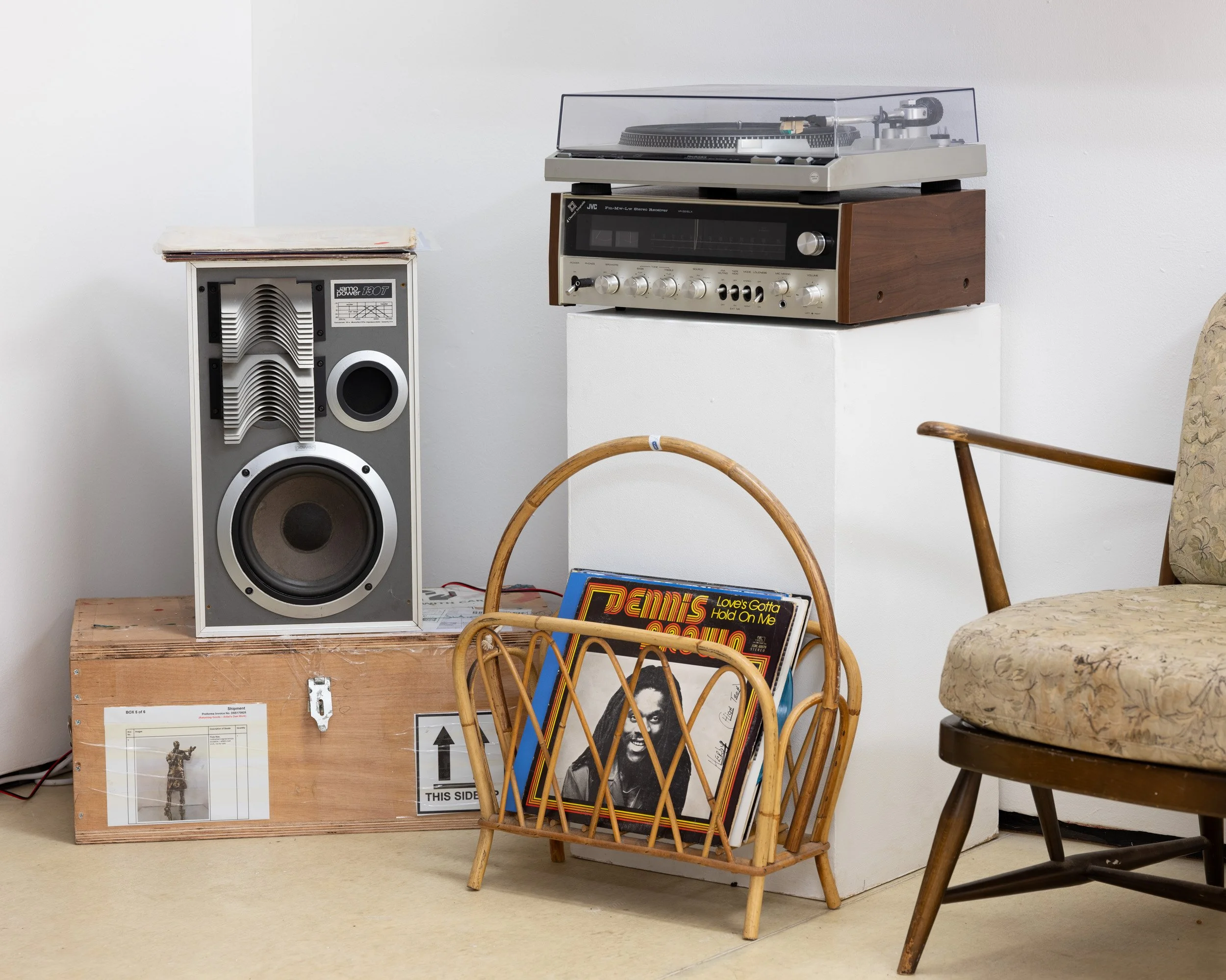
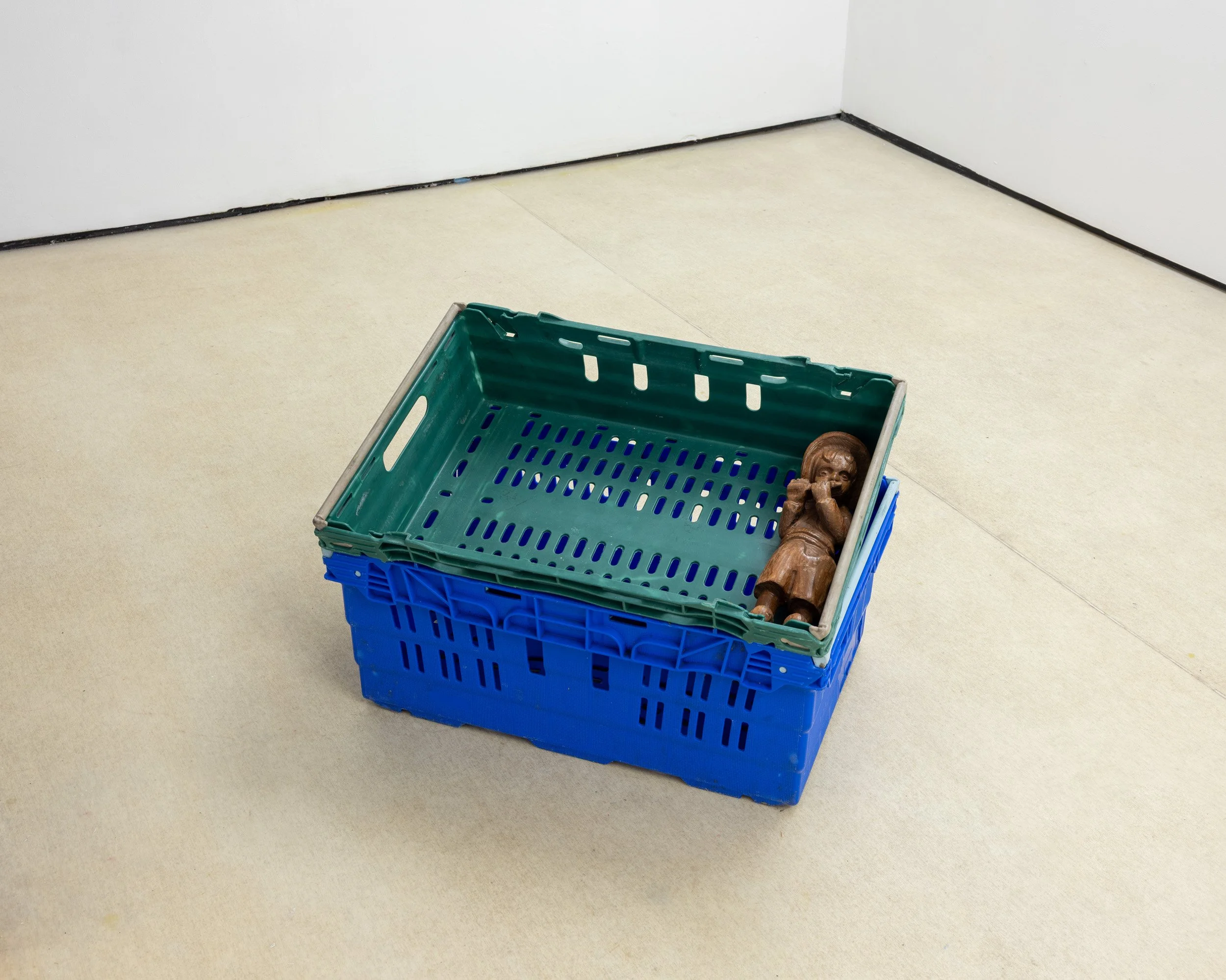
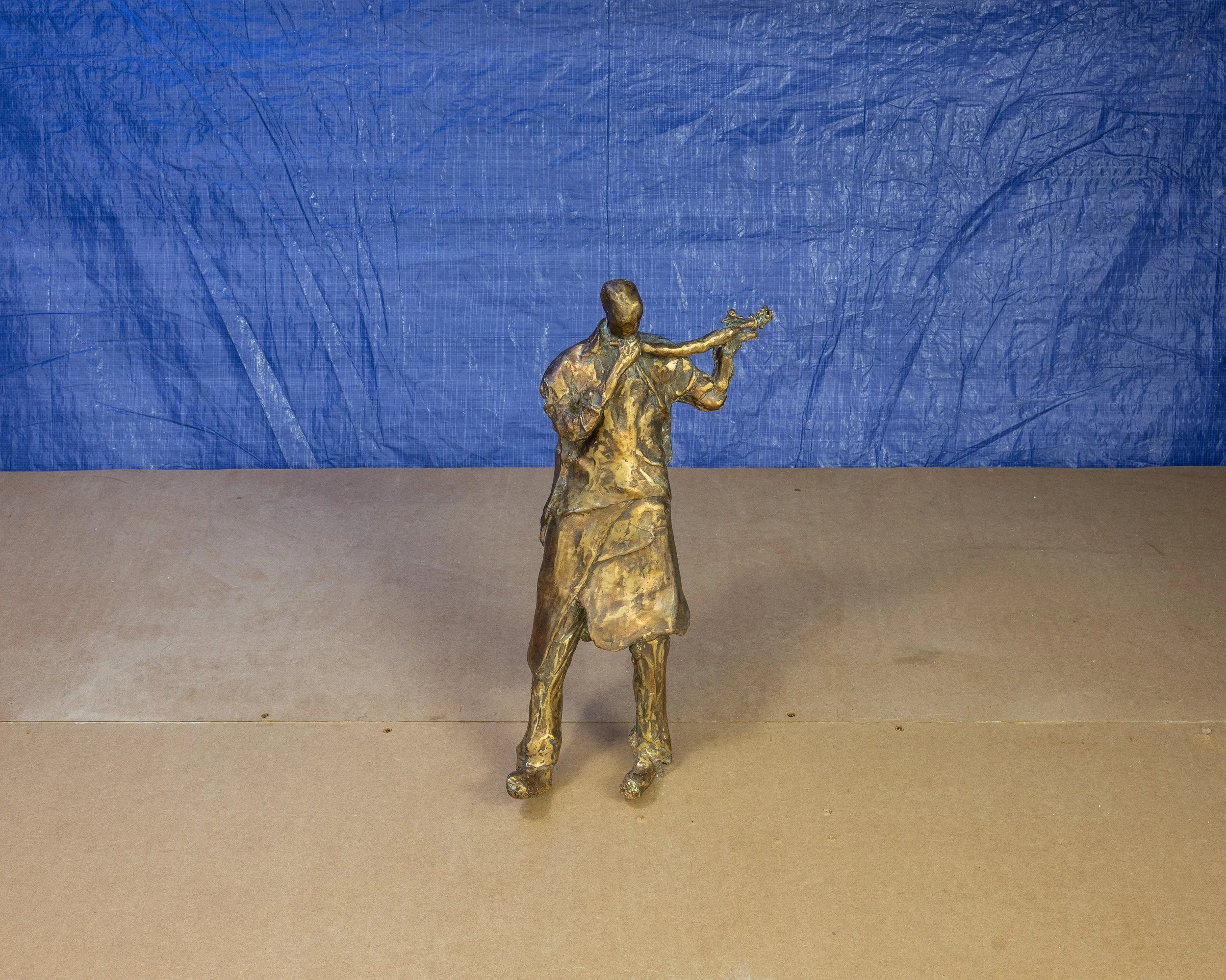
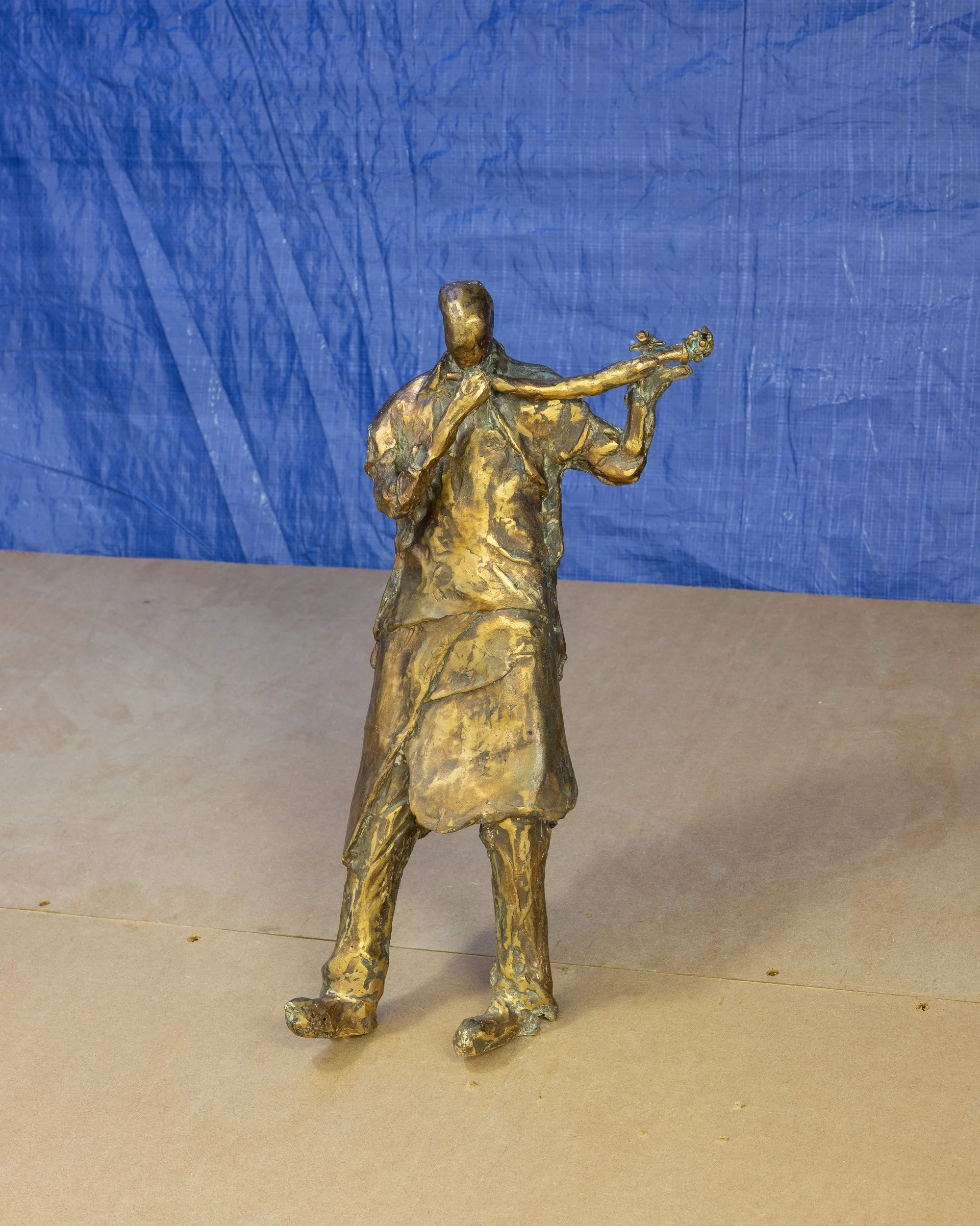
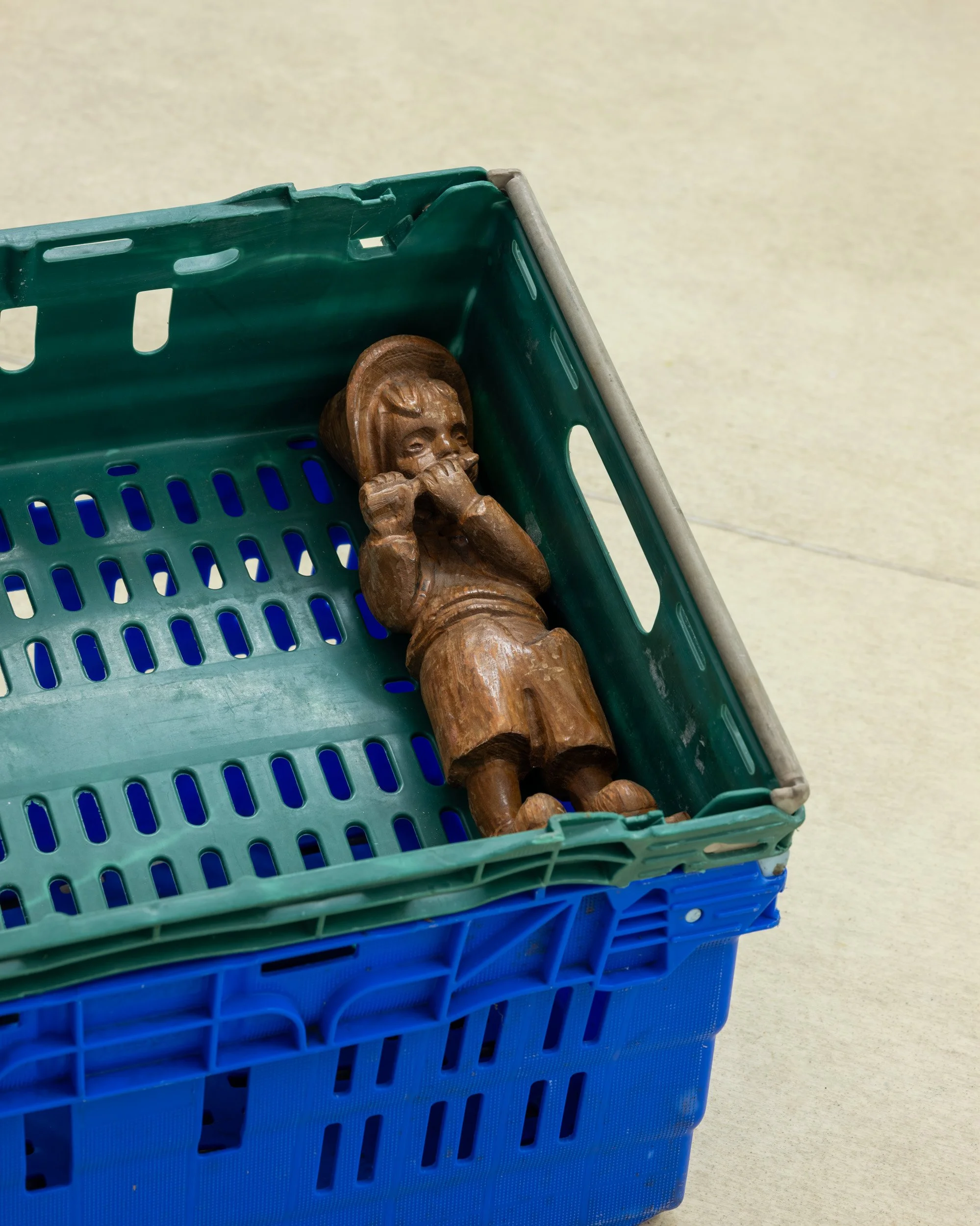
At its heart, a bronze sculpture depicts a figure poised in motion, flute raised. The pose echoes the stance of colonial Portuguese soldiers once immortalised in bronze to commemorate conquest. Here, the figure has been reworked and reclaimed, no longer an emblem of domination, but of protest. From the tip of the flute, a current of miniature figures is blown outward, symbolising the dispersal and persistence of displaced bodies and dreams.
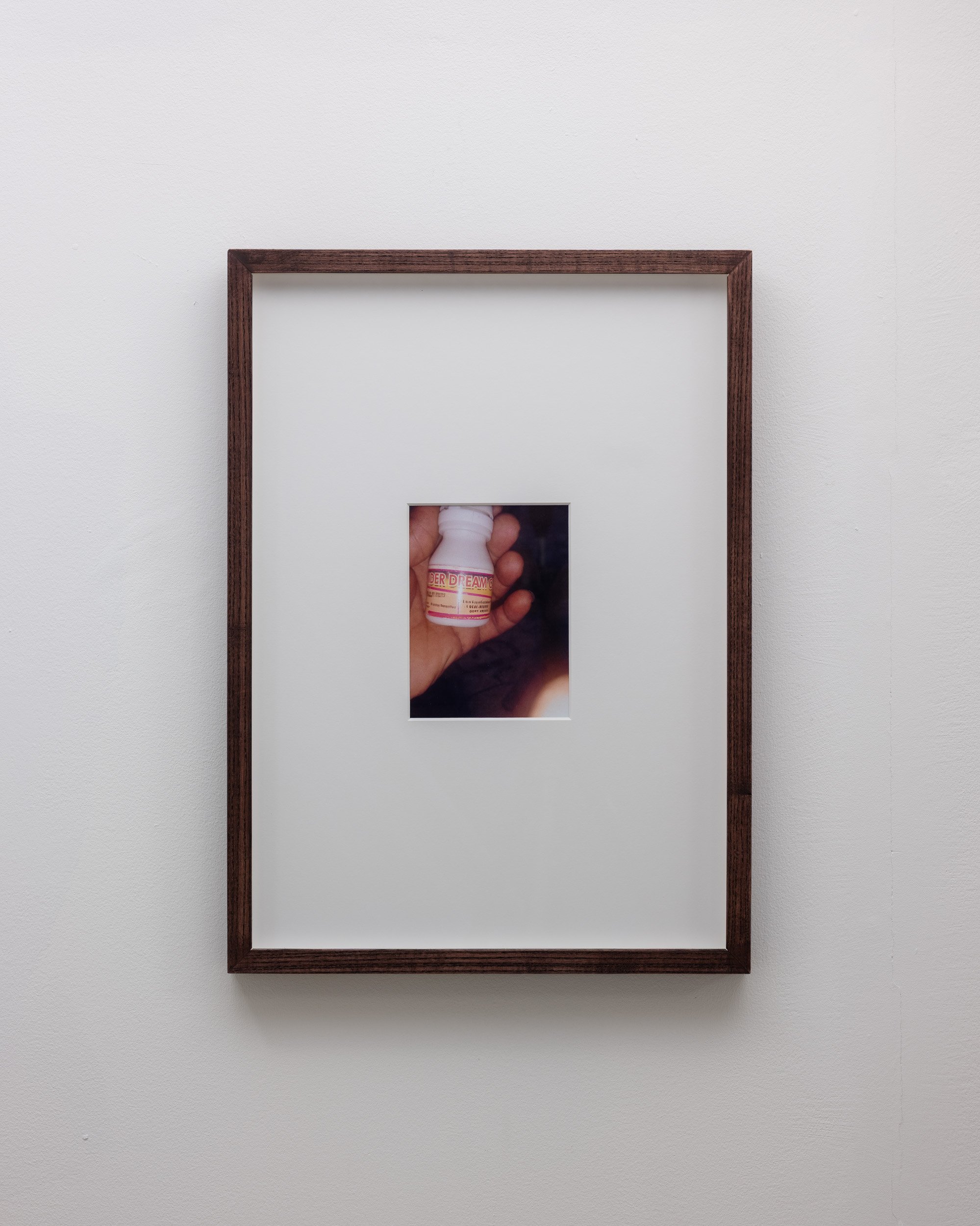
On one side, a photograph captures a hand holding a small bottle inscribed with the word "DREAM". A quiet gesture reminding us that dreaming is the fragile economy of hope that sustains belief through the harsh realities of displacement.
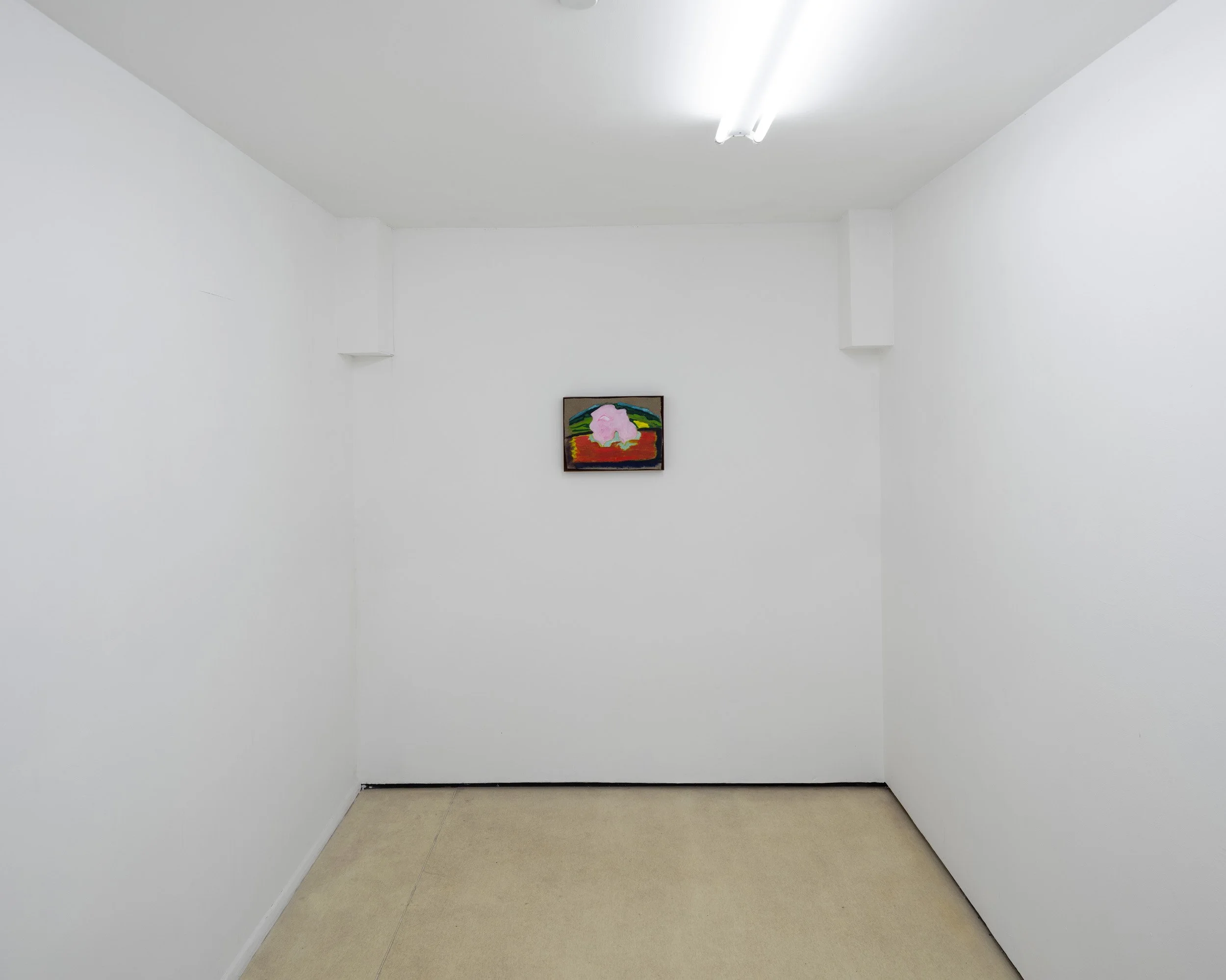
A painting titled Asé reimagines a metaphysical landscape, a place of sweetness, abundance, and possibility; a land of “milk and honey.”
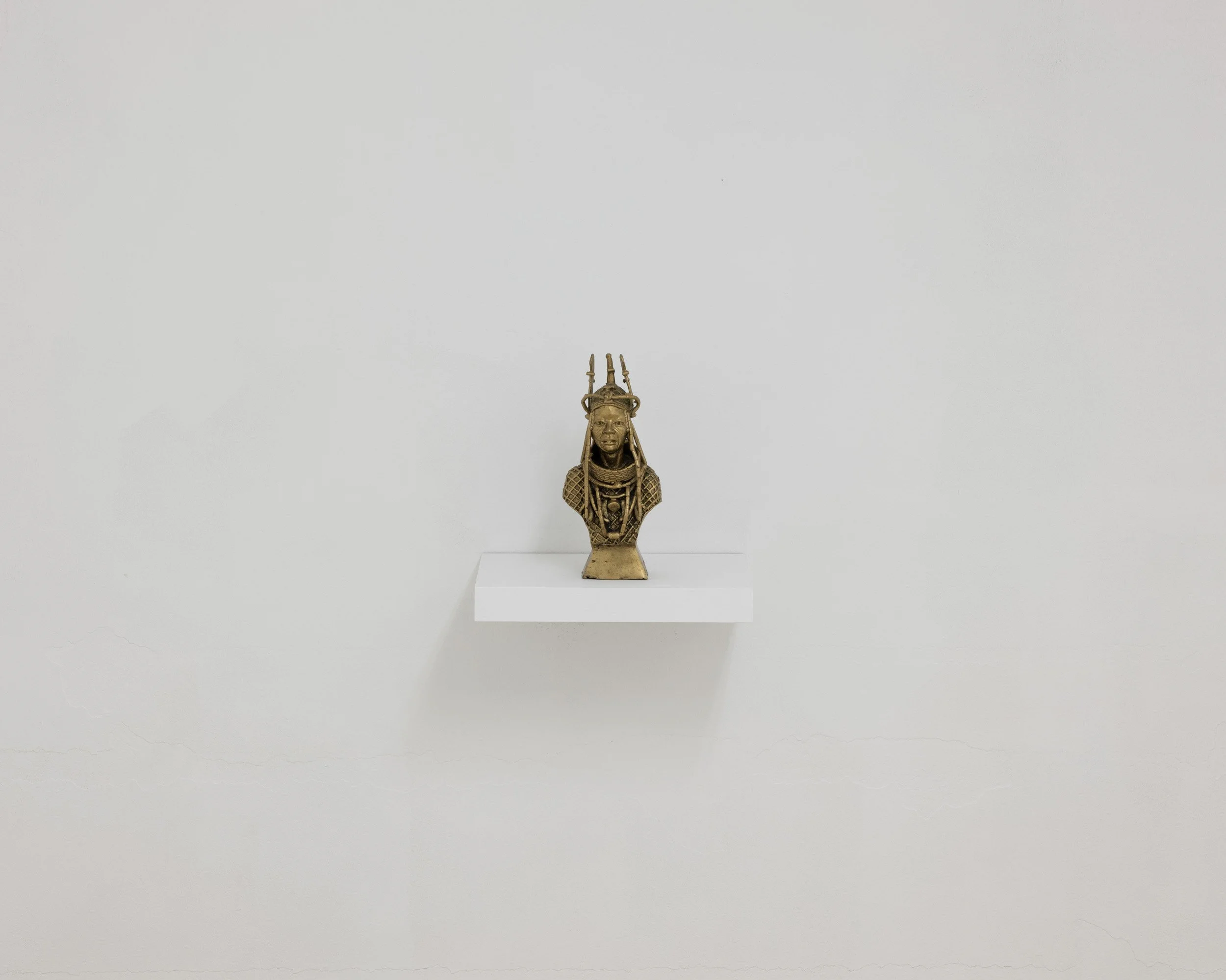
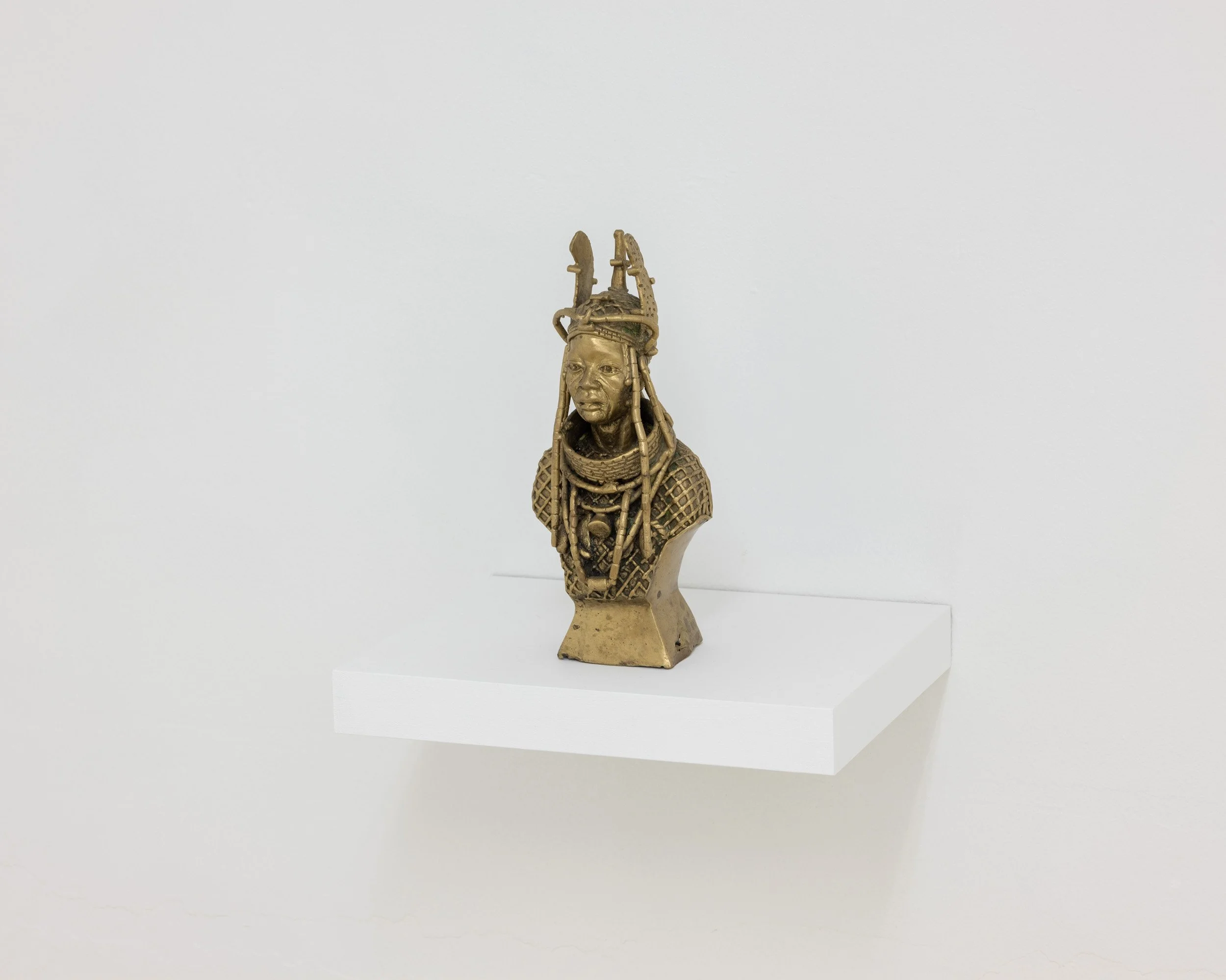
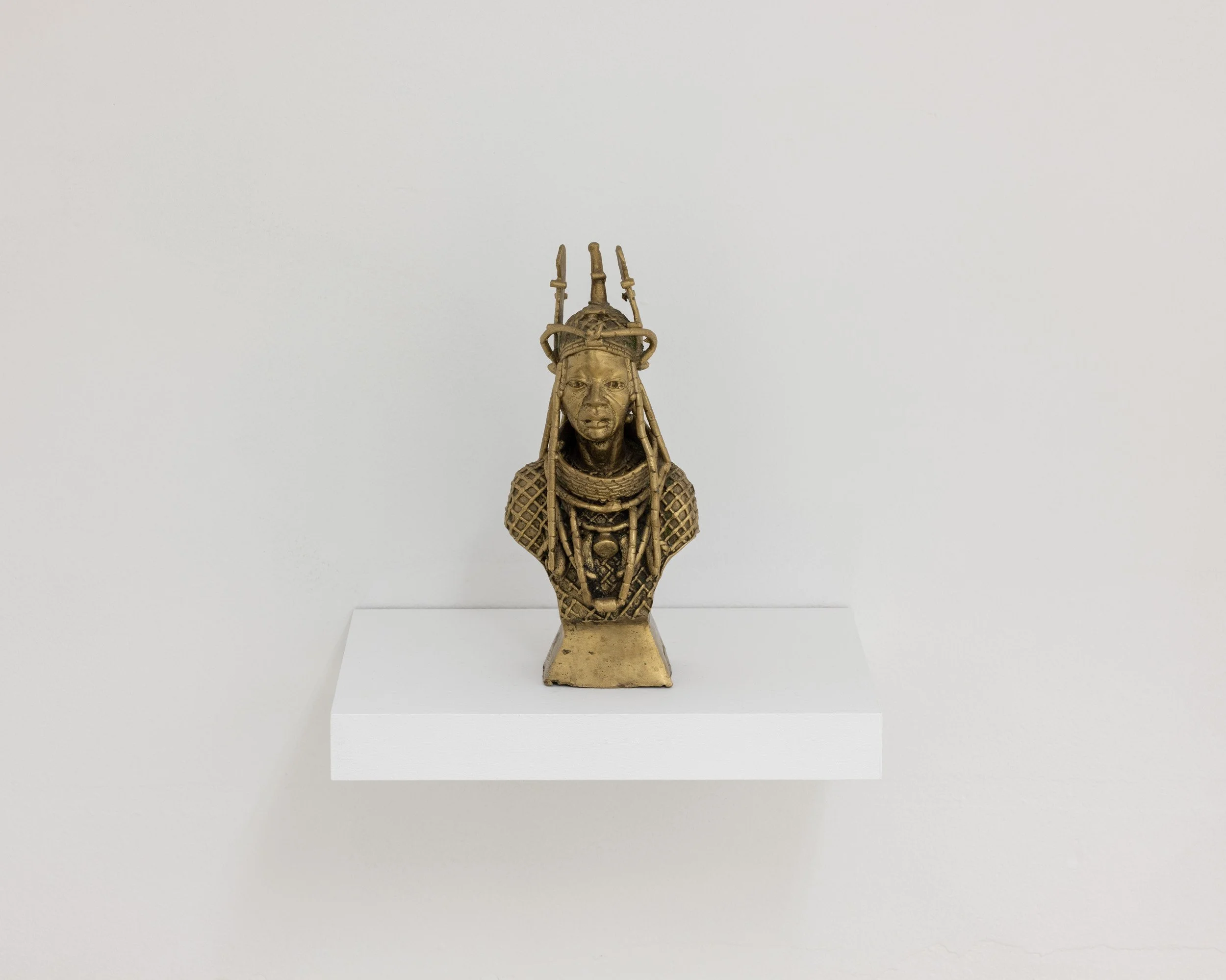
Juxtaposed with the stall is a commemorative head of an Oba found in a Deptford market. The Oba occupies a quiet but powerful presence. Once a sacred symbol of royalty and ancestral lineage, it now appears displaced: it’s a symbol of a precious object caught within the circuits of trade and exchange. Its presence speaks to histories of looting, exile, and survival.
As part of the work, I invited my mother to prepare food; dishes that have travelled across borders just as people do. These are the meals I grew up with in Ghana, foods that have sustained me and carried the warmth of home into new worlds. Sharing this food is an act of connection and resistance: a crossing of cultures and an offering of identity. Each plate embodies both remembrance and renewal.
Artist Bio
Ghanaian artist Emmanuel Awuni mobilises diasporic traditions of oral history, hip-hop, jazz and Afrobeats to question established systems of power. As analytical vehicles for cultural deconstruction and reconfiguration, his practice draws comparisons between the mechanisms that underlie systems of incarceration and disempowerment, and those that support our cultural institutions, likening the encyclopaedic museum to a zoo of non-western cultures in cages. While music is at the core of his work, Awuni describes any repressed expression, no matter the medium, as ‘singing’ against the bars of oppression. Within the context of museology and its cultural biases, he reconfigures cast busts and found objects in blue packing foam bases, naming their spiritual potential and attending to them with ceremonial tenderness. Presenting his largest work to date Awuni awakens and manifests the transformation of latent object to metaphysical being, inviting his viewers to bear witness to the act of emergence and liberation. Awuni’s works hold space for free abstraction, dictated by breath and intuition. Recent works were completed during a residency at the The Roberts Institute of Art in Scotland, where Awuni was particularly inspired by the rural landscape around Cortachy and the River South Esk. His gestural compositions meditate on nonviolent resistance and freedom reimagined, echoing the river and its rhythms.
Kumbirai Makumbe
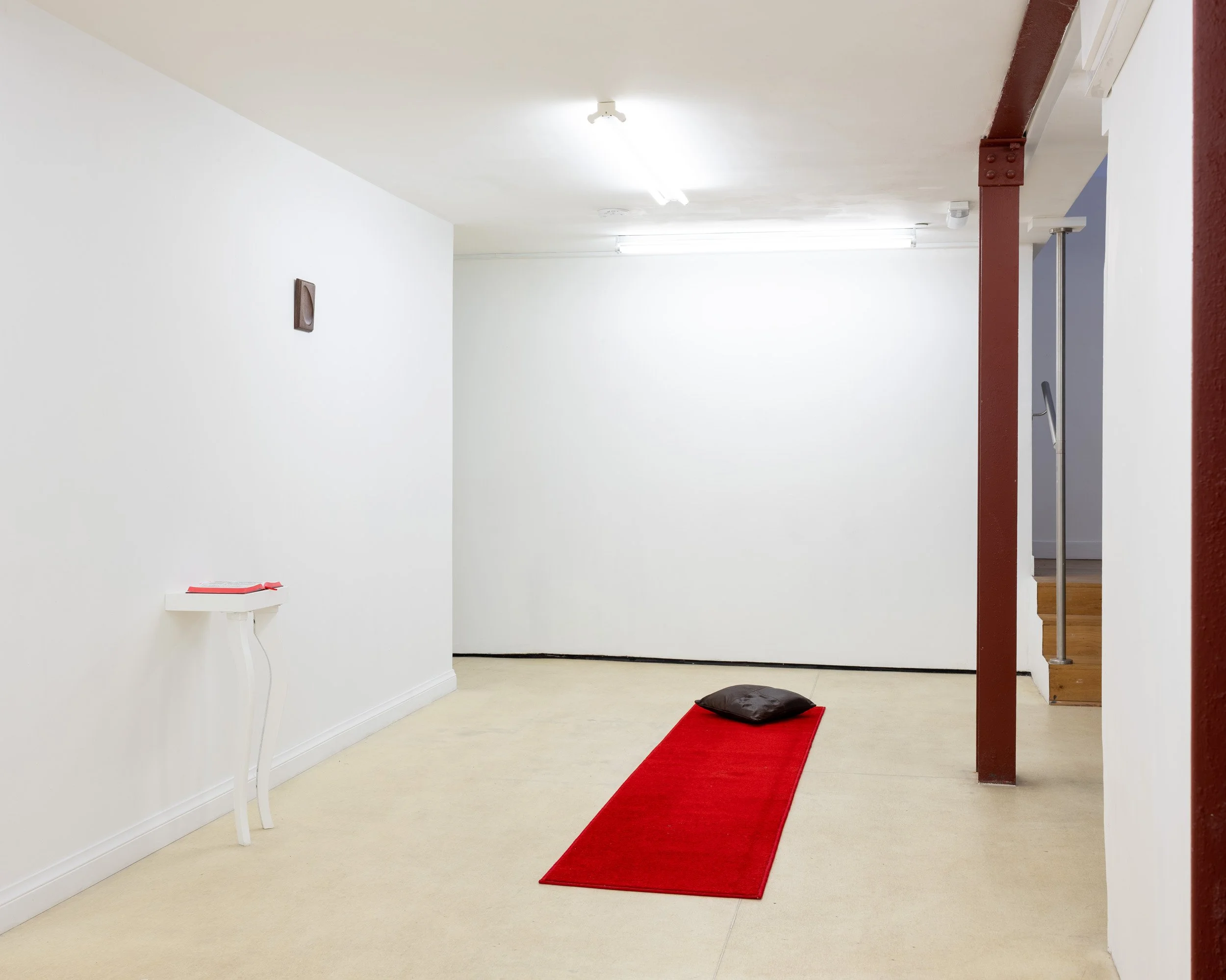
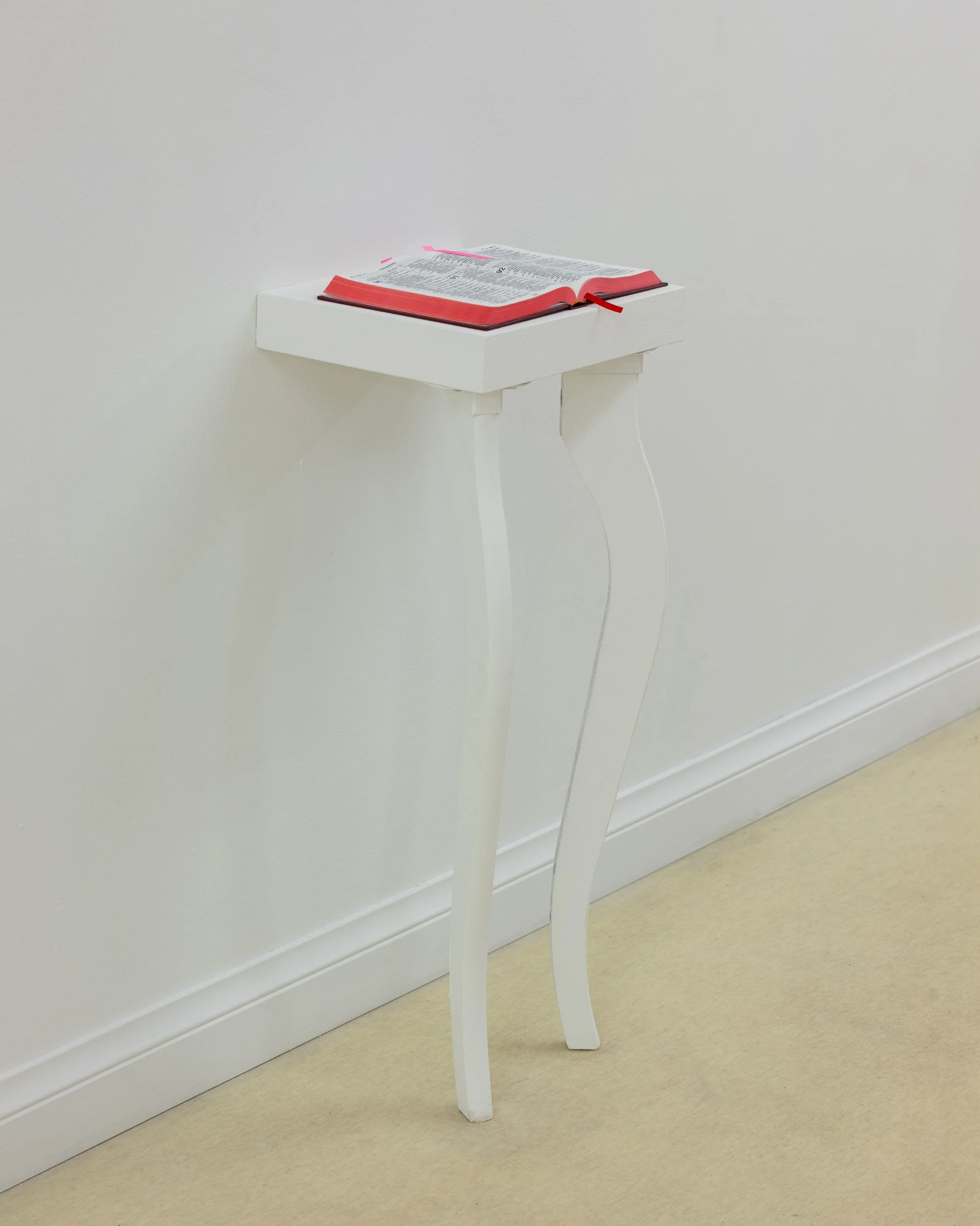
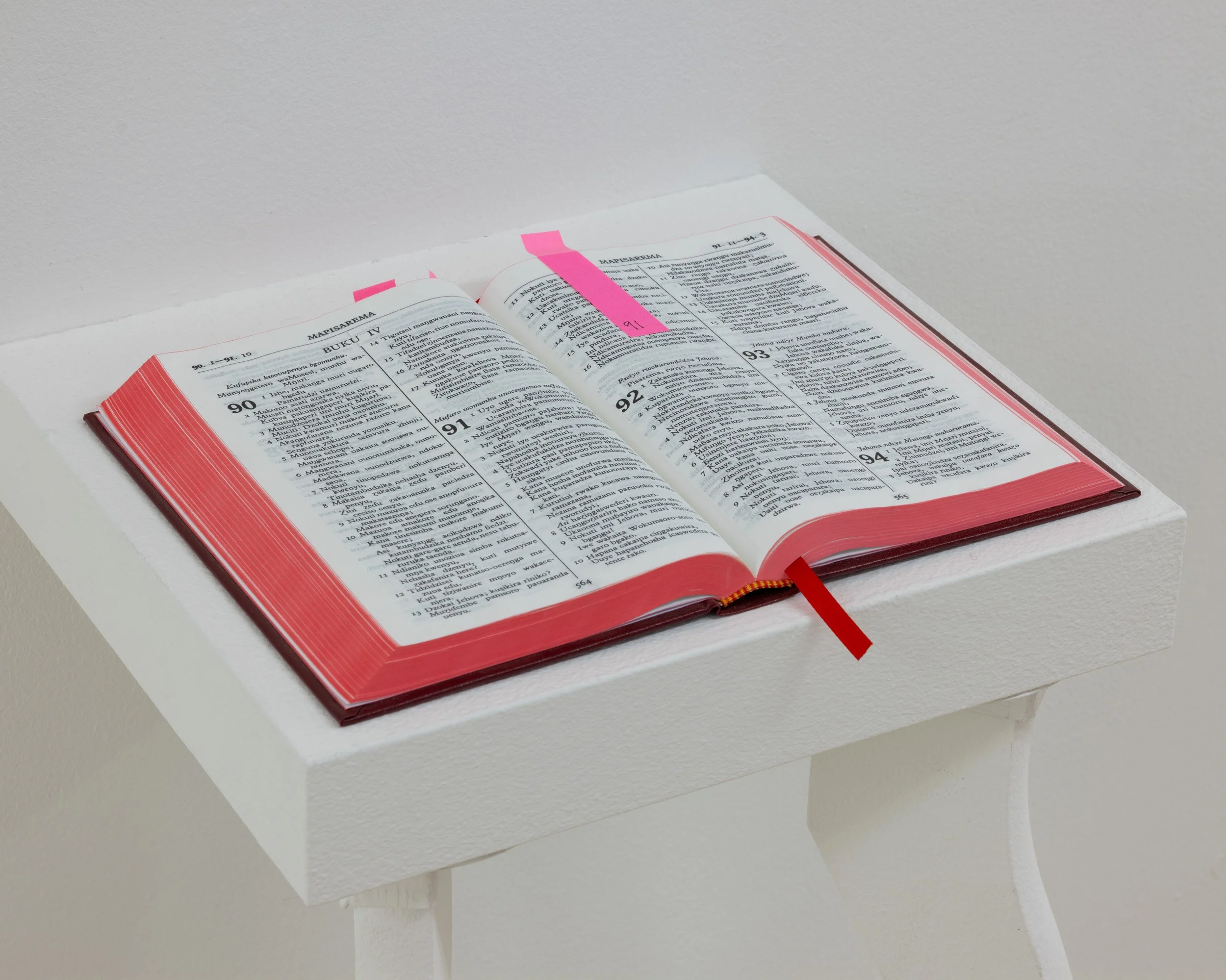
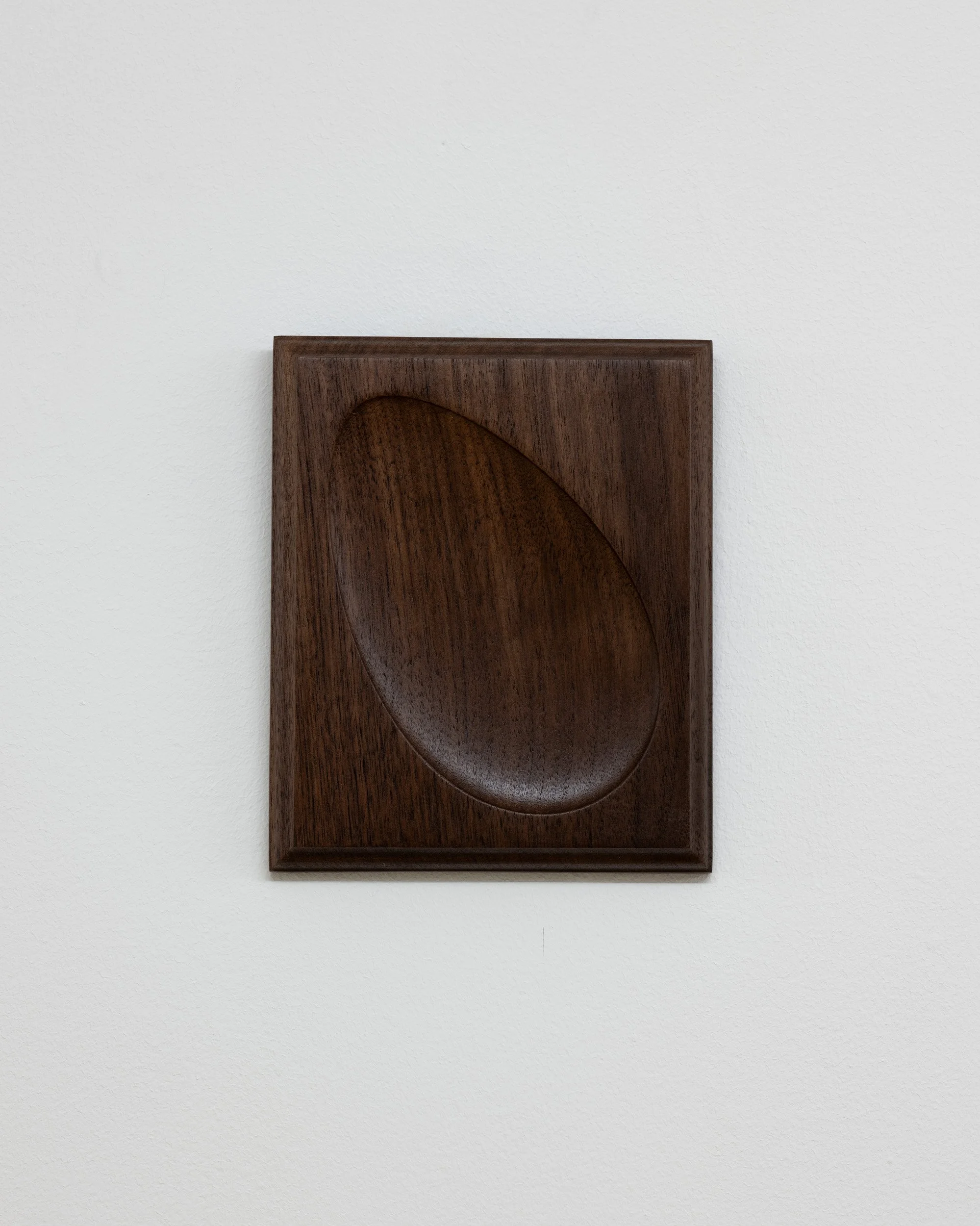
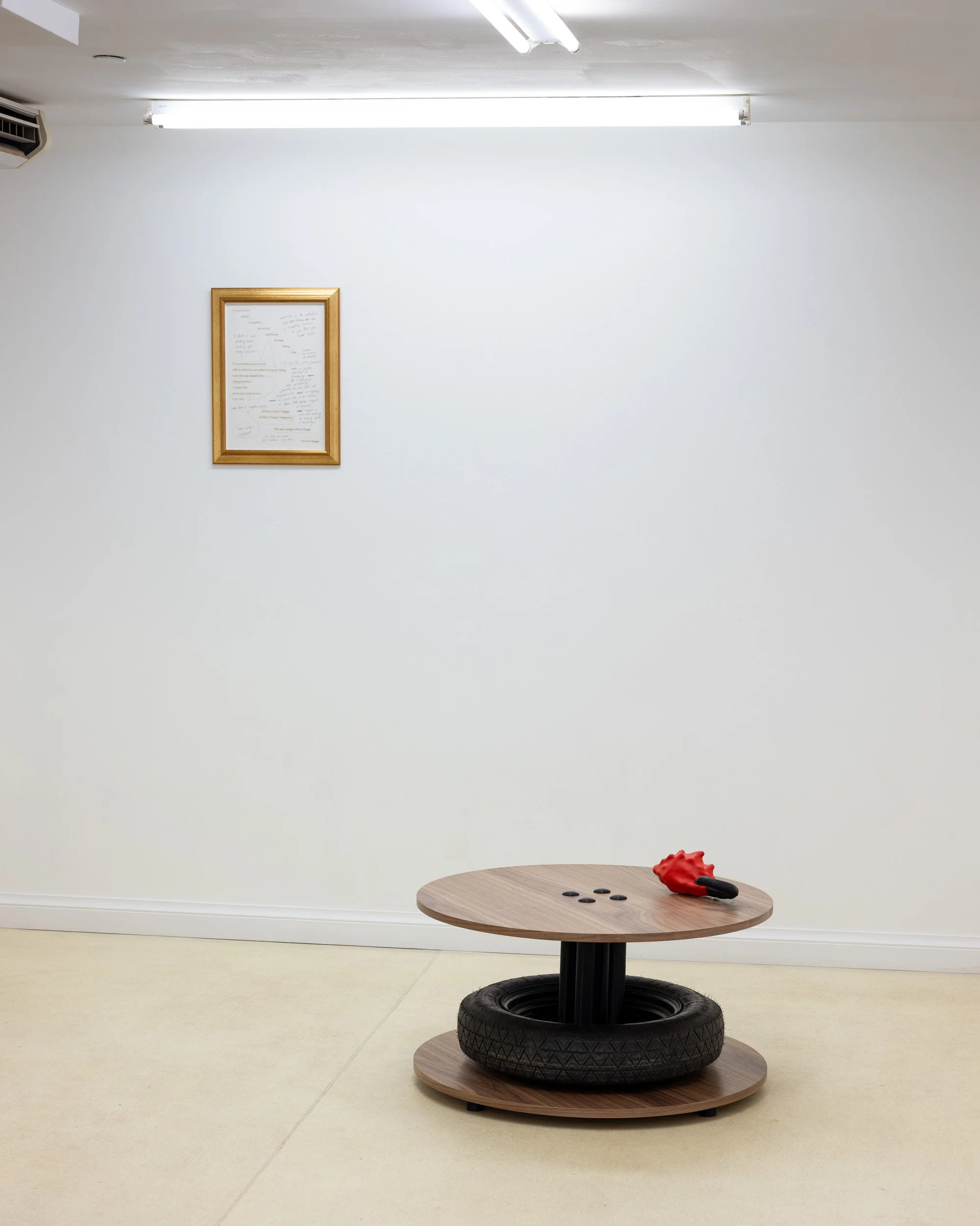
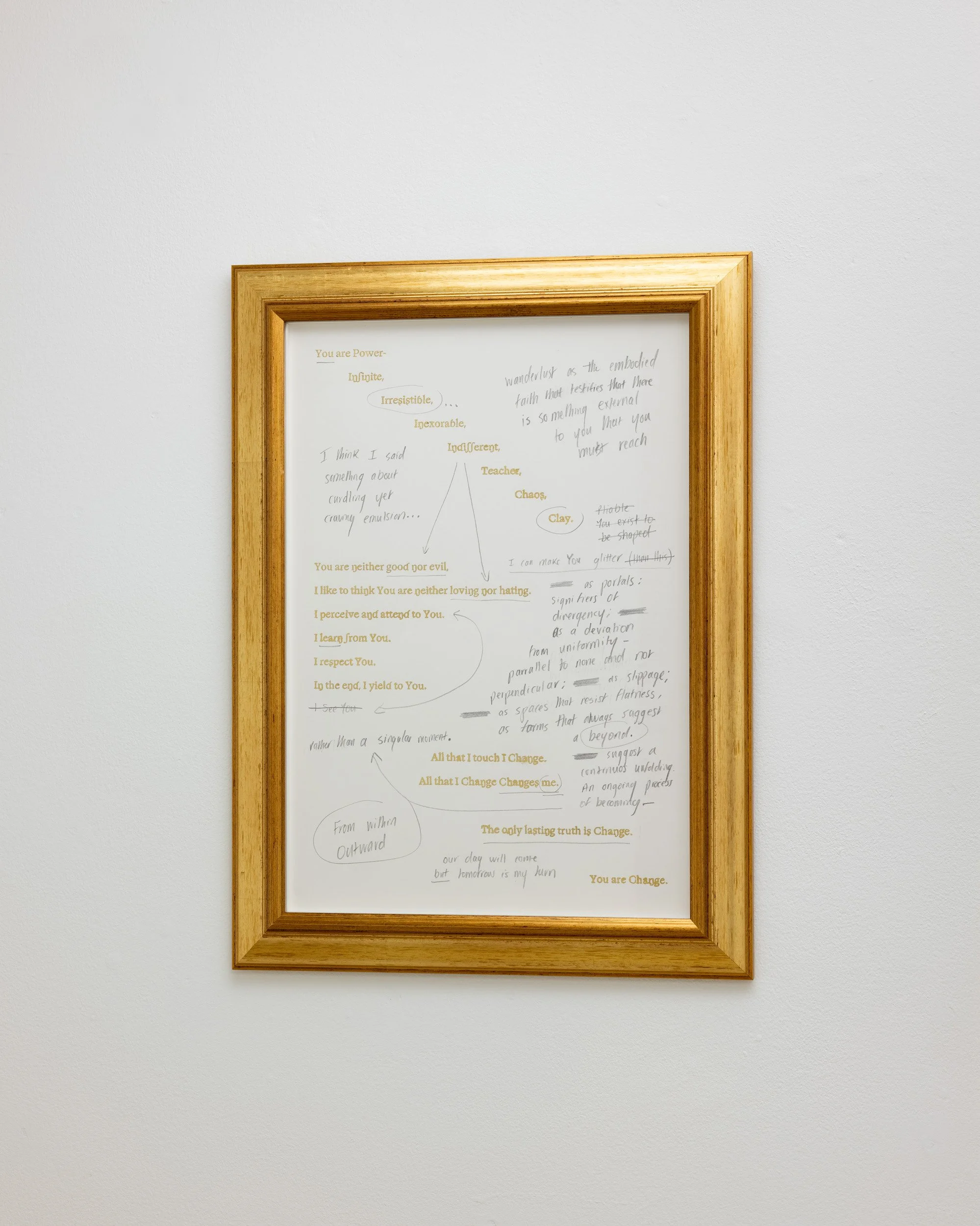
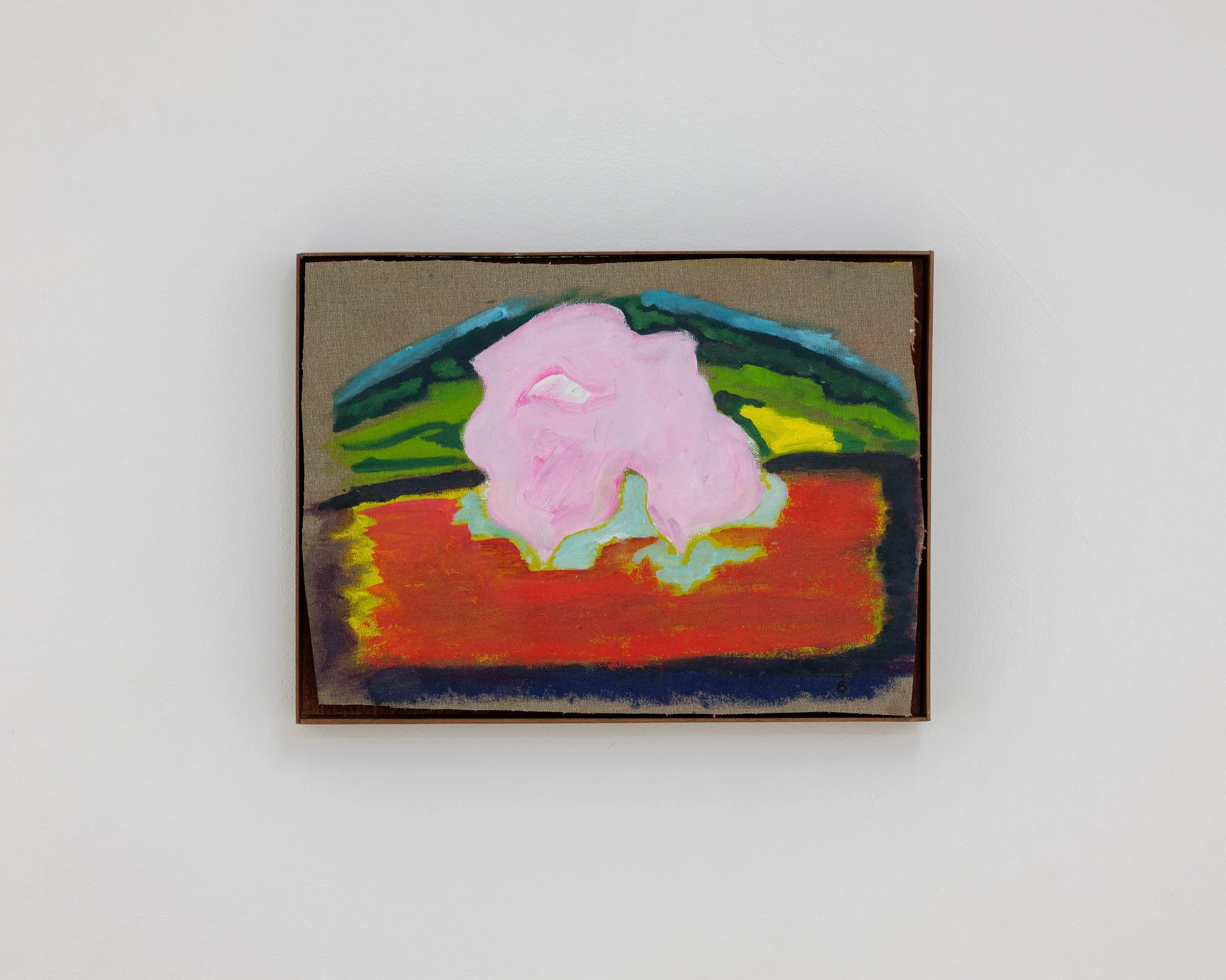
My work for Brexciya is based on the formation of a spiritual/theological framework titled You; an alternate belief system; one rooted in a faith in movement rather than destination. An alternative theology that embraces divergence as sacred. One that is centred on the ellipse form. Ellipses as portals; signifiers of divergency; the ellipse as a deviation from uniformity-parallel to none and not perpendicular; ellipses as slippage; ellipses as spaces that resist flatness, as forms that always suggest a beyond. The ellipses form suggests a continuous unfolding. An ongoing process of becoming rather than a singular moment.
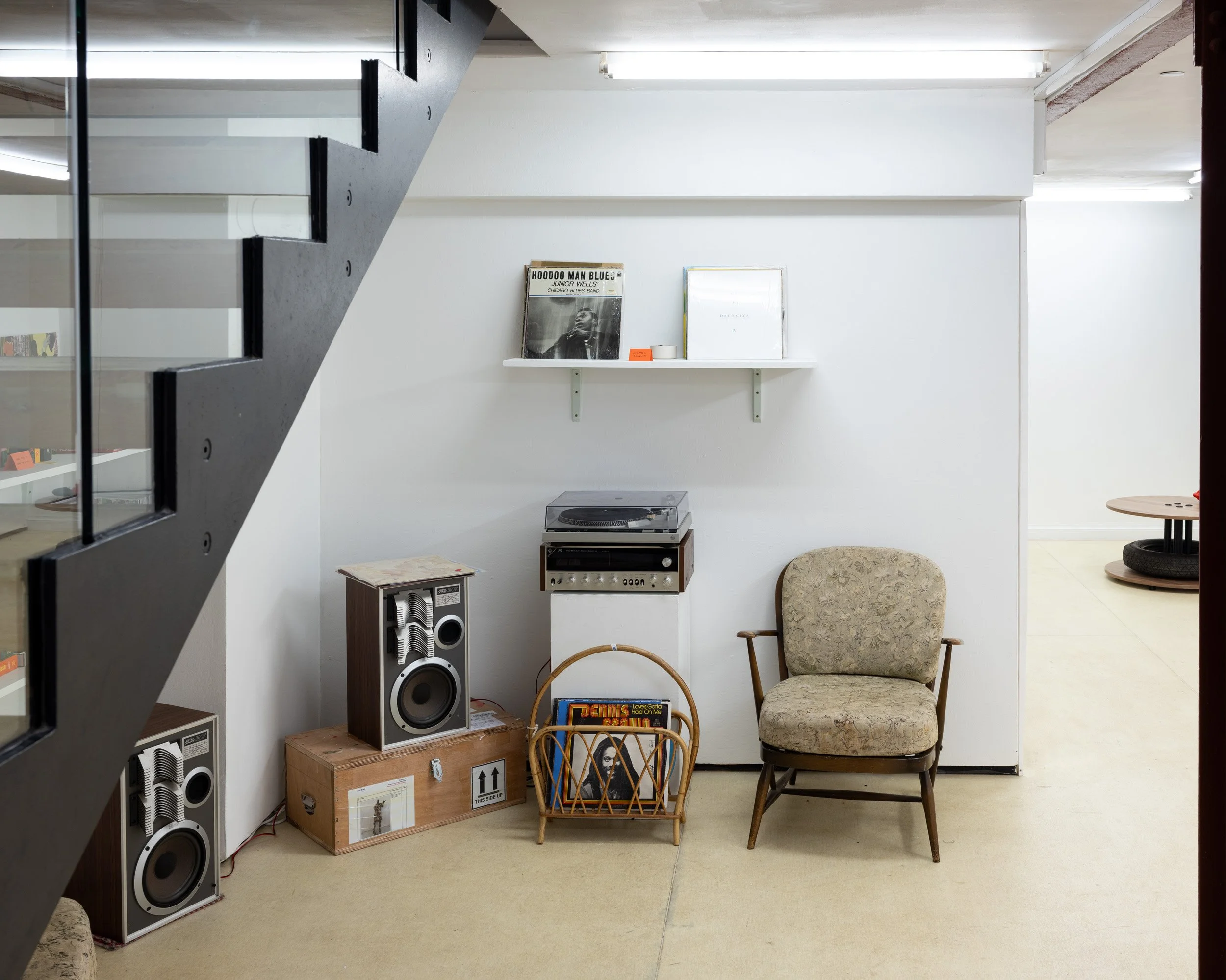
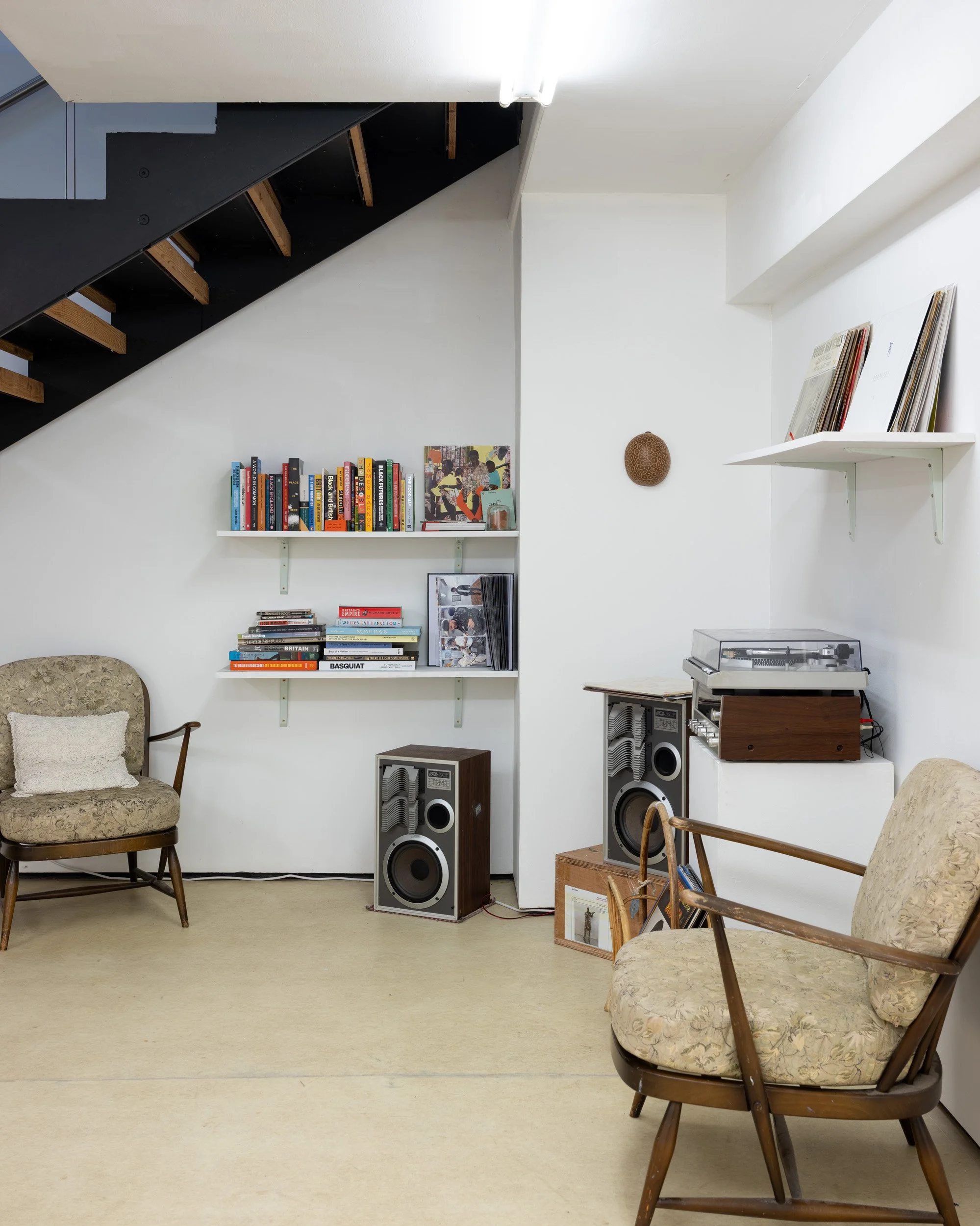
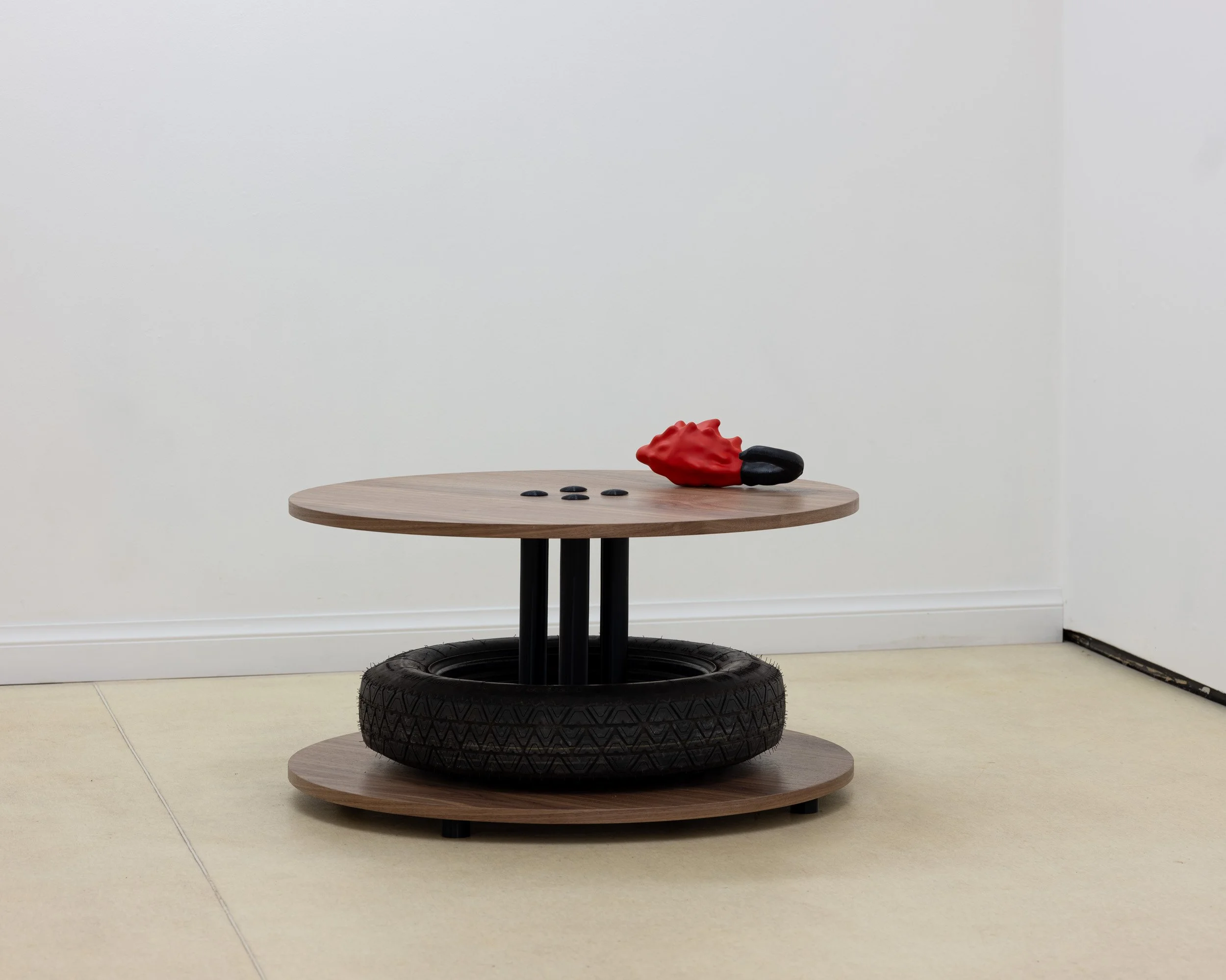
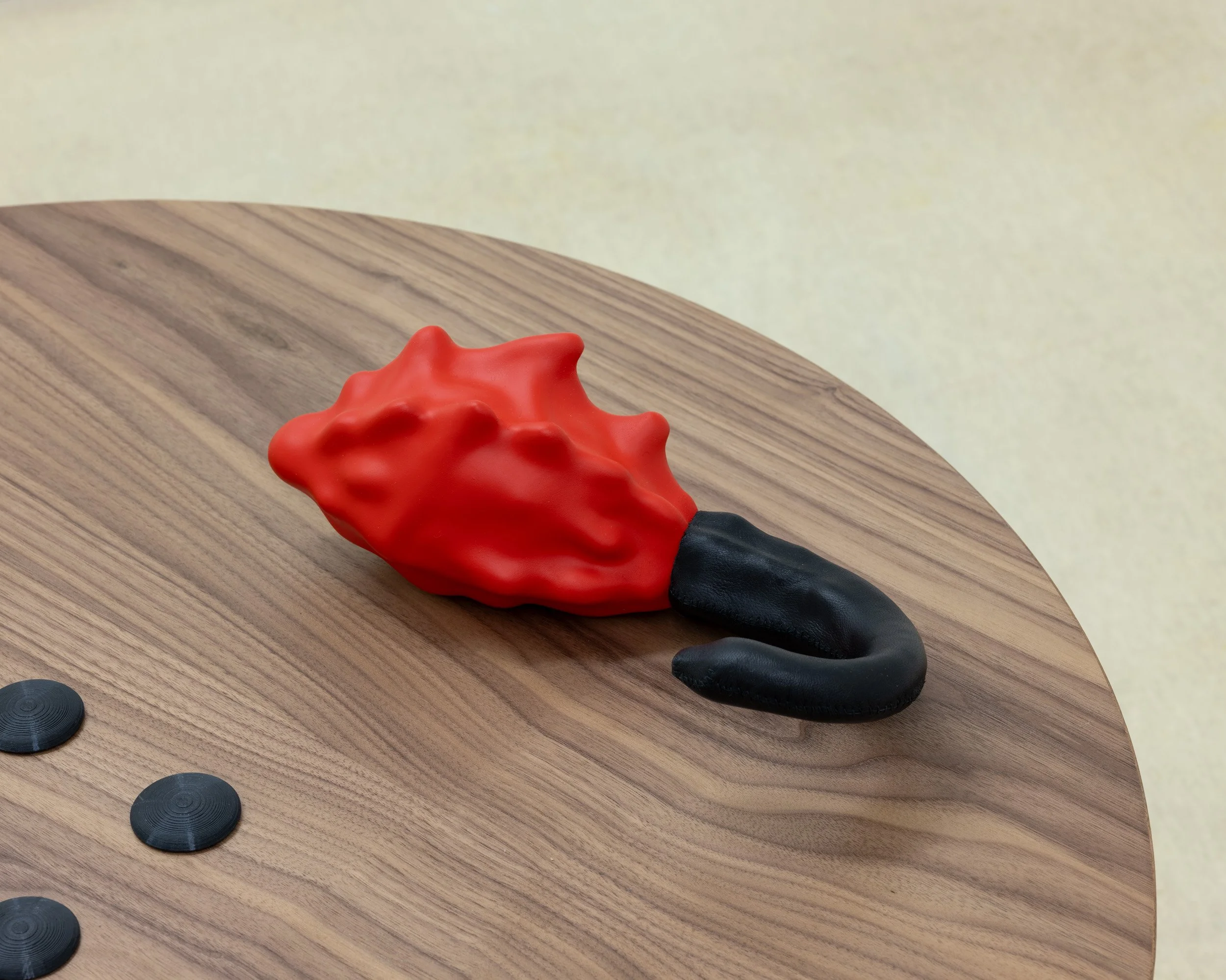
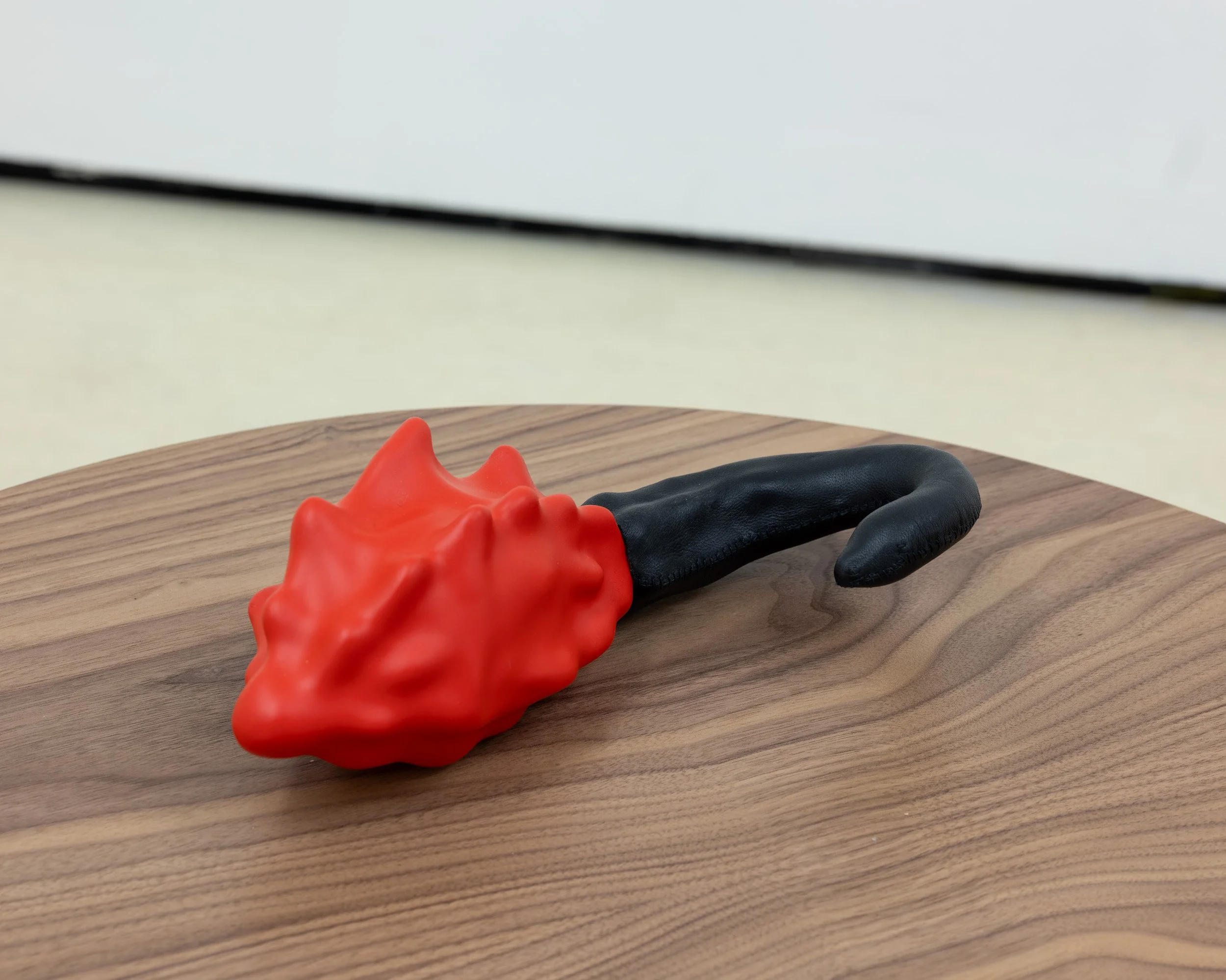
In parallel to the domestic sphere that I grew up in where the religion my family practiced, one I was continuously at odds with, seeped into every dimension of our household. I was fascinated with imagining a domestic space with similarities to the one I became in but where Youhas a strong and inescapable presence instead. I began with creating a loose iconography for You based on the ellipse form which I then playfully merged with domestic furniture and objects as well as paraphernalia from the religious and/or spiritual practices that my family still practice but I no longer do.
I came to realise that I have placed time in developing a visual language with a soft sci-fi sensibility which I’ve come to describe and/or label as exo- domesticity. It draws from the zimbabwean evangelical domestic sphere in the UK which I personally grew up within, in conjunction with the trans- dimensional, the beyond and that which is on the ‘outside’. It’s an act of queering my personal understanding of ‘Home’ & depicting how “home” can be turbulently constructed when belonging is fractured, fluid and non-linear.
Artists Bio
Kumbirai Makumbe is a Zimbabwean artist based in London. Their practice is an ongoing exploration of fabulation— not as storytelling alone, but as the construction of narratives with elements of myth, folklore, and speculative fiction. They use it as a methodology for constructing alternative theologies, counter-worlds, and modes of being. Makumbe is interested in how fabulation can be employed as a form of spiritual and aesthetic infrastructure: a way to build and believe differently. Through sculpture, digital media, and installation, they create strategic apparatuses — symbolic forms, speculative devices, and cosmological architectures — that support divergent realities.
Rather than focusing on a single mythos or narrative, Makumbe conceives of their practice as a growing ecology of support structures for thought, transformation, and survival. Each project or concept acts as a site of both speculation and holding — instruments for meaning-making and orientation. These works offer soft geometries for spiritual inquiry, speculative geographies for queer becoming, and material metaphors for translocational identity.
Across their work, what remains central is not the specific outcome, but the strategic deployment of fabulation as a way to think through complexity — to create temporary shelters for ideas, to develop languages that encapsulate the elusive, and to test the boundaries of visibility, legibility, and belief. Each apparatus they develop functions as a support structure within a wider cosmology-in-progress — part of an evolving toolkit for survival, speculation, and self-definition.